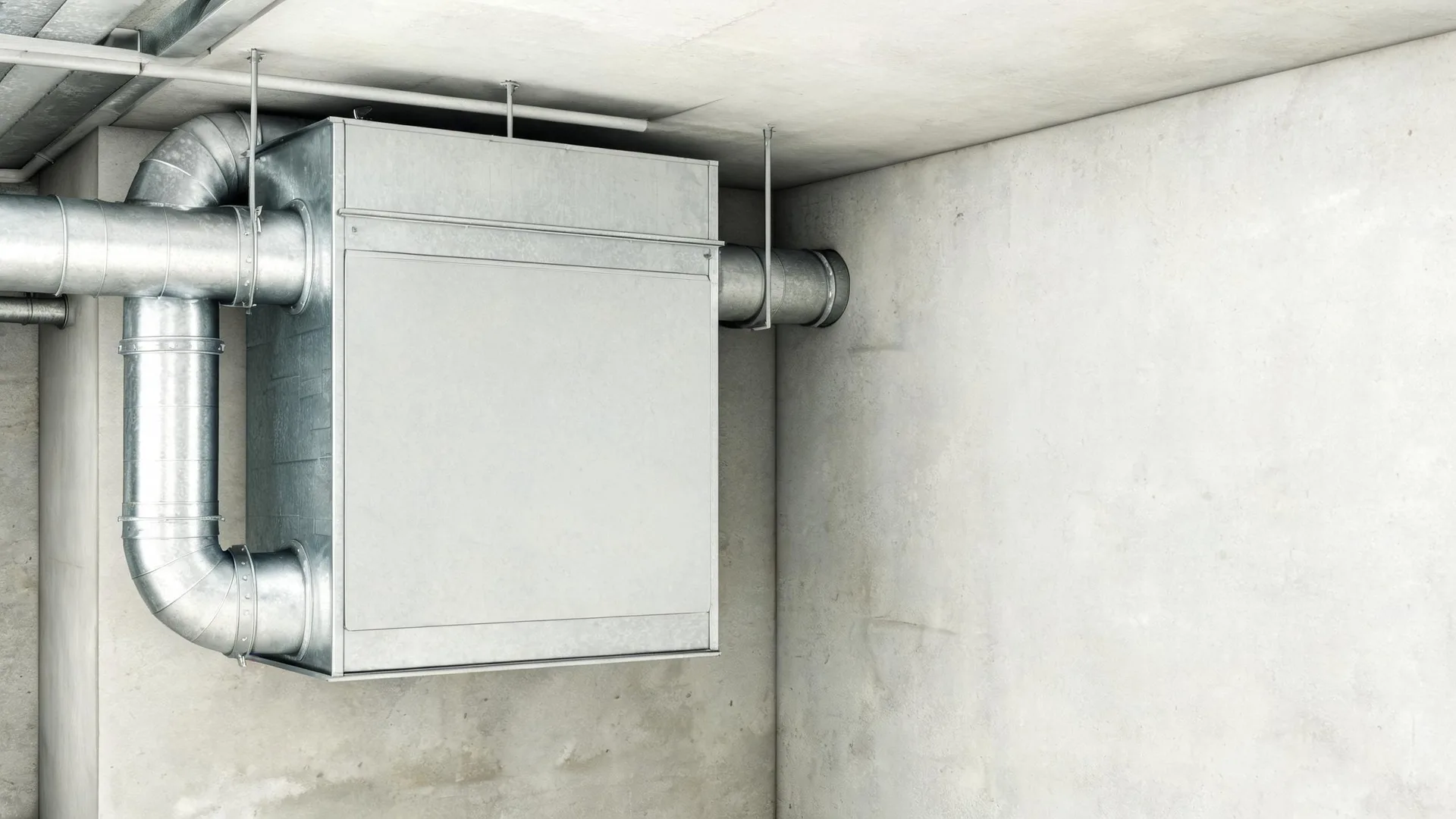
Cooling from April through October
Air conditioners in Denham Springs run seven months of the year, not just a few weeks in summer. That's seven months of the compressor and fan motor cycling on and off, day after day.
Takes about a minute. No obligation.
Air conditioners in Denham Springs run seven months of the year, not just a few weeks in summer. That's seven months of the compressor and fan motor cycling on and off, day after day.
June through August, this system isn't working against a mild stretch of warm weather. A unit under that kind of load for months at a time wears sooner than one that gets a real break.
NOAA nClimDiv, 1991–2020 normals
March is the month before cooling starts in Livingston Parish.
Get the AC looked at in March, before the first hot stretch finds the part that was already weak.




Half the homes in Livingston Parish were built in 2002 or later. If yours is one of them, the system may be a replacement put in well after the house went up, or close to its first one. Either way, a system that age usually isn't failing from wear on every part at once. More often it's one thing. A capacitor, a contactor, a low charge. Worth having someone confirm that before you spend money assuming the whole unit is on its way out.
A system that runs seven months a year under afternoon highs near 91°F doesn't get much time to recover between cycles. Whatever's acting up now is worth having a tech look at and diagnose properly, so the fix holds for the rest of the season.
Find a contractorMost AC failures trace back to a handful of parts, not the whole system. The capacitor gives the compressor and fan motor the jolt they need to start, and it weakens with every cycle until one day it can't deliver that jolt anymore. The contactor switches power to the compressor, and its contacts pit and burn from years of arcing each time it closes. Refrigerant charge drops when there's a slow leak at a fitting or coil, and once it's low the system cools less and the compressor runs harder to make up for it. The coil itself collects dirt and grime over time, and once airflow across it is blocked, ice builds up and the whole system struggles. None of these fail because the unit is simply old. They fail because something wore down, cracked, or leaked, one part at a time.
Air coming out warm or barely cool usually means the compressor isn't running, the charge is low, or the coil is iced over and blocking airflow. It's rarely something to wait out. Running the system in that state only pushes the compressor harder.
If the unit shuts off a few minutes after starting, that's short cycling, and it points to a bad capacitor, a dirty coil, or a thermostat reading the room wrong. Every start puts a surge through the compressor and fan motor, so a unit doing this all day is wearing those parts down faster each time it happens.
Estimates for a typical Livingston Parish home, compared with an older unit built to the previous federal minimum, from EIA household energy data, Louisiana fuel prices and NOAA climate normals. Your home will differ.
Repair makes sense when a part like a capacitor or contactor has failed.
Replacement makes sense when the compressor has failed or the system uses R-22 refrigerant, which is no longer made.
A diagnostic visit starts with questions. What's it doing, when did it start, has it happened before. Then the tech checks the easy things first. The thermostat setting, the air filter, the breaker. From there it's gauges on the refrigerant lines to check the charge, a meter on the capacitor to see if it's holding its rating, and a look at the contactor for pitting or burn marks. The coil gets checked for ice or buildup, since either one blocks airflow and makes the whole system work harder than it should. A tech will also listen to the compressor and fan motor run. A bad bearing or a failing motor often sounds different before it fails completely. By the end, the goal is one answer, which part is causing this, not a guess at all the things that could be wrong.