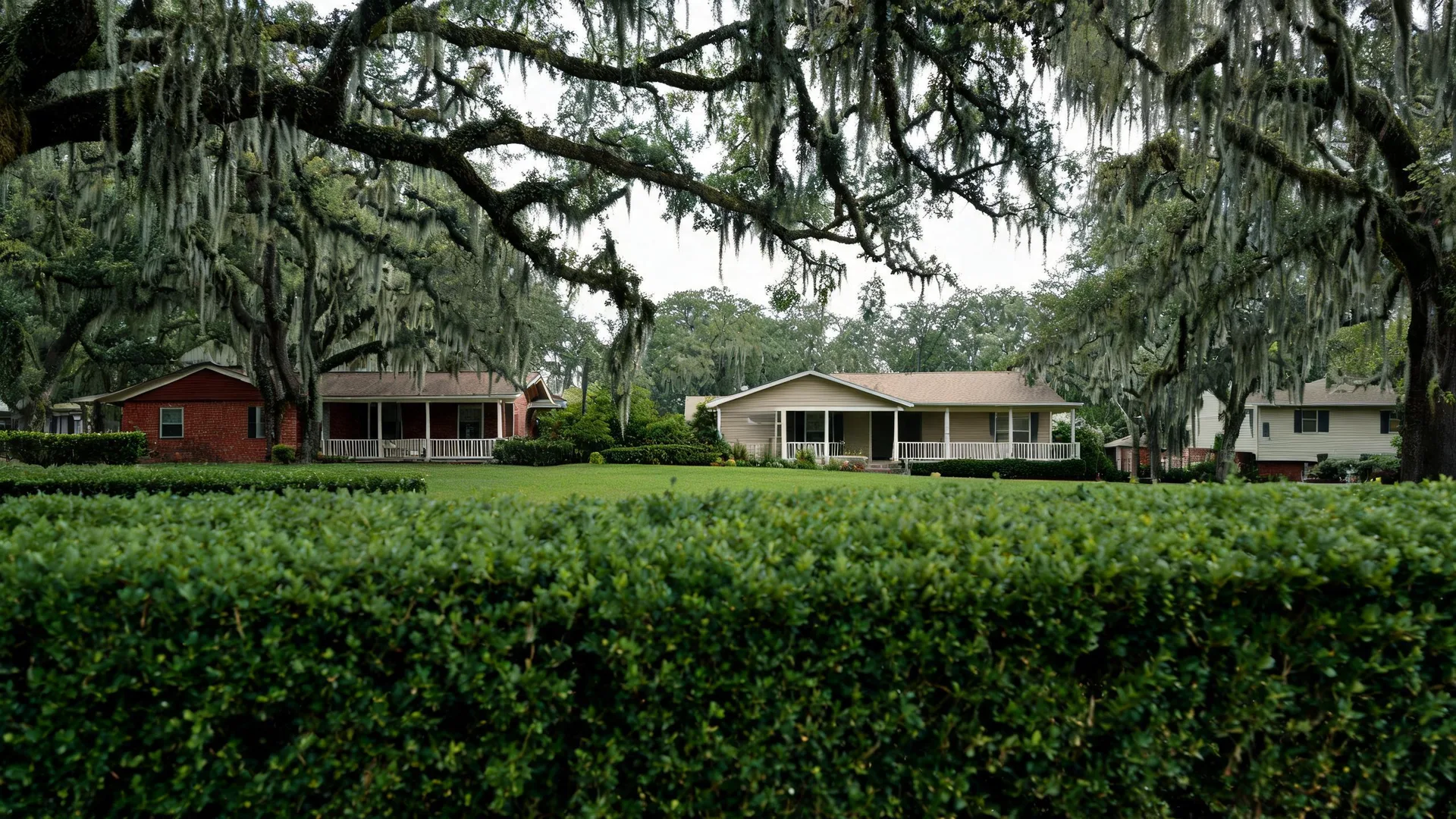







Single-story houses with covered porches sit behind a mowed lawn and a long trimmed hedge, framed by oak branches draped with Spanish moss.

AC Repair in Monroe, LA

Tell us about the job

Takes about a minute. No obligation.

RepairCentral ACOuachita Parish, LA
Step 1 of 2

What ZIP code is the job in?

Ouachita Parish saw 140 severe weather events between 2015 and 2024. Most of that was wind, 86 events, the kind that drives branches and debris into an outdoor unit. Hail hit 39 times in the same stretch, and hail can bend fins and crack a fan blade without stopping the unit from running that day. Add 8 tornadoes and 2 tropical storms or hurricanes in that span, and it is worth asking what your condenser has already been through. A unit that still turns on can be running with a damaged coil or a bent fan, working harder than it should. If a storm has come through your yard, that is reason enough to have it looked at.

6 months
May through October, your air conditioner is on duty
92°F
the average summer afternoon it cools against
39 hail events
in ten years, and hail bends the fins on outdoor coils
86 wind events
in ten years, and wind drives debris into outdoor units
Isometric cutaway illustration of a single-story house showing interior rooms with ductwork and an air handler, connected by refrigerant lines to an outdoor condenser unit on the left.
Your air conditioner works hardest from June through September.

NOAA nClimDiv, 1991–2020 normals

Your AC runs six months a year here, May through October, with afternoon highs averaging 92°F in June, July and August.

A dew point averaging 70°F those months keeps the system working to pull moisture out of the air, not just cool it.

Cooling starts in May. Problems from last October show up the day it turns back on.

Cooling runs May through October
Climate zone 3A
Power here costs 12.03 cents per kilowatt-hour
Newer Homes, Newer SystemsHalf the homes in Ouachita Parish were built in 1983 or later.

A repair that only patches the symptom tends to fail again once the afternoons hit their stride. Six months of running from May through October does not leave this unit much downtime to show a problem before the next hot stretch finds it. A tech who checks the refrigerant charge, the condenser fan, and the coil before closing it back up will catch what a quick fix skips. Ask what was actually tested, not just what was replaced.

If a storm has come through your yard, get it checked before the next repair call

A unit that still turns on after wind or hail isn't the same as one that's fine. If your yard has taken a hit in the last few years, have the coil and fan looked at now, before a damaged one turns into a failed one.

Find a contractor
A man in a cap, brown shirt and tan work pants, seen from behind, carries a canvas tool bag up steps toward a green front door of a gray clapboard house with a potted shrub beside it.
An outdoor residential air conditioning condenser unit mounted on a concrete pad, surrounded by gravel with a blue sky in the background.

What Trouble Looks Like Before It's a No-Cool Call

Most AC trouble announces itself before the unit quits outright. Warm air out of the vents while the thermostat calls for cool usually points to a refrigerant leak or a compressor that is losing its grip. Short cycling, where the unit kicks on and off every few minutes instead of running a full cycle, wears out the parts that handle starting the hardest: the capacitor and the contactor. A hissing or bubbling sound near the lines means refrigerant escaping somewhere it shouldn't. Water pooling at the indoor unit usually means the condensate drain is clogged, and if that line backs up far enough the system will shut itself off to keep from flooding the house. Ice on the refrigerant lines looks like the system is working fine underneath, but ice forms when airflow or charge is low, and running it iced up longer just stresses the compressor. A musty smell when the system kicks on points to mold in the ductwork or on the coil. None of these mean the unit is done. They mean something inside it needs a tech's attention before it takes another part down with it.

A Low Charge Doesn't Stay Put

A system low on refrigerant still blows cold air, just not as cold, so it keeps running to chase the setpoint. The compressor runs hotter and longer than it was built for. Left alone, that heat breaks down the oil that lubricates it, and a compressor failure turns a refrigerant top-off into a full replacement.

A Failing Capacitor Takes the Motor With It

A weak capacitor makes the fan motor or compressor strain to start instead of kicking on clean. Every hard start heats the motor windings a little more than the last one. A capacitor is a simple swap. A motor that's been straining against a bad one for weeks might not be.

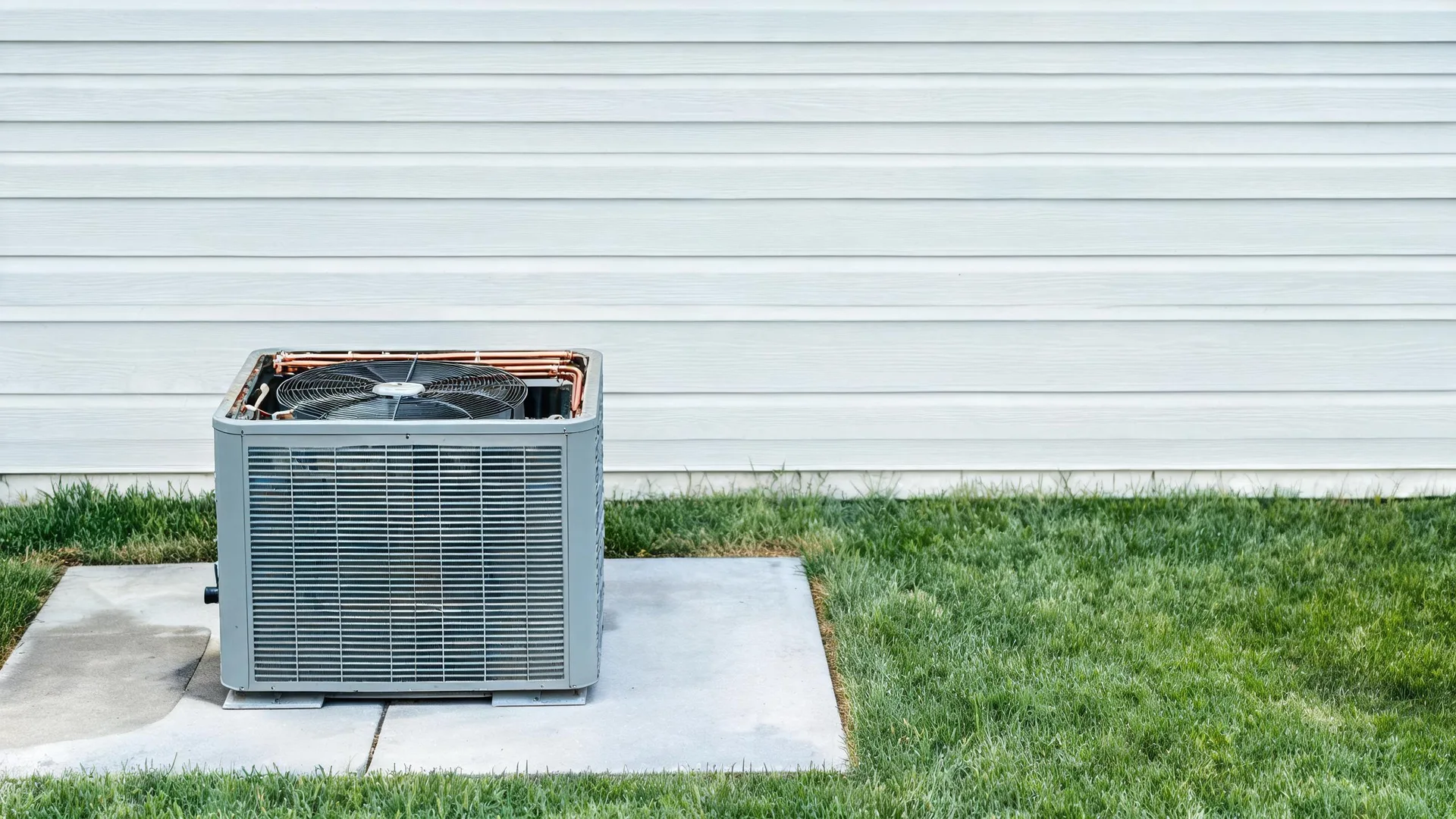
An outdoor air conditioning condenser unit positioned beside a blue-sided house at sunset.

A new air conditioner would cut about $60 a year off cooling for a typical Ouachita Parish home.

  • A new one at the federal minimum, 14.3 SEER2$400 a year
  • An older air conditioner$460 a year

Estimates for a typical Ouachita Parish home, compared with an older unit built to the previous federal minimum, from EIA household energy data, Louisiana fuel prices and NOAA climate normals. Your home will differ.

Repair makes sense when a part like a capacitor or contactor has failed.

Replacement makes sense when the compressor has failed or the system uses R-22 refrigerant, which is no longer made.

At some point every AC owner asks whether a repair is worth it or whether the money should go toward a new system instead. Age alone doesn't answer that. What matters more is what's actually failed and what it did on the way down. A blown capacitor or a bad contactor is cheap to replace and doesn't say anything bad about the rest of the unit. A compressor that seized because it ran low on charge for months is a different story, because the compressor is the part you can't reasonably replace on its own. The other thing worth asking is how the unit has been treated, not just how old it is. A system that's had its coil cleaned and its charge checked every so often tends to fail one part at a time, in ways a tech can fix at the house. One that's been ignored tends to fail in ways that take the compressor with it.