





Two white Southern-style homes with wraparound porches lit by landscape lighting at night, flanked by live oak trees hung with Spanish moss.

Mini Split Installation in Abbeville, LA

Tell us about the job

Takes about a minute. No obligation.

New system or replacementMini-splitVermilion Parish, LA
Step 1 of 2

What ZIP code is the job in?

Most homes in Vermilion Parish heat with electricity, 75.5% of them. A mini split fits right into that picture, since it runs on electricity too and doesn't need a gas line brought in or hooked up. Utility gas heats 21.3% of homes here, and if yours is one of them, a mini split still works as a way to add cooling or to heat a room without running ductwork to it. Either way, you're not fighting the house to make it work.

5 months
November through March, your system heats
7 months
April through October, it cools
46°F
the average winter night it heats against
90°F
the average summer afternoon it cools against
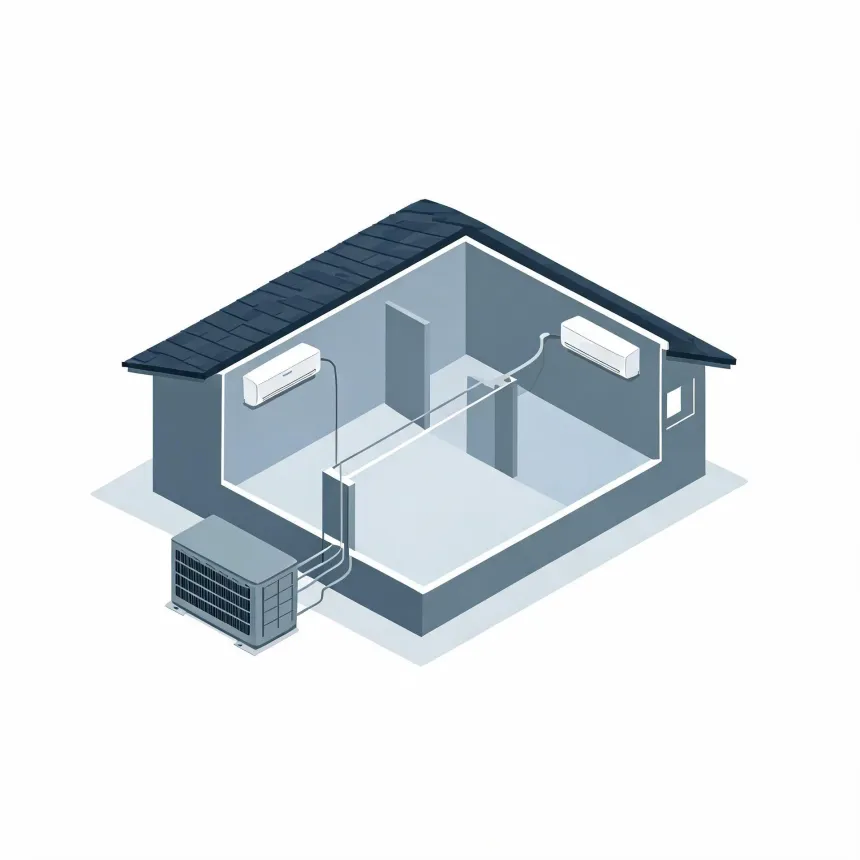
Isometric illustration of a cutaway house showing two wall-mounted mini-split indoor units connected by line sets to a single outdoor condenser beside the exterior wall.
Your system heats November through March and cools April through October.

NOAA nClimDiv, 1991–2020 normals

A mini split in Abbeville runs cooling seven months a year, April through October, with afternoon highs averaging 90°F through the summer.

Sizing it right matters more here than in places where the system gets a break.

A standard mini split handles this heat fine

Power costs 11.73 cents a kWh statewide
Cooling runs April through October
Summer afternoons average 90°F

Half the homes in Vermilion Parish were built in 1983 or earlier, half in 1983 or later, and that spread doesn't change what a mini split needs to do. A properly sized unit cools a room whether the house is older or newer. Mobile homes make up 19.1% of the housing here, and for those a mini split is worth a look too, since it doesn't ask for ductwork the home may not have room for. Outside of matching the unit to the space, there's nothing about these houses that calls for a bigger system or a special one.

A standard mini split is the right call for Abbeville

Vermilion Parish sees its share of severe weather, including wind, hail and the occasional tornado. None of that changes what a mini split needs to do once it's installed. What it does affect is the power behind it. A lot of Louisiana households lost power for a day or more in 2024. A mini split needs electricity to run, same as the rest of your home, and that's worth planning around rather than something a bigger or pricier unit fixes.

Find a contractor
A man in a cap, long-sleeve shirt and brown work pants carries a worn canvas tool bag up porch steps toward a green front door, with a potted shrub beside the entry.
A white mini-split air conditioner outdoor condenser unit mounted on metal brackets against a beige stucco exterior wall, with a blue sky and scattered clouds in the background.

Put it in before April asks anything of it

Seven months of cooling wears on a system here, April through October. Get a new mini split in before April and it's running under full load from day one, not catching up to a heat wave that's already arrived. March is the month to have it done.

Ask what each room needs, not just the house

A contractor should size each indoor head to the room it serves, based on that room's square footage, window area and sun exposure. A single number for the whole house tells you a sales pitch is coming, not a proper load calculation.
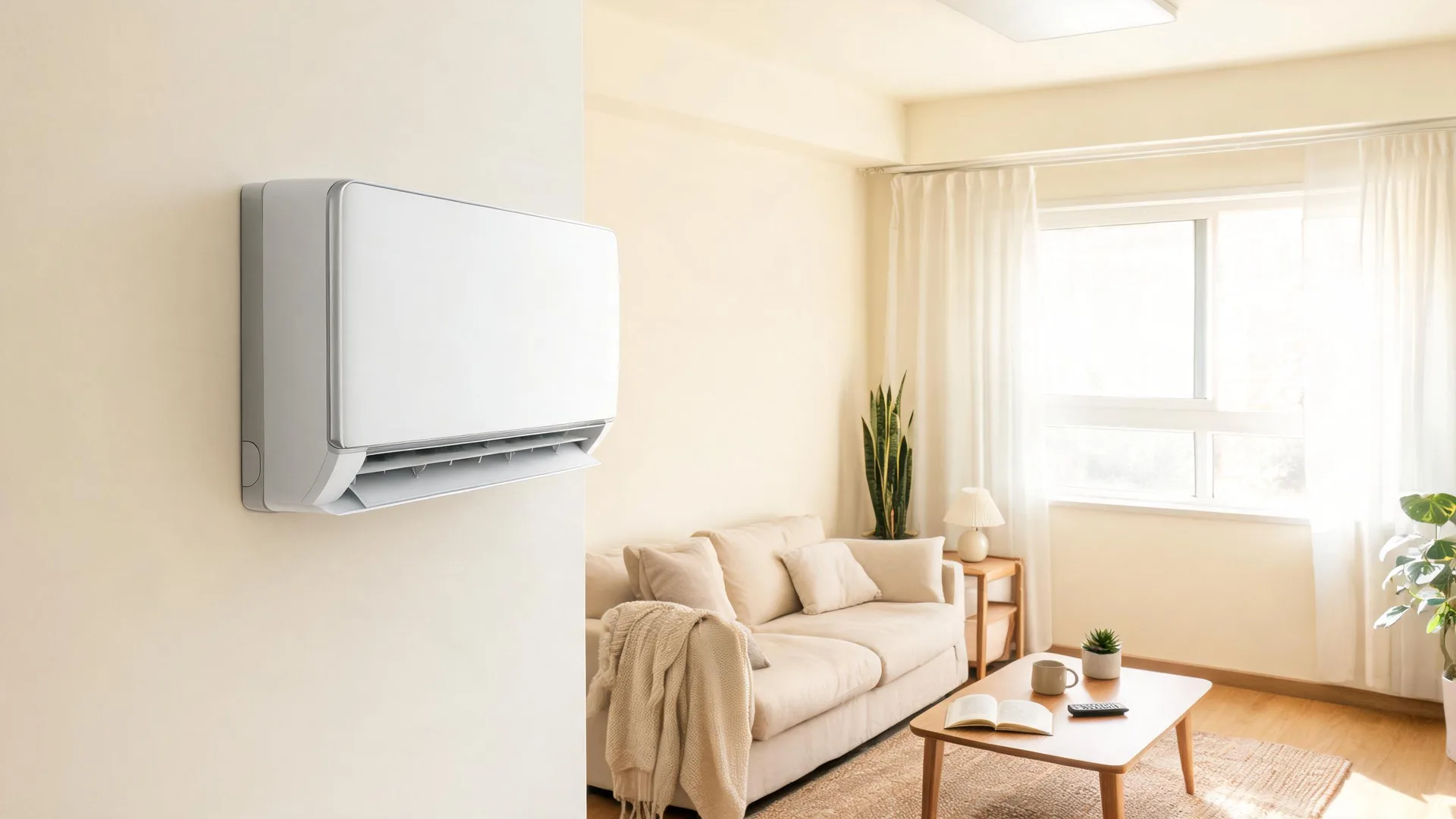
Ask how many indoor heads one outdoor unit can run

Some outdoor condensers run one indoor head, others run several off the same unit. Running too many rooms off one condenser means the whole system slows down when several heads call for cooling at once. Ask how that outdoor unit performs when every zone is running at the same time, not just one.

If you're replacing a central system, the old equipment doesn't just get unplugged and left. The refrigerant in that system has to be recovered before anything gets cut apart or hauled off, and that's a licensed step, not an optional one. Ductwork is a separate question. If you're switching to a mini split because the ducts were never any good, they can stay in the walls unused, or get pulled out if you're reclaiming the space. Either way, removing the old system is a small piece of the job next to sizing and installing the new one.

What drives the price on a job like this is mostly how many indoor heads it takes and how far each one sits from the outdoor unit. A single head on a wall near the condenser is a short job. Spread heads across different rooms and you're running a line set and a drain line to each one, with a wall penetration that has to be sealed right or it leaks or rattles later. Where the outdoor unit ends up matters too. A tricky mounting spot, a long line run, or a condenser that has to sit somewhere out of the way all add labor. The equipment itself plays into it as well, since a unit built to hold its efficiency and run quiet costs more than a basic one. None of that is padding. It's refrigerant lines run clean, electrical done to code, and each head sized to the room it serves.