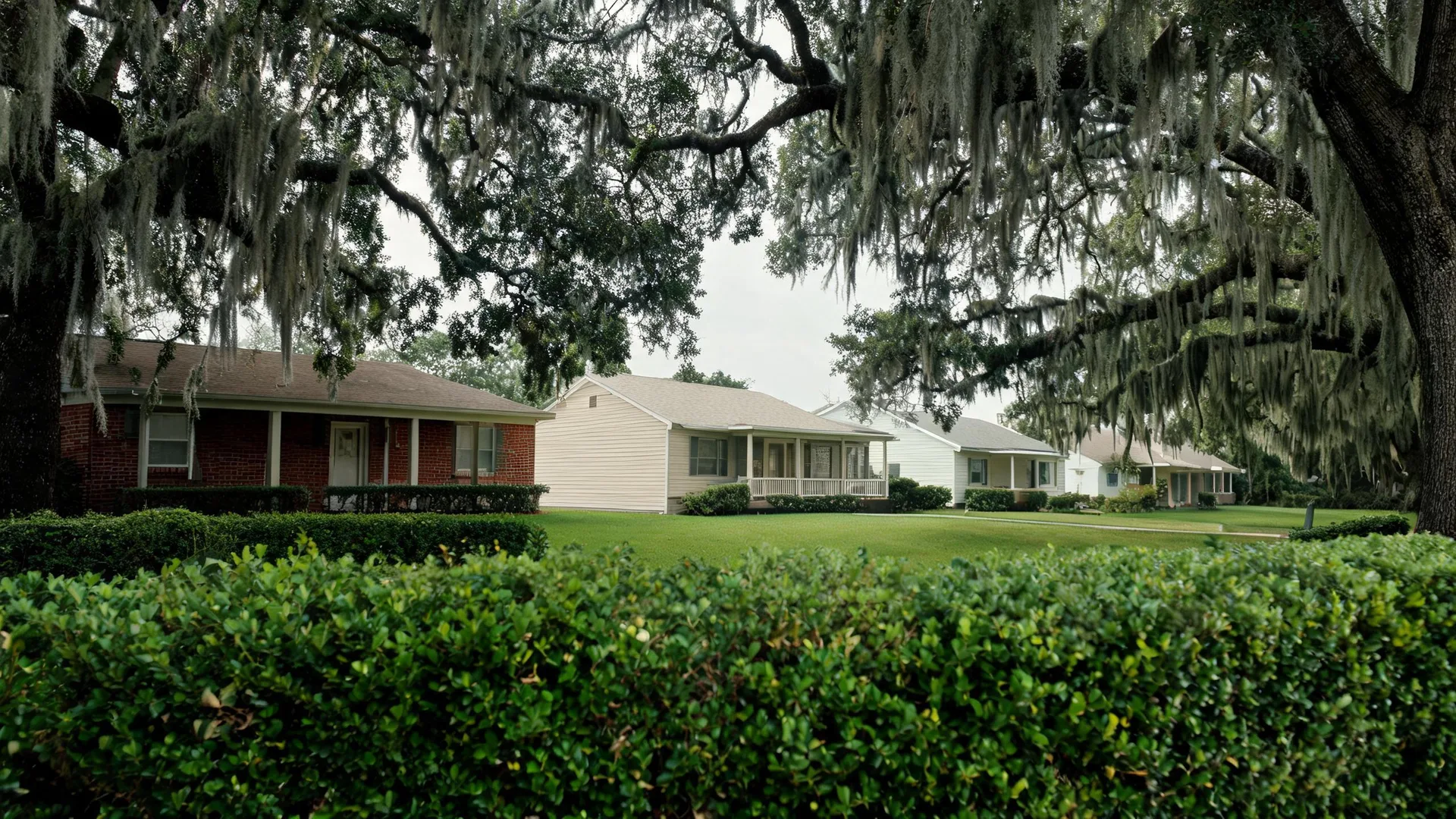
A row of single-story houses, one of red brick and others with pale siding, behind a mowed lawn and a tall trimmed hedge, framed by large oak branches draped with Spanish moss.

Mini Split Installation in Alexandria, LA

Tell us about the job

Takes about a minute. No obligation.

New system or replacementMini-splitRapides Parish, LA
Step 1 of 2

What ZIP code is the job in?

Electricity here runs cheaper than most places

Rapides Parish homes paid about 13.06 cents per kilowatt-hour in 2025, lower than most US counties. A mini-split in this parish still uses less power to move a degree of heat than the electric systems most homes already run on.

The install decides what shows up on the bill

A mini-split sized and set up right for this house will use less power to do the same job all year. Since heat here runs on electricity already, the difference between a system that fits the space and one that doesn't shows up every month, not just in summer.

5 months
November through March, your system heats
7 months
April through October, it cools
41°F
the average winter night it heats against
92°F
the average summer afternoon it cools against
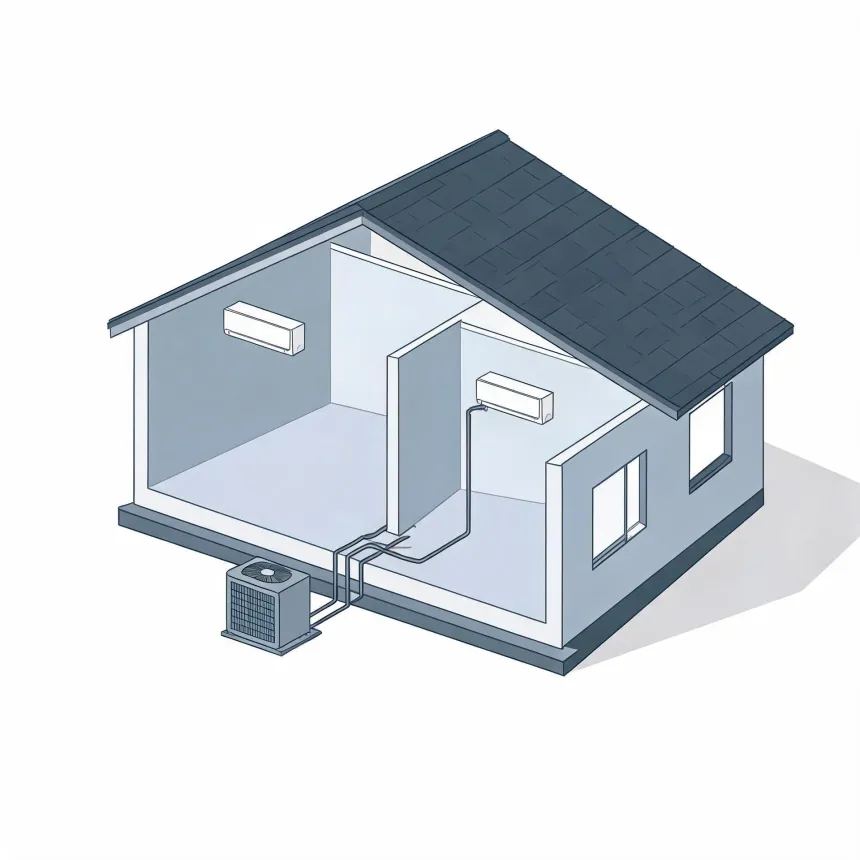
Isometric cutaway illustration of a small house with a dark shingled roof, showing two wall-mounted indoor units connected by lines running to an outdoor condenser unit beside the building.
Your system heats November through March and cools April through October.

NOAA nClimDiv, 1991–2020 normals

Cooling starts in April here, and a mini-split put in during March goes to work on day one.

Installing before the season means the job happens on your schedule, not in the middle of a hot spell.

Seven Months of WorkAfternoon highs average 92°F here through June, July and August, with a dew point near 71°F, so a mini-split runs longer and against harder air than it would almost anywhere else.

Seven out of ten homes in Rapides Parish heat with electricity already. That's not gas, not propane, electric resistance heat or an older heat pump, paying whatever that costs to make warmth. A mini-split does the same job on the same kind of power, usually for less. Since the fuel is already electric, swapping to a mini-split doesn't mean rewiring the way a house handles heat, just choosing equipment that moves it more efficiently. For most homeowners here, that makes a mini-split a replacement, not an experiment.

Get the Install That Keeps Your Bill Low

Power here already costs less than most places. A mini-split that's sized and installed right keeps it that way, bill after bill. The equipment and the install are what decide which one you get.

Find a contractor
A white outdoor air conditioner condenser unit mounted on metal wall brackets against gray horizontal siding, with a blue sky and white clouds behind it.

Size It for Seven Months, Not Seven Days

Seven months of work a year adds up fast. Get the size wrong and the unit shows up on more days than it needs to, pushed harder each time. Ask whoever bids the job to size it to this house, not to whatever's cheapest to install. The right size cycles on and off the way it's supposed to. The wrong one runs long and still doesn't keep up.

Where the Lines Run Sets the Price

A mini-split needs a line set between the outdoor unit and each indoor head, carrying refrigerant, a condensate drain, and power. The shorter and straighter that run, the less it costs to install. Running line through an attic, under a slab, or through brick or block takes more time and more material than running it through open wall space, and that labor shows up in the bid.

One Head or Several Changes the Job

A single zone cooling one room is a different job from a multi-zone system feeding several rooms off one outdoor unit. Each extra indoor head needs its own line set and its own spot on the wall or ceiling, and the outdoor unit has to be sized to run all of them at once. More zones means more parts, more refrigerant to charge, and more time on the ladder.

Sizing a mini-split starts with a load calculation, not a tape measure around the room. A contractor works out how much heat the space gains in summer and loses in winter, counting the windows, the insulation, the ceiling height, and which way the walls face. Square footage alone leaves out too much to be reliable. Two rooms the same size can need different size units if one has west-facing glass and the other doesn't. Oversize it and the unit cools the air fast, shuts off, and leaves the moisture behind, so the room feels clammy even at the right temperature. Undersize it and it runs flat out without ever catching up on the hottest days. The right size runs long steady cycles, pulls the moisture down with the temperature, and shuts off when the room is actually done.

Rapides Parish sits in climate zone 2A, a hot and humid zone where cooling drives the load most of the year. Any mini-split installed here has to meet the federal minimum for that kind of system, which counts as a split system under the standard. That means at least 14.3 Btu of cooling for every watt-hour it uses, and at least 7.5 Btu of heating for every watt-hour on the heating side. Those numbers set the floor, not the goal. A unit built right at that floor and one built well above it can carry the same rating sticker, but one of them works closer to its limit through a long, humid summer here. A federal tax credit is available on qualifying equipment, which can offset some of the cost of going above the minimum. What the floor guarantees is that the system is legal to install in this parish. It doesn't guarantee it's sized or built for this house.