





Night view of illuminated white Southern-style houses with wraparound porches beneath Spanish moss-draped oak trees.

Mini Split Installation in Bossier City, LA

Tell us about the job

Takes about a minute. No obligation.

New system or replacementMini-splitBossier Parish, LA
Step 1 of 2

What ZIP code is the job in?

Bossier Parish saw 217 severe weather events between 2015 and 2024. Most of that was wind and hail, 116 damaging wind events and 70 hail events, with 19 tornadoes mixed in. A mini-split's outdoor unit sits outside through all of it, exposed to whatever comes through. Hail dents the cabinet fins and bends them if there's no guard around it. Wind-blown branches and debris do worse. Power cuts follow the same storms, and 49% of Louisiana households went at least 24 hours without power in 2024. Where that unit goes, and what's mounted around it, is worth deciding before install day, not after a storm.

5 months
November through March, your system heats
5 months
May through September, it cools
38°F
the average winter night it heats against
92°F
the average summer afternoon it cools against
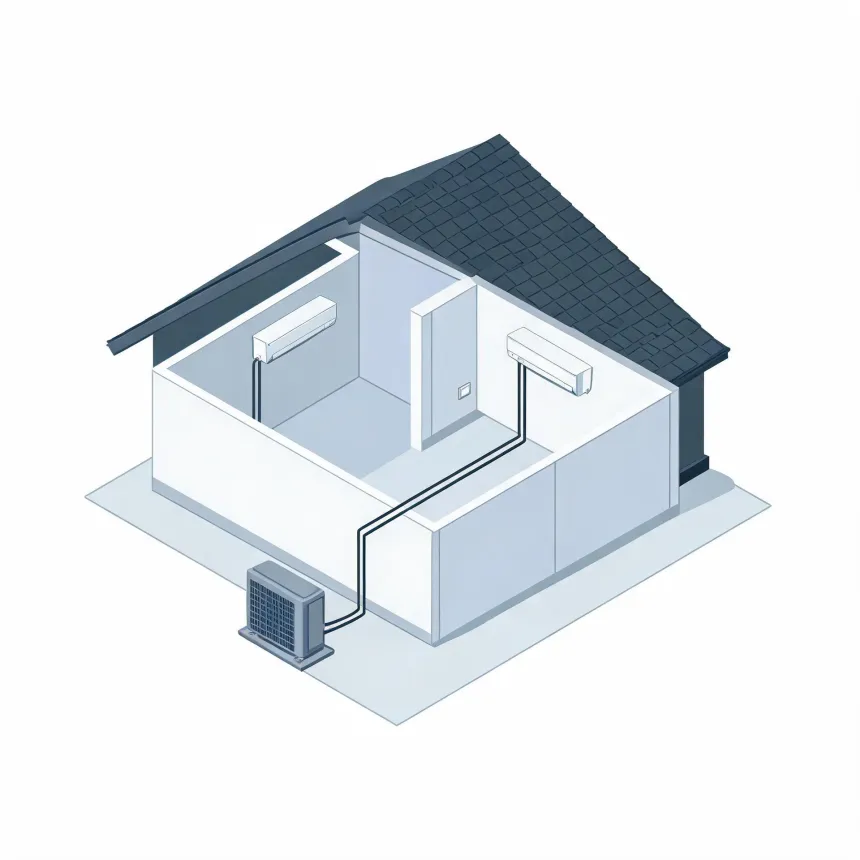
Isometric cutaway illustration of a small house with a dark shingled roof, showing two wall-mounted indoor air conditioning units in separate rooms connected by lines to an outdoor condenser unit on the ground outside.
Your system heats November through March and cools May through September.

NOAA nClimDiv, 1991–2020 normals

June through August, afternoon highs here average 92°F with a dew point near 70°F.

A mini-split sized for a milder climate will run flat out most of the summer and still fall behind.

Hail and wind come through before summer even starts, so May is too late to be picking a system

Cooling runs May through September
Summer afternoons average 92°F
70 hail events from 2015 to 2024
Most Homes Run On Electric HeatElectricity heats 56.2% of homes here, gas 41.4%.

Electricity here runs 13.32 cents a kilowatt-hour, lower than most of the country. That helps, but a mini-split still has to earn its keep against a Bossier City summer. A unit sized right and installed clean will use a lot less power to hold the same temperature than one that's undersized or leaking charge. Over a year of heavy summer use, that difference shows up on every bill, not just the big ones.

Decide where the unit goes and how it's protected before the install, not after a storm

Plan the outdoor unit's spot and its guard before install day. A mounting location with cover from wind-blown debris, and a hail guard around the cabinet, costs nothing to ask for now. Storms knock out power along with everything else, so talk through what happens to heat and hot water when that happens, and get it settled while the install is still being planned.

Find a contractor
A white mini-split air conditioner outdoor condenser unit mounted on metal brackets against a beige stucco exterior wall, with a blue sky and scattered clouds in the background.

Five Months On, Every Year

Cooling runs about five months here, May through September. For five months the outdoor unit is on most of every day, not just in the afternoon heat. That's a long stretch of load on the compressor, long before anyone thinks about a second summer. Size the system for what June, July and August actually ask of it, not for a shorter season somewhere else.

The Old Unit Has To Come Out Clean

If the old system used a line set and it's not being reused, the lines get reclaimed and capped, and any refrigerant left inside has to be recovered, not vented. An old condenser bolted to a pad usually just unbolts, but one mounted on a wall bracket leaves holes and sometimes a stain where it sat. Indoor air handlers or ducted coils come with their own drain line and condensate pump, and both need to come out or get tied into the new system cleanly.
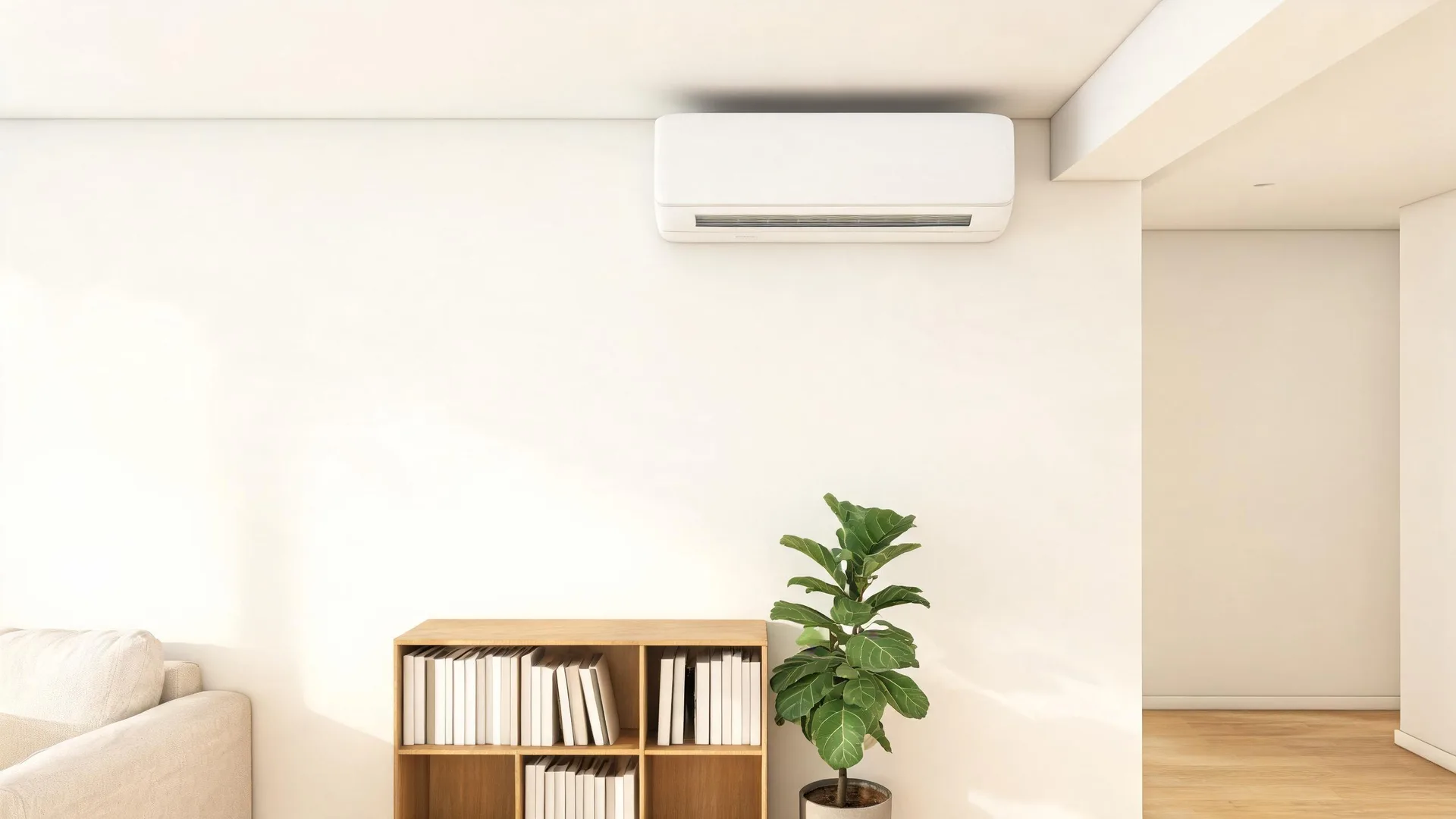
What Gets Left Behind Matters

A line set run through a wall leaves a penetration that needs sealing once it's either reused or abandoned. Old mounting brackets and pads left in place can work for the new outdoor unit if they're sound, but a cracked pad or rusted bracket is worth replacing rather than building on. Any electrical disconnect or whip from the old system gets checked against what the new unit actually draws, since reusing it without checking is how a unit ends up on the wrong breaker.

Sizing a mini-split comes down to matching the unit's output to the heat gain in the space it's cooling, not to the square footage alone. A contractor works through a load calculation that accounts for window area and orientation, insulation, ceiling height, and how many people and appliances are putting heat into the room. Skip that math and guess instead, and the system fights the space every day it runs. Too big, and the unit cools the air fast, shuts off, and leaves the humidity behind, so the room feels cold and damp at the same time. Too small, and the compressor runs constantly trying to reach a setpoint it can't hold, which wears it down well ahead of schedule. The right size cycles on, pulls both heat and moisture out, and shuts off, the way the equipment is built to work.

Bossier Parish falls in climate zone 3A, warm and humid with a long cooling season. A mini-split going in here has to meet the federal minimum for that kind of system: at least 14.3 Btu of cooling for every watt-hour it uses over the summer, and at least 7.5 Btu of heating for every watt-hour over the winter, if it was built on or after January 1, 2023. That's the floor, not a target, and it narrows what a contractor can legally install. A unit that clears those numbers is also likely to qualify for the federal energy efficiency tax credit, worth checking into before the install is finalized.