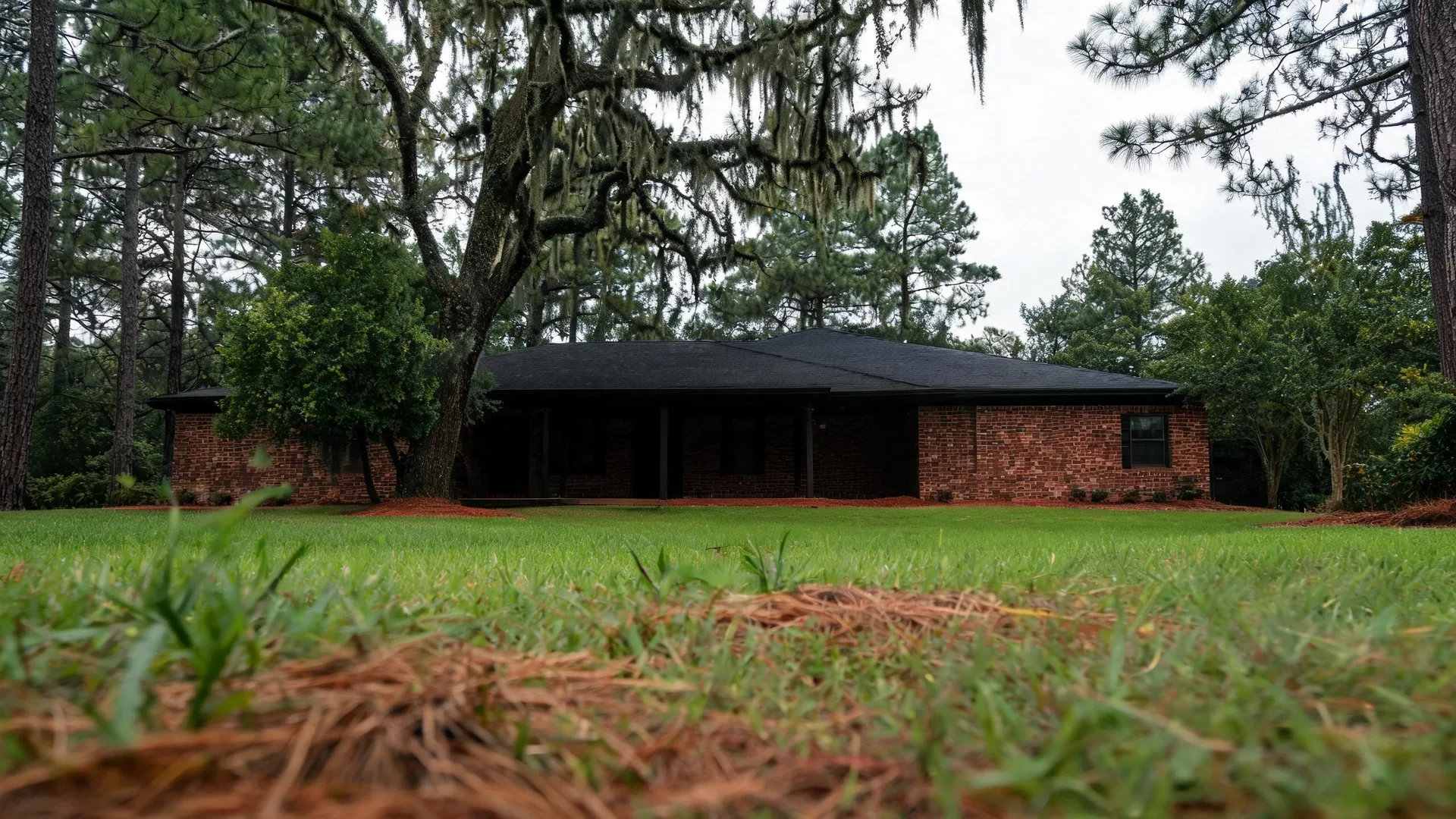




Single-story brick house with a dark shingled roof set behind a lawn and tall pine and moss-draped trees, photographed low to the ground with pine straw in the foreground.

Mini Split Installation in Houma, LA

Tell us about the job

Takes about a minute. No obligation.

New system or replacementMini-splitTerrebonne Parish, LA
Step 1 of 2

What ZIP code is the job in?

Electricity in Terrebonne Parish runs 11.67 cents per kilowatt-hour on average, cheaper than most US counties. That sounds like good news, and it is. But a mini-split here still runs for months at a stretch to keep up with the humidity, and every one of those hours shows up on the bill. A unit that moves heat efficiently costs less to run even at a low rate. One that struggles costs more no matter what the power company charges. The rate you pay is fixed. What you get for it depends on the equipment.

4 months
November through February, your system heats
7 months
April through October, it cools
48°F
the average winter night it heats against
90°F
the average summer afternoon it cools against
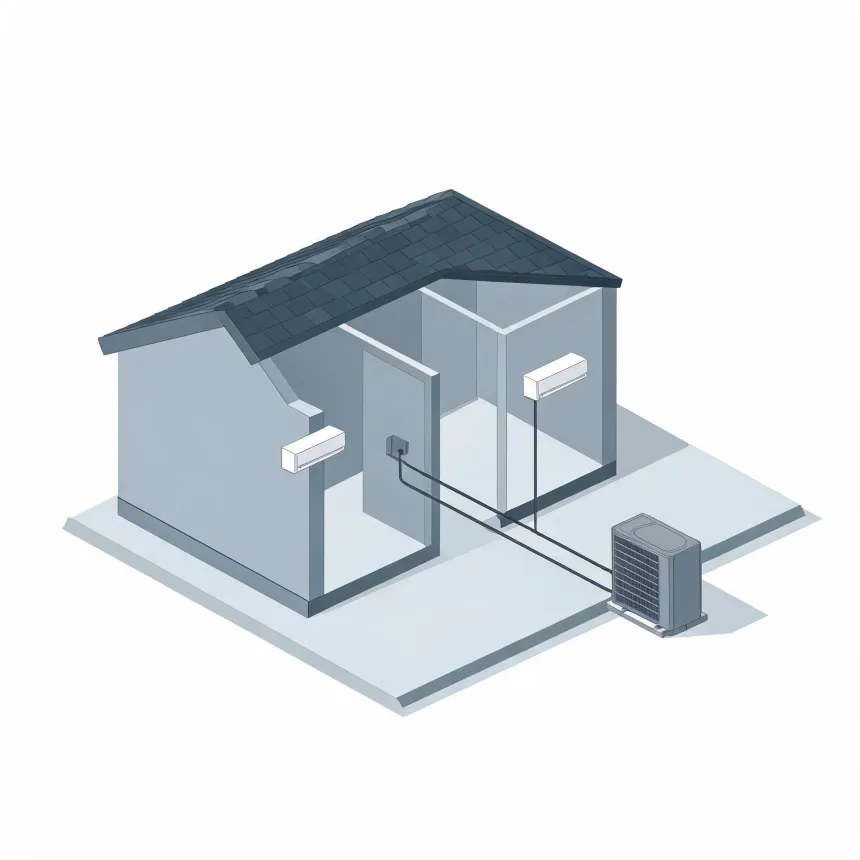
Isometric illustration of a cutaway gray house with a dark shingled roof, showing two wall-mounted indoor air handlers connected by line sets to an outdoor condenser unit on a pad outside.
Your system heats November through February and cools April through October.

NOAA nClimDiv, 1991–2020 normals

Cooling starts in April here and runs through October.

March is the month to get a mini-split installed, before the heat makes it urgent.

Seven months of ninety-degree afternoons is what this system is up against

Cooling runs April through October
Summer afternoons average 90°F
Power here costs 11.67 cents per kilowatt-hour

Electricity heats about two out of three homes in Terrebonne Parish. Gas accounts for most of the rest. A mini-split fits the electric side of that split without any conversion, since it runs on electricity to begin with and doesn't compete with a gas furnace for the job. That matters more here than in places where heating is the hard part, because in Houma the unit's real work is cooling, and cooling only runs on power. If the home is already wired for electric heat, adding or replacing a mini-split means working with a system the house is already built around, not against.

Pick the unit that makes the most of the rate you already have

The rate is set. What the equipment does with it is not. Ask the installer what SEER2 rating the unit carries before you sign anything. A higher rated system costs less to run every month it's cooling, and in Houma that's most of the year.

Find a contractor
A white mini-split air conditioner outdoor condenser unit mounted on metal brackets against a beige stucco exterior wall, with a blue sky and scattered clouds in the background.

This runs most months of the year, so the sizing has to be right the first time

Seven months of cooling a year adds up to a lot of hours on the compressor. Size the unit for this house, not for the one down the street. Too big and it short cycles, turning on and off without running long enough to pull the humidity down. Too small and it runs flat out all afternoon trying to catch up. Either way the wear lands on the same parts. Ask the installer to run a load calculation on this house instead of guessing off square footage.

Taking out the old unit is its own job

An old mini-split holds refrigerant under pressure, and that refrigerant has to be recovered before the lines get disconnected, not vented. The indoor head comes off its mounting plate, the outdoor unit comes off its bracket or pad, and the line set gets pulled unless the new system can reuse it. A wall sleeve from an old line set often gets reused too, but the hole may need to be resized for new lines.
What's worth checking before it's hauled off

A line set that's the wrong diameter or has kinks in it won't carry the new refrigerant correctly, so it usually gets replaced rather than reused. The electrical whip and disconnect box from the old outdoor unit may not match what the new one needs, especially if the new unit draws different power. Ask the installer what gets reused and what gets replaced, since that decides how much of the old installation stays in the wall.

The SEER2 number on the label tells you how much cooling the unit delivers for the power it draws, averaged over a season of real starts and stops, not just at full blast. A higher number means the compressor is doing more work per watt, which matters most in a unit that runs long hours rather than short ones. Two systems can cool the same room to the same temperature and still pull very different amounts of power to get there. The rating also reflects the whole system working together, the compressor, the indoor coil, the outdoor coil, not any single part in isolation, so swapping one piece later won't change the number on the label. It's worth comparing SEER2 across units before deciding, since the installed cost up front doesn't tell you what the unit will ask for every month it runs.

Terrebonne Parish saw 53 severe weather events between 2015 and 2024, and 28 of those were damaging wind. Hail hit 10 times in that same stretch, and tornadoes touched down 3 times. An outdoor compressor sits outside through all of it, exposed to wind-driven debris and hail in a way an indoor furnace never is. Where the installer sets the unit, and what if anything shields it, is worth deciding before the ground gets broken. Power loss is its own problem separate from the unit itself. Almost half of Louisiana households went at least 24 hours without power in 2024, and a mini-split with no backup power stops cooling or heating the moment the grid does.