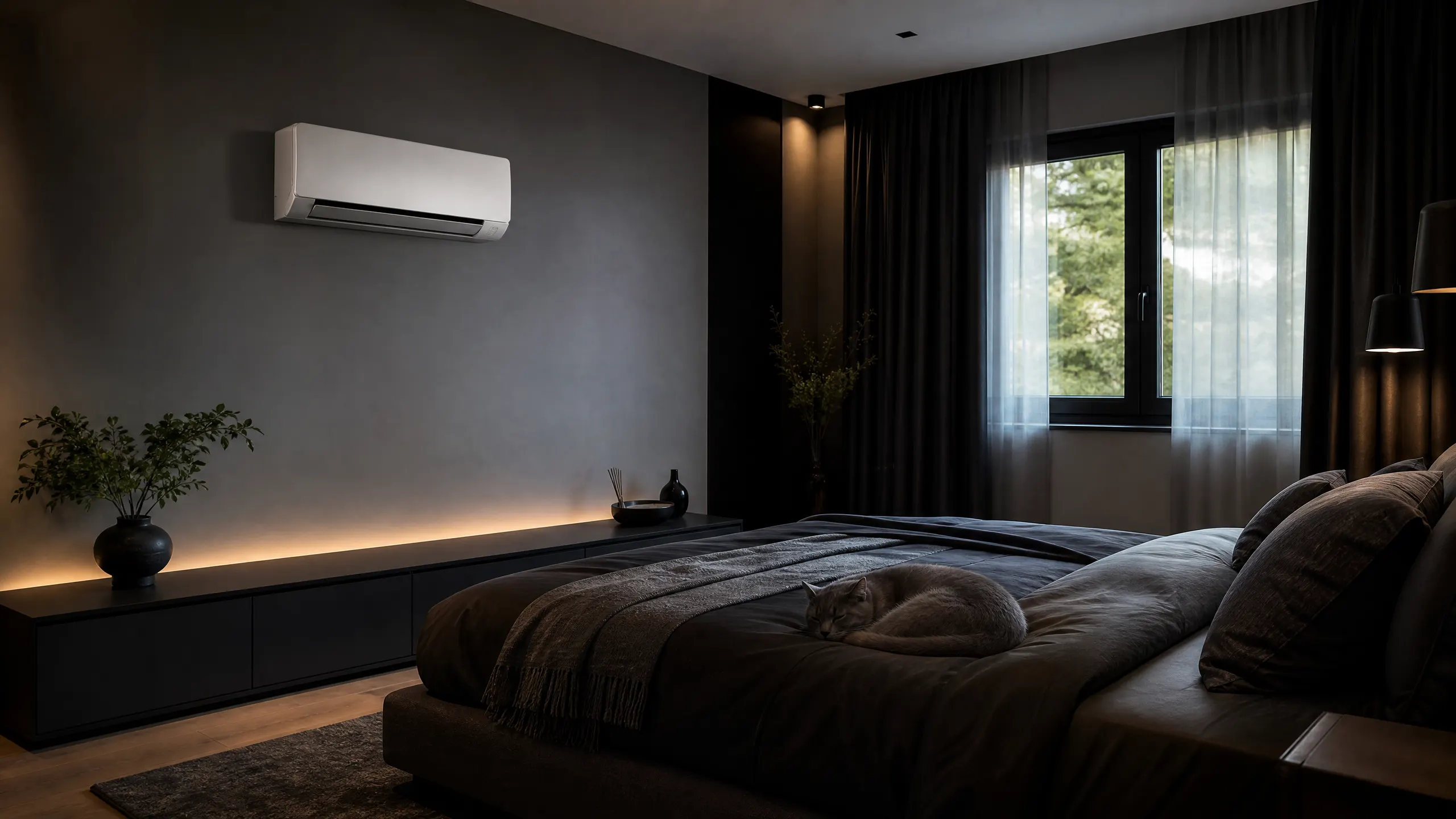




A modern bedroom with dark furnishings, a wall-mounted air conditioning unit, and a cat resting on a large bed.

Mini Split Installation in Jennings, LA

Tell us about the job

Takes about a minute. No obligation.

New system or replacementMini-splitJefferson Davis Parish, LA
Step 1 of 2

What ZIP code is the job in?

Most homes in Jefferson Davis Parish run on electric heat, 71.1% of them. A mini split fits right into that picture, since it runs on electricity for both heating and cooling. Gas heats about a quarter of homes here, and those houses usually have a furnace or boiler alongside any cooling equipment. If your home already heats with electricity, adding a mini split means you're not mixing fuel types or rethinking how the place is set up. It's working with what's already there, not against it.

5 months
November through March, your system heats
7 months
April through October, it cools
44°F
the average winter night it heats against
91°F
the average summer afternoon it cools against
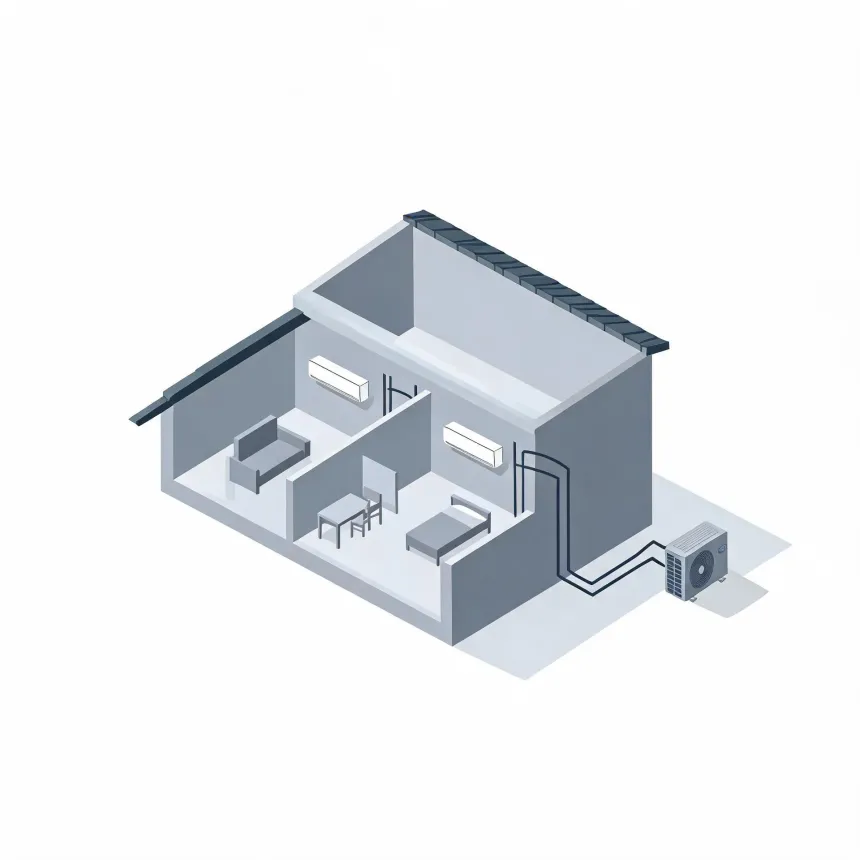
Isometric cutaway illustration of a gray house showing two wall-mounted indoor air conditioning units in separate rooms with furniture, connected by line sets to an outdoor condenser unit on a pad outside.
Your system heats November through March and cools April through October.

NOAA nClimDiv, 1991–2020 normals

A mini split sized too big will cool the room fast, then shut off before it pulls the moisture out of the air.

Getting the size right means measuring the room, not guessing from the one next door.

Jennings sees its share of storms. That doesn't change what size unit your home needs.

41 severe weather events from 2015 to 2024
49% of homes statewide lost power a day or more in 2024
19 damaging wind events from 2015 to 2024

Jennings falls in climate zone 2A, a hot and humid zone where cooling carries most of the load over the year. Any mini split installed here has to meet the same federal minimum as other split-system heat pumps. That means 14.3 SEER2 for cooling and 7.5 HSPF2 for heating, for units built from 2023 on. That floor narrows the field before you even start comparing brands. A federal tax credit is available on top of that for equipment that qualifies, which is worth asking about when you're pricing units.

The right size, not the biggest one, is what this job calls for

A standard-size mini split at the federal minimum efficiency will do the job here. There's no reason tied to this place to pay for more than that. Electricity runs 11.73 cents a kilowatt-hour for Louisiana homes, and a correctly sized unit is what keeps that bill in line, not an oversized or higher-tier model.

Find a contractor
A white outdoor air conditioner condenser unit mounted on metal wall brackets against gray horizontal siding, with a blue sky and white clouds behind it.

What runs for years and what runs hard

A mini split runs whenever the room calls for it, not on a schedule, so over a full year it cycles on and off far more than a window unit ever did. That's normal wear, and it's why the question worth asking a contractor isn't just what a system costs installed but what it takes to keep it running right. Ask who services the outdoor unit and how often the indoor filter needs a rinse, because a dirty filter makes the whole system work harder for the same result. Ask about the line set too, since a longer run between the outdoor compressor and the indoor head means more refrigerant and a harder job if something ever needs repair. A system that runs for years without strain is one that was sized and installed correctly from the start, not one with the most features.

The old system doesn't have to come out first

A window unit or existing ductless head can keep running while the new mini split goes in. The outdoor compressor mounts on its own pad or bracket, and the indoor head goes on its own wall space, so there's no point where the home is without cooling or heat.
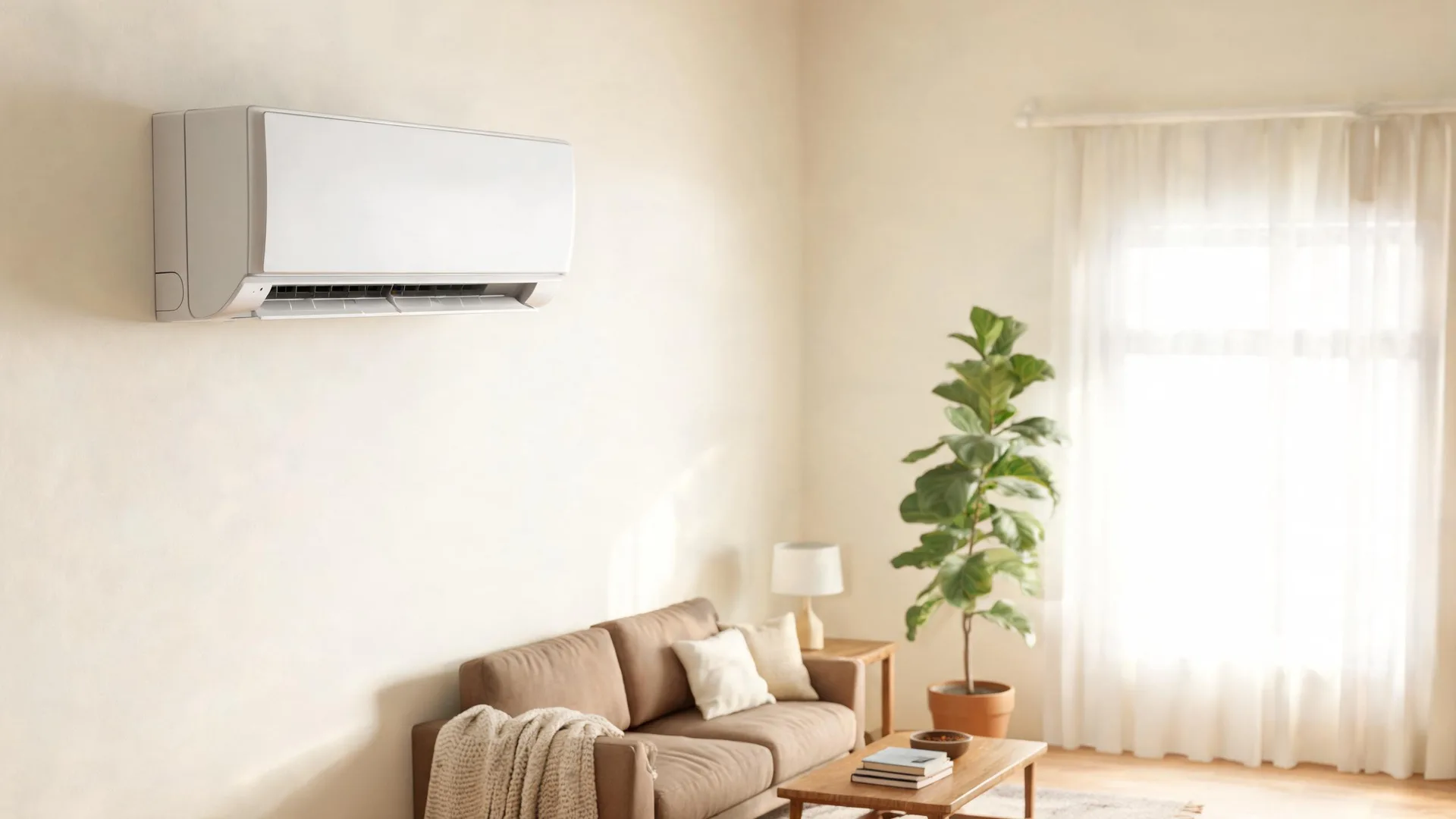
What happens to it depends on what it is

A window unit usually just gets pulled out and hauled off. Old ductwork tied to a central system is a different question, since it may stay in place for another part of the home or get capped off if the mini split is taking over that job entirely. Ask what the plan is for anything currently in place before work starts.

What a mini split costs to put in comes down to the work the installer has to do, not just the equipment on the truck. The line set between the outdoor compressor and the indoor head has to be run through a wall, and how far it travels and what it passes through changes the labor. A straight shot through one wall is a different job than routing around framing or up through a second floor. The electrical side matters too, since the outdoor unit needs its own dedicated circuit, and if the panel doesn't have room for one, that's added work before the mini split even gets mounted. Adding more than one indoor head off a single outdoor unit changes the job again, since each head needs its own line set and its own path. None of that shows up in a price until someone has actually looked at the walls and the panel.

Installation day starts outside, not in. The outdoor compressor gets mounted on a pad at ground level or a bracket on the wall, somewhere with clear airflow on all sides. Inside, the installer picks a spot on the wall for the head, usually high up, with a clear path back to where the line set will exit. That line set, the refrigerant lines, the wiring and the condensate drain, gets run through a single hole bored through the wall, then sealed up around it. Once the indoor and outdoor units are connected, the lines get purged and pressure tested before any refrigerant is charged, since a leak found now is a lot easier to fix than one found later. The last step is running the system through both heating and cooling to check it responds and holds temperature before anyone calls the job done.