





A lit antebellum-style two-story house with white columns and a wraparound porch at night, framed by live oak trees draped in Spanish moss.

Mini Split Installation in Kenner, LA

Tell us about the job

Takes about a minute. No obligation.

New system or replacementMini-splitJefferson Parish, LA
Step 1 of 2

What ZIP code is the job in?

Jefferson Parish actually pays less for power than most US counties, 12.18 cents per kilowatt hour in 2025. That helps, but it only goes so far when a mini split runs nearly year round here. A unit that sits a few degrees off its rated efficiency will pull extra power on every one of those months, and with Kenner's cooling load that adds up faster than it would somewhere milder. The rate is low. How many hours the system runs and how hard it works during those hours is what decides the bill.

4 months
November through February, your system heats
7 months
April through October, it cools
47°F
the average winter night it heats against
90°F
the average summer afternoon it cools against
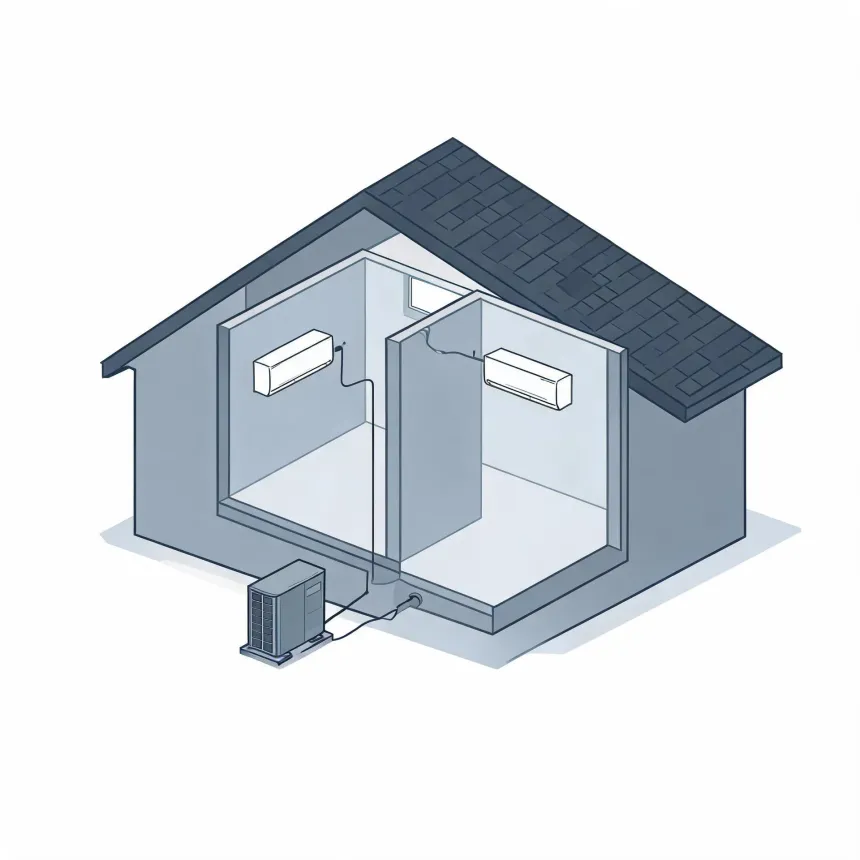
Isometric line illustration of a cutaway house with two rooms, each with a wall-mounted indoor air conditioning unit connected by lines to an outdoor condenser unit on the ground outside.
Your system heats November through February and cools April through October.

NOAA nClimDiv, 1991–2020 normals

Cooling runs April through October here, seven months straight.

Get a mini split installed before April and it's running at its best from the first hot day, not limping through install delays in the middle of summer.

Seven months of cooling, at 90 degrees, is a lot to ask of one machine

Cooling runs April through October
Summer afternoons average 90°F
Power here costs 12.18 cents per kilowatt-hour

Jefferson Parish recorded 71 severe weather events between 2015 and 2024, including 38 with damaging wind, 13 tornadoes, and 11 hail events. A mini split's outdoor unit sits through all of that, so where it gets mounted matters. A spot away from the open yard, with something solid to break the wind, holds up better than a corner exposed on every side. Power loss is the other half of it. Close to half of Louisiana households went at least a day without power in 2024, and with electric heat, that means your heat and your hot water both ride on the grid. Worth asking your contractor how the system handles a restart once power comes back, and whether a backup plan makes sense for your home.

Get it sized and installed right, and efficiency stops being a number on a brochure

Sizing and installing this system right is what keeps that efficiency rating real once it's running on your wall. Get the load calculation and the setup done correctly and the unit holds its rated output on every one of those bills.

Find a contractor
A man in a cap, long-sleeve shirt and brown work pants carries a worn canvas tool bag up porch steps toward a green front door, with a potted shrub beside the entry.
A white mini-split air conditioner outdoor condenser unit mounted on metal brackets against a beige stucco exterior wall, with a blue sky and scattered clouds in the background.

One sizing decision, seven months of living with it

Seven months of cooling a year means the sizing decision only happens once before the work starts. A mini split that is a half ton too big or too small for the space spends more of those months running poorly, and there is no mild stretch here to make up for it. Ask for a load calculation on the room or zone it is serving, not a guess based on square footage alone. Get that number right at install and the unit spends its seven months doing what it was built to do.

Ask what SEER2 and HSPF2 numbers the quote is built on

Every mini split system carries an efficiency rating, and the contractor's quote should name the actual numbers for the unit being installed, not just the brand's top-of-line figure. A single-zone system and a multi-zone system with the same outdoor unit can carry different ratings once lines, heads, and zoning are factored in. Ask for the rating of the system as configured for the rooms it will serve, not the rating printed on the box.
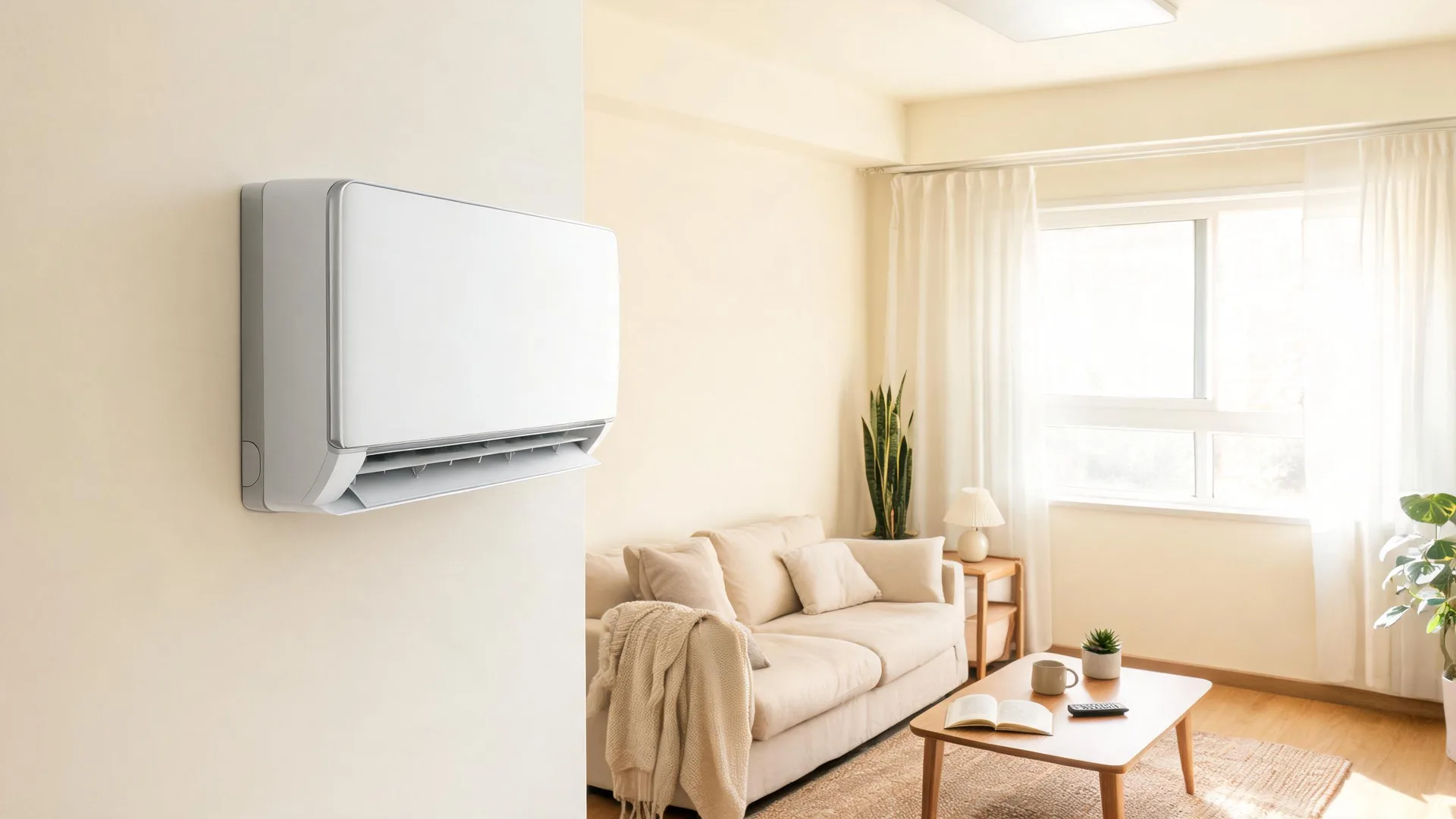
Ask how many indoor heads the outdoor unit is rated to run

A multi-zone outdoor unit has a limit on how many indoor heads it can run at once, and that limit is lower than the number of ports it has. Load up every port at the same time and the system splits its capacity across all of them, so each room gets less than it would running alone. If the plan is to run every zone on hot days, ask whether the outdoor unit was sized for that or just for the total number of heads.

That rating on the label, SEER2 for cooling and HSPF2 for heating, is a lab number. It tells you what the system can do under set conditions, not what it will do mounted on your wall. The compressor, the one part doing most of the work, only hits that number when the system is sized right and charged right. Add refrigerant lines that run longer than they should, or a charge that's off by a little, and the unit works harder to move the same amount of air. It'll still cool the room. It just spends more power doing it, every time it cycles on. A rating is a ceiling, not a guarantee, and what holds the system near that ceiling is the install, not the sticker.

Electricity heats 55.6% of homes in Jefferson Parish, more than gas and bottled gas combined. A mini split fits that setup directly, since it runs on electricity alone and doesn't need a gas line brought to it. For a home already wired for electric heat, swapping in a mini split means working with what's already there instead of adding a fuel source that isn't. Gas still heats 42.6% of homes here, so if yours is one of them, ask the contractor how the mini split will work alongside whatever is already heating the house, rather than replacing it outright.