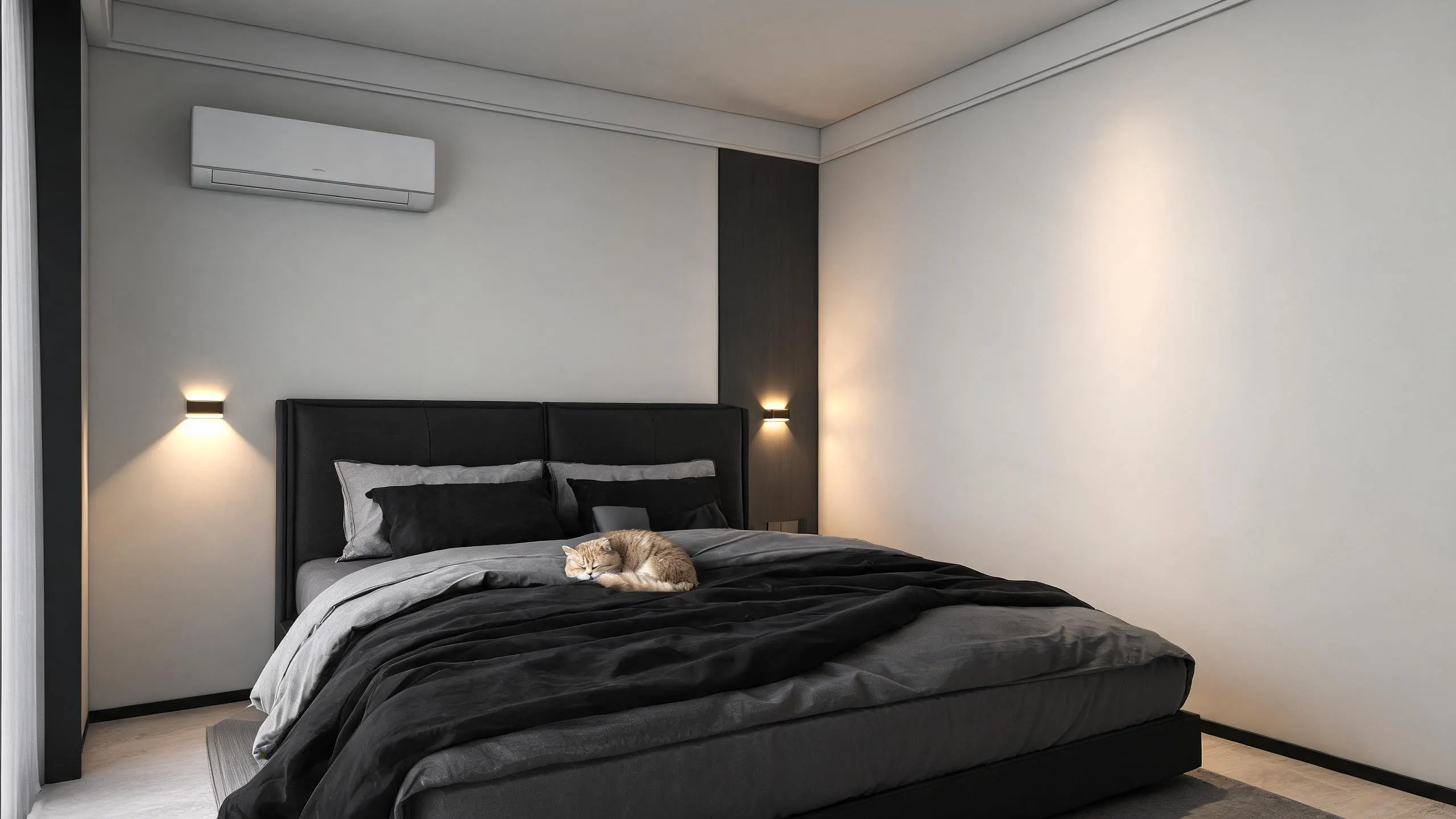






An orange cat sleeps on a neatly made bed with dark grey bedding in a minimalist bedroom with wall sconces and a mounted air conditioner.

Mini Split Installation in Lake Charles, LA

Tell us about the job

Takes about a minute. No obligation.

New system or replacementMini-splitCalcasieu Parish, LA
Step 1 of 2

What ZIP code is the job in?

Electricity here runs 12.95 cents per kilowatt-hour on average, cheaper than most of the country. That sounds like good news, and it is. But a mini split in this parish runs for months at a stretch, cooling through the long muggy stretch and picking up some of the heating load too. Low rates help, but a system that runs that many hours still adds up on the meter. The efficiency of the unit you install decides how much of that cheap power actually turns into cooling, and how much just runs the compressor harder than it needs to.

5 months
November through March, your system heats
7 months
April through October, it cools
44°F
the average winter night it heats against
91°F
the average summer afternoon it cools against
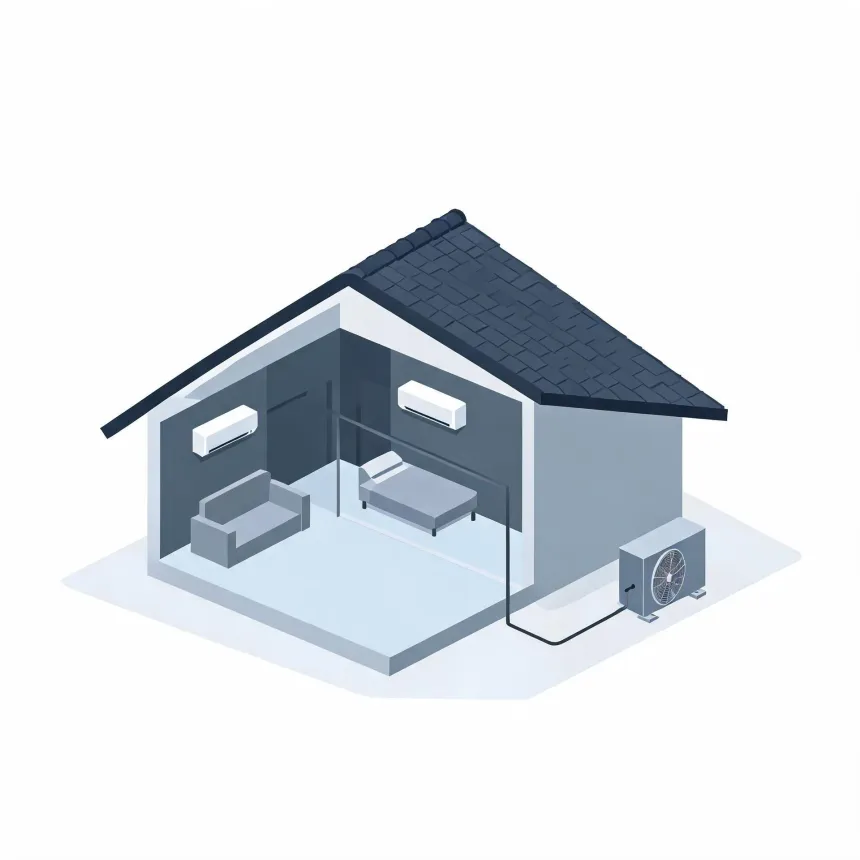
Isometric illustration of a cutaway house showing two wall-mounted indoor air conditioning units connected by a line to an outdoor condenser unit beside the building, with a sofa and bed inside.
Your system heats November through March and cools April through October.

NOAA nClimDiv, 1991–2020 normals

Electricity heats 69.4% of homes in Calcasieu Parish, more than gas and propane combined.

A mini split runs on electricity already, so it fits the power this parish is already set up to deliver.

This parish takes a beating from weather, and the power doesn't always hold

155 severe weather events from 2015 to 2024
49% of homes statewide lost power a day or more in 2024
77 damaging wind events from 2015 to 2024
Get it in before AprilCooling runs April through October here, seven months on the machine you install.

A mini split installed here will run cooling from April through October, seven months out of twelve. June through August, the afternoon high averages 91°F, and the dew point averages 74°F, heavier air than most of the country ever sees. The compressor is working against that heat and that moisture both, most of the day, for most of the year. A unit sized wrong for the space will run longer than it should trying to catch up, or short cycle and never pull the moisture down. That wear shows up sooner here than it would somewhere with a shorter, milder summer.

The efficiency you install is what your low rate buys you

The rate on your bill is low. The hours on the meter are not. Picking the right size and efficiency now is what decides whether that low rate actually shows up as a low bill.

Find a contractor
A man in a cap, gray shirt and jeans, seen from behind, carries a canvas tool bag up porch steps toward a green front door flanked by potted shrubs.
A white outdoor air conditioner condenser unit mounted on metal wall brackets against gray horizontal siding, with a blue sky and white clouds behind it.

Size it for seven months, not for the showroom

Seven months of that workload is already decided before the installer shows up. What's not decided is the size of the unit and how well it's matched to the room. Get the sizing wrong and the compressor pays for it every one of those months, not just a few. This is the part worth slowing down for, more than the brand or the brochure numbers.

What the rating actually measures

The efficiency rating on a mini split tells you the ratio of cooling delivered to power drawn, measured across a range of outdoor temperatures. A higher number means the compressor moves more heat out of the room for the same draw on the meter. It's not a measure of how cold the unit can get a room or how fast. Two units can feel identical standing in front of them and still land far apart on what they draw to do the same job.
Why the rating matters more the longer it runs

A unit with a weak rating and one with a strong rating can cool a room to the same temperature. The difference only shows up over time, in how hard the compressor works to get there and stay there. A system that sits idle most of the year can get away with a low rating because it barely runs long enough to matter. One that runs long hours day after day turns that difference into real load on the compressor, month after month.

When you're comparing systems, ask what the manufacturer rates the unit for at low outdoor temperatures, not just at peak heat. A mini split is a heat pump, and in cooling mode its rating tells you one thing, but most of these systems also run in reverse to heat. Ask how the contractor is sizing the unit for your specific rooms, not just the square footage on a floor plan. The right size depends on insulation, window area, and ceiling height, not a single number pulled from a chart. Ask how many zones the system supports and whether the indoor head going in matches the room it serves. A head sized too large for a small room will short cycle, turning on and off before it pulls the moisture out of the air. Ask about the line set length and how that affects performance, since longer runs between the outdoor compressor and the indoor head can change how the system is rated to perform.

Calcasieu Parish falls under zone 2A, a hot and humid climate where cooling carries most of the load. Any mini split installed here has to meet the federal minimum for that kind of system, if it was manufactured on or after January 1, 2023: at least 14.3 Btu of cooling for every watt-hour it draws over the summer, and at least 7.5 Btu of heat for every watt-hour over the winter. That floor applies whether the room is a small bedroom or a whole addition. A unit can beat that number by a wide margin, and plenty do, but nothing built for sale now can legally fall short of it. Ask what a system is rated at before you compare prices. The sticker price won't tell you which side of that line it falls on.