Electricity here runs 13.84 cents a kilowatt-hour
That's what Vernon Parish homes paid on average in 2025. A mini-split draws on that rate every time it cycles on, through the long cooling months and whatever heating it does in winter.
Takes about a minute. No obligation.
That's what Vernon Parish homes paid on average in 2025. A mini-split draws on that rate every time it cycles on, through the long cooling months and whatever heating it does in winter.
A mini-split sized and installed right uses less power to move the same heat. With electricity priced the way it is here, that difference in efficiency shows up on every bill the system generates.
NOAA nClimDiv, 1991–2020 normals
Vernon Parish saw 83 severe weather events between 2015 and 2024, including 39 with damaging wind and 25 with hail.
An outdoor compressor needs a spot that keeps it clear of falling limbs and flying debris, and a plan for heat and hot water when the power drops.



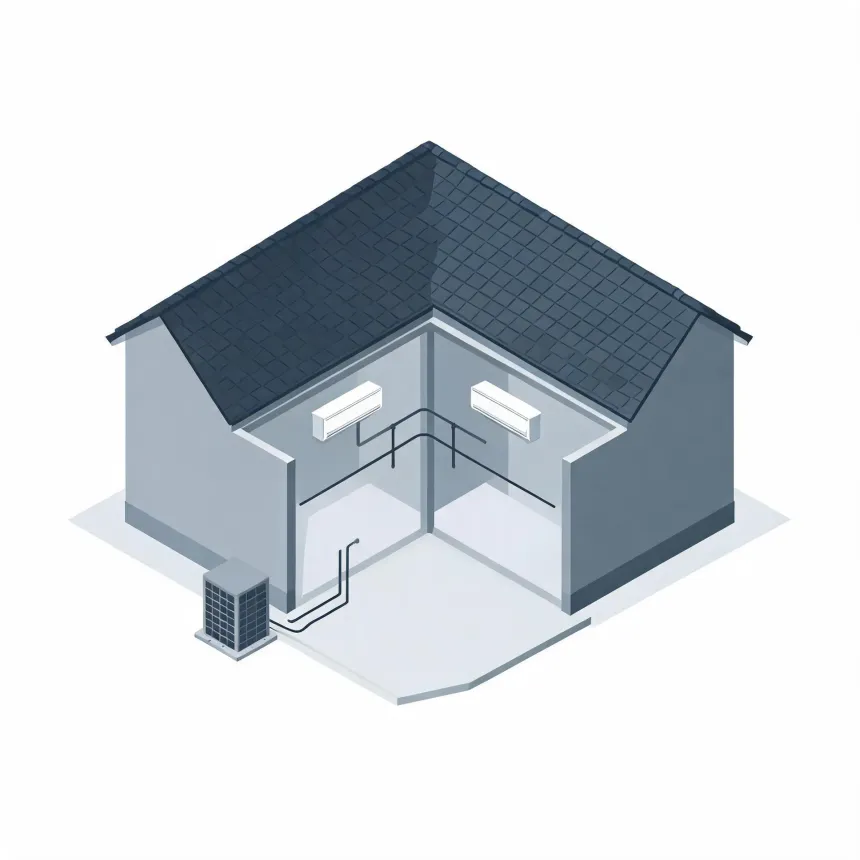
Most homes in Vernon Parish heat with electricity, close to eight in ten. A mini-split fits that pattern instead of fighting it. There's no gas line to run or tank to place, since gas heats only about one in seven homes here. The system handles cooling all summer and carries the heating load in winter too, on the same electric circuit the house already has. For a straight replacement, that's one less system to install and one less fuel to account for.
The rate on your bill is fixed. What a mini-split does with it isn't. Get the sizing and install right, and it buys the same cooling and heat for less power on every cycle. That gap is set the day it goes in.
Find a contractorSix months of the year, this system runs through afternoons that sit at 92 degrees. The compressor cycles on, carries the load, cycles off, and starts again, day after day from May to October. That pattern puts more hours on the unit than it would see almost anywhere else in the country. Sizing it right for this house matters more here than it would somewhere milder, because an oversized or undersized unit is working against that heat for six months, not two.
A window unit or a central system being replaced has to come out before the new lines and wiring go in. A central system means a trip to the attic or closet for the air handler, plus the old line set running out to the pad. A contractor disconnects the power, recovers the refrigerant from the lines, and hauls off the equipment once it's clear.
Old refrigerant has to be recovered into a tank with the right equipment, not vented into the air. That's true whether the old system is a window unit, a central system, or another mini-split. A licensed contractor handles that recovery as part of the teardown, before the new lines ever get connected.
Sizing a mini-split starts with a load calculation, not a rule of thumb based on square footage. A contractor works out how much heat the house gains in summer and loses in winter, counting windows, insulation, ceiling height, and which way rooms face. Too big and the unit short cycles, cooling the air fast without running long enough to pull the moisture out, so the house feels clammy even at the right temperature. Too small and it runs flat out on the hottest afternoons and still can't keep up. Either mistake also wears the compressor harder than a correctly sized one ever would. For a multi-zone system, that calculation gets done room by room, since one oversized head can throw off the whole setup even if the total capacity looks right on paper.
Vernon Parish sits in climate zone 3A, warm with a long muggy cooling season and a short mild winter. Any mini-split installed here, if manufactured from 2023 onward, has to meet the federal minimum for that kind of system: at least 14.3 Btu of cooling for every watt-hour it draws over the summer, and at least 7.5 Btu of heat for every watt-hour over the winter. That's the floor, not a target, so it narrows down which units a contractor can legally put in. A system built to those numbers is already accounting for the long stretch of hot afternoons this house will put it through. Nothing on the market here can legally fall under that line.