





White two-story houses with wraparound porches and Spanish moss-draped oak trees photographed along a residential street at night.

Mini Split Installation in Morgan City, LA

Tell us about the job

Takes about a minute. No obligation.

New system or replacementMini-splitSt. Mary Parish, LA
Step 1 of 2

What ZIP code is the job in?

Most homes in St. Mary Parish heat with electricity, 64.6% of them. Gas reaches 34.6%, the rest. A mini split fits naturally into a parish already wired for electric heat, since it runs on electricity for both heating and cooling instead of needing a gas line run to it. For a home already on electric heat, swapping in a mini split or adding one to a room that needs its own zone is a straightforward match to what the house already expects.

5 months
November through March, your system heats
7 months
April through October, it cools
47°F
the average winter night it heats against
90°F
the average summer afternoon it cools against
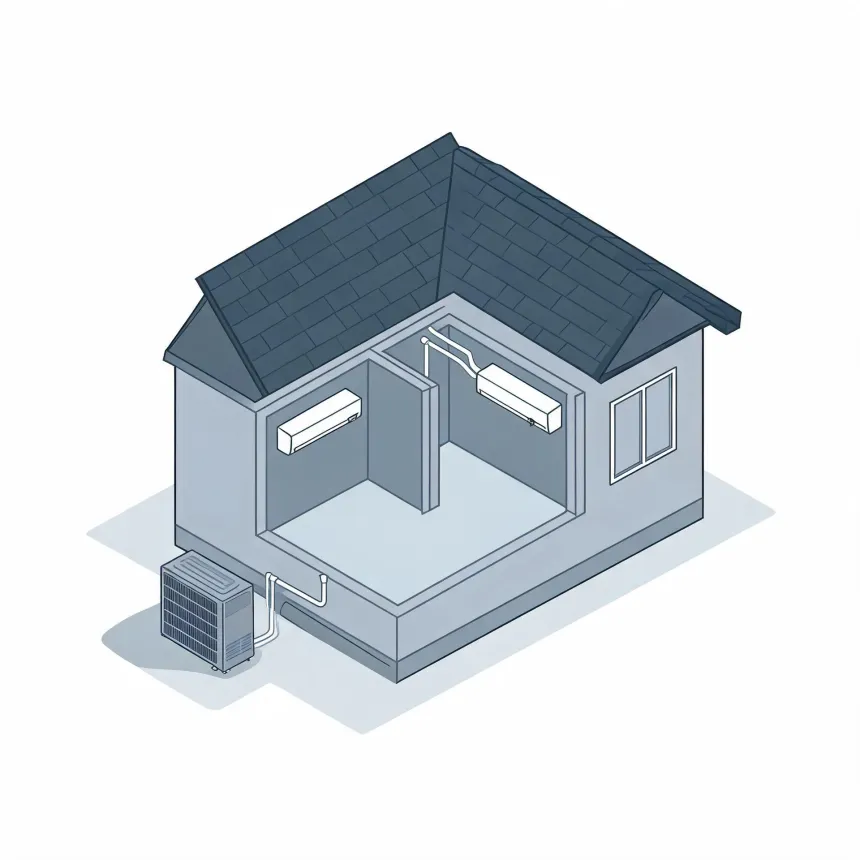
Isometric line illustration of a cutaway house with a shingled gable roof, showing two wall-mounted indoor air conditioning units connected by piping to an outdoor condenser unit on the ground outside.
Your system heats November through March and cools April through October.

NOAA nClimDiv, 1991–2020 normals

A mini split run here costs 11.73 cents per kilowatthour to operate, the same rate as anywhere else in the state.

No efficiency upgrade pays for itself faster in Morgan City than it would elsewhere, so a standard size suits this job.

March gets a mini split installed before it has to work

Cooling runs April through October
Summer afternoons average 90°F
Power costs 11.73 cents a kWh statewide
Morgan City weather doesn't change what a mini split needsSt. Mary Parish saw 29 severe weather events between 2015 and 2024, but that doesn't change what size unit this job needs.

St. Mary Parish falls in climate zone 2A, a hot and humid zone where a mini split spends most of its year on cooling rather than heat. Any ductless heat pump installed here counts as a split system under the federal rule, so it has to hit at least 14.3 SEER2 for cooling and 7.5 HSPF2 for heating. That floor applies everywhere in the country, not just here, so it is not a reason to size up or hunt for something stronger than standard. A unit that clears 14.3 SEER2 is already built for a cooling-heavy climate like this one. Homeowners installing new can expect contractors to quote equipment at or above that minimum, since nothing lower can legally go in.

Size it for seven months of cooling, not for the pitch

Cooling runs seven months here, April through October, with afternoon highs averaging 90°F through June, July and August. A mini split sized right for this house will carry that load every year without strain. Size it for the parish, not for whatever a quote happens to push.

Find a contractor
A white outdoor air conditioner condenser unit mounted on metal wall brackets against gray horizontal siding, with a blue sky and white clouds behind it.

A mix of older homes and mobile homes still just needs a standard mini split

Half the homes in St. Mary Parish were built in 1976 or earlier, half in 1976 or later. That spread doesn't point toward older construction needing more from a mini split, or newer construction needing less. Mobile homes make up 17.8% of the housing here. A mini split sizes to the room or space it covers, whether that space sits inside a mobile home or a site-built house. Nothing in how this parish is built calls for sizing up.

A load calculation, not a square footage chart

Sizing a mini split right means working out how much heat the room gains in summer and loses in winter, counting the windows, the walls, the ceiling and what sits on the other side of each one. Square footage alone skips all of that. Rooms the same size can need different size units because one has west-facing windows or a sun-baked attic above it and the other doesn't.
Oversized cools the air but not the room

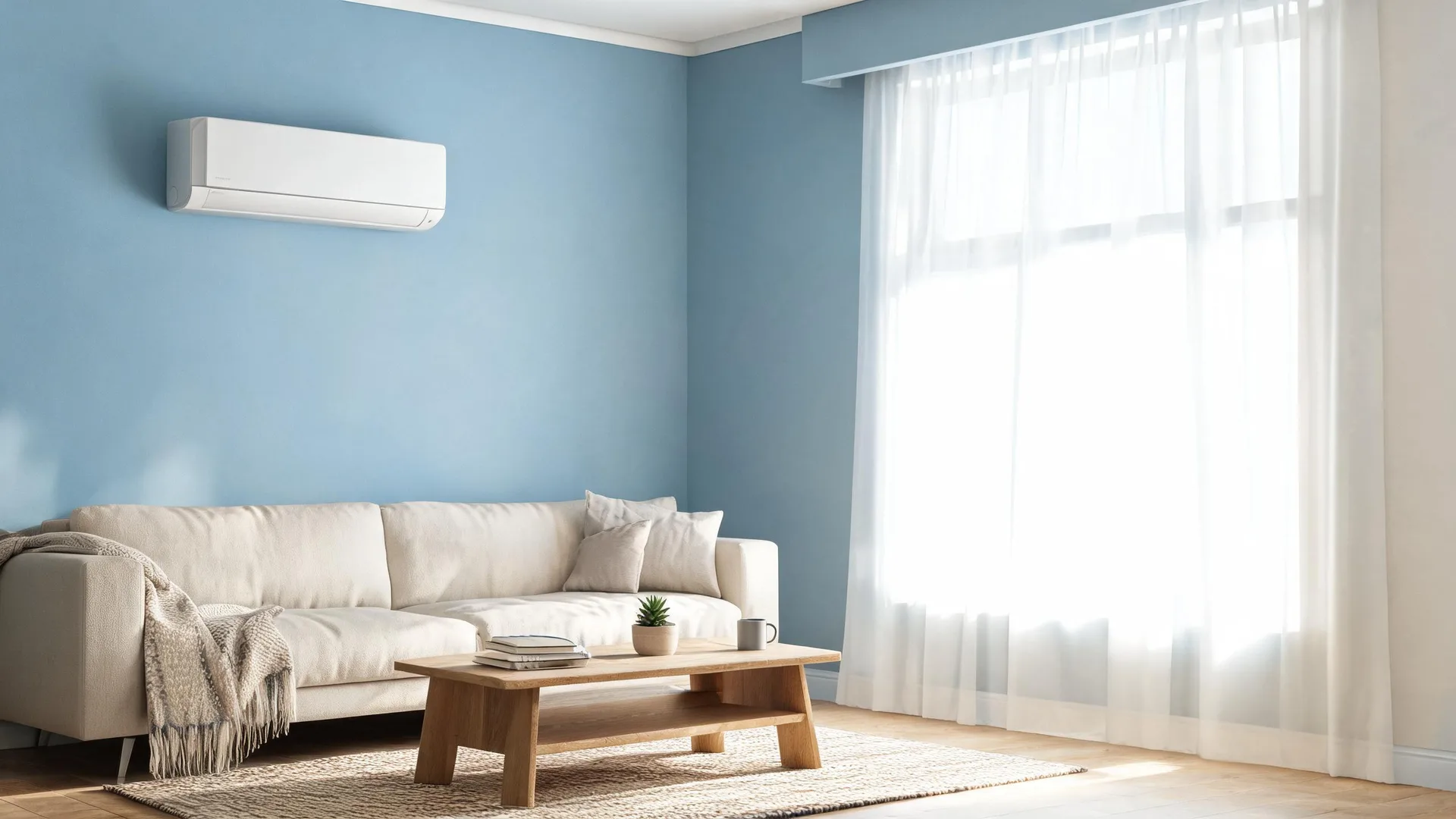
A unit too big for the space shuts off before it finishes pulling moisture out of the air. The room hits temperature fast, the compressor cycles off, and the air comes out cold but clammy. Sized right, the unit runs longer at a steady pace and the humidity drops along with the temperature.

The equipment itself is only part of what goes into an installation. The line set runs from the indoor head to the outdoor unit, and a longer run or one that has to go through a wall, up an exterior side, or across the roofline takes more time and more material than a short straight shot. The electrical matters too. Some homes already have a circuit sitting there ready to use, others need one run in, and that's extra work either way. A multi-zone system, where several indoor heads tie back to one outdoor unit, takes more line set, more mounting, and a more careful refrigerant charge than a single zone does, so it costs more to put in. Where the outdoor unit ends up and how easy that spot is to work around and service later also factors in. None of this can be priced from a list. It has to be looked at first.

Install day starts with the load calculation already done, so the crew isn't guessing where the head goes or what size line set to bring. The outdoor unit gets set on a pad or mounted brackets, away from anything that blocks airflow around it. A technician drills one small hole through the wall for the line set, the refrigerant lines, the power wire and the condensate drain, all bundled together and sealed where they pass through. Indoors, the head mounts high on a bracket, and the line set runs behind it to the hole and out to the condenser. Once everything connects, the line gets pulled down to a vacuum to clear out moisture and air before the refrigerant valve opens, because any moisture left in the line turns to acid once the system runs. The last step is firing it up and checking that it holds the charge, cools or heats like it should, and drains the way it's supposed to.