




Single-story houses with covered porches, one brick and one light-colored siding, behind a trimmed hedge and lawn, beneath large oak trees draped with Spanish moss.

Mini Split Installation in New Iberia, LA

Tell us about the job

Takes about a minute. No obligation.

New system or replacementMini-splitIberia Parish, LA
Step 1 of 2

What ZIP code is the job in?

Most homes in Iberia Parish heat with electricity, 64.1% of them. Gas reaches 33.7%, and almost nobody uses LP gas. A mini split runs on electricity for both heating and cooling, so it fits right into a home that's already wired for electric heat. No gas line or venting to plan around. That makes it a straightforward swap for an electric furnace or heat pump, or a way to add capacity to a room that never got comfortable. In one of the gas-heated homes, a mini split still works fine for cooling, or for taking the load off the furnace in the milder months.

5 months
November through March, your system heats
7 months
April through October, it cools
46°F
the average winter night it heats against
90°F
the average summer afternoon it cools against
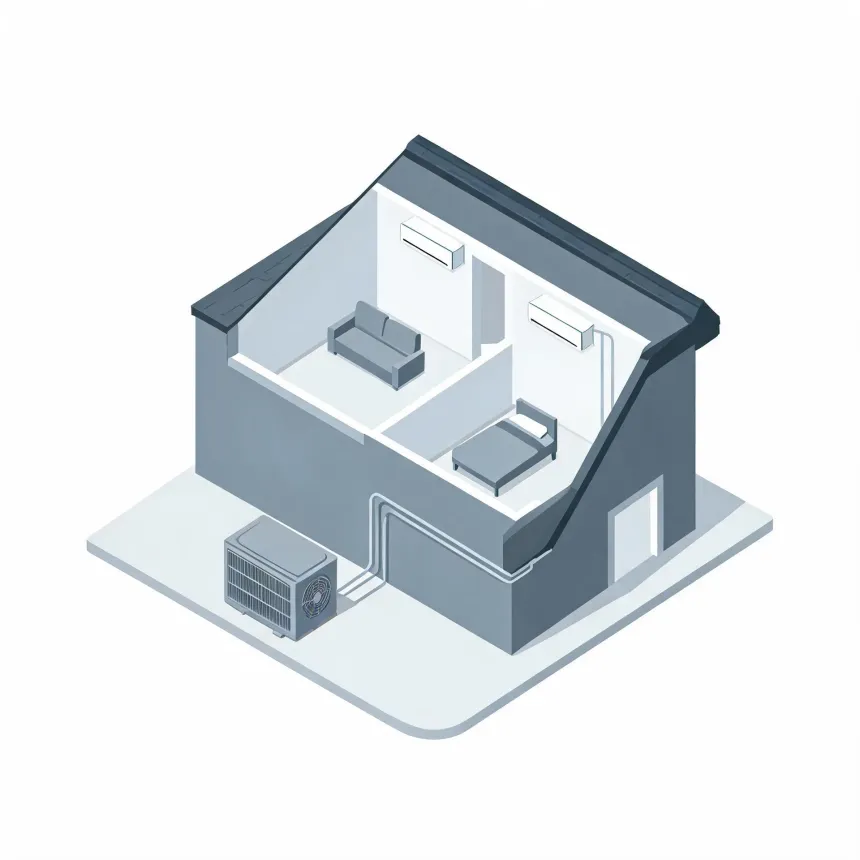
Isometric cutaway illustration of a two-room house showing two wall-mounted indoor air conditioning units connected by line sets to an outdoor condenser unit on the ground outside.
Your system heats November through March and cools April through October.

NOAA nClimDiv, 1991–2020 normals

A mini split's rated output doesn't change with the electric rate in Iberia Parish.

Sizing this job comes down to the room it's heating and cooling, not the price per kilowatthour.

40 severe weather events, and none of them change what size mini split this room needs

40 severe weather events from 2015 to 2024
49% of homes statewide lost power a day or more in 2024
25 damaging wind events from 2015 to 2024

A mini split for a standard room here doesn't need upsizing. Half the homes in Iberia Parish were built in 1982 or earlier, half in 1982 or later, and neither end of that range changes what size unit a room calls for. A contractor sizes the system to the square footage, the windows, and how the room is used, same as anywhere. Mobile homes make up close to a fifth of the housing here, and they're a different case worth a separate look, since wall construction and available power can limit what's practical. For a standard site-built home, though, the sizing math is ordinary. No reason to pay for more capacity than the room needs.

Install before April, while it's still your choice

Cooling runs April through October here, seven months straight. March is the last month before that starts. A mini split put in now gets set up and checked before the load hits, instead of getting picked out while a room is already hot.

Find a contractor
A white mini-split air conditioner outdoor condenser unit mounted on metal brackets against a beige stucco exterior wall, with a blue sky and scattered clouds in the background.

Seven months of cooling, every year

Cooling runs April through October in Iberia Parish, seven months of the year. June through August, the afternoon high averages 90°F. A mini split installed here spends most of the year on, not standing by for a few hot weeks. That kind of runtime puts real hours on the compressor and the outdoor coil, year after year. A unit sized right for the room handles that load without strain. One sized wrong, too small or too big, works harder than it should every one of those seven months.

Ask for the room by room load, not a size the installer has on the truck

A contractor should walk each room and account for its windows, its exposure, and what's in it before naming a unit size. If the answer comes back before the walk-through happens, that's a guess, not a measurement.
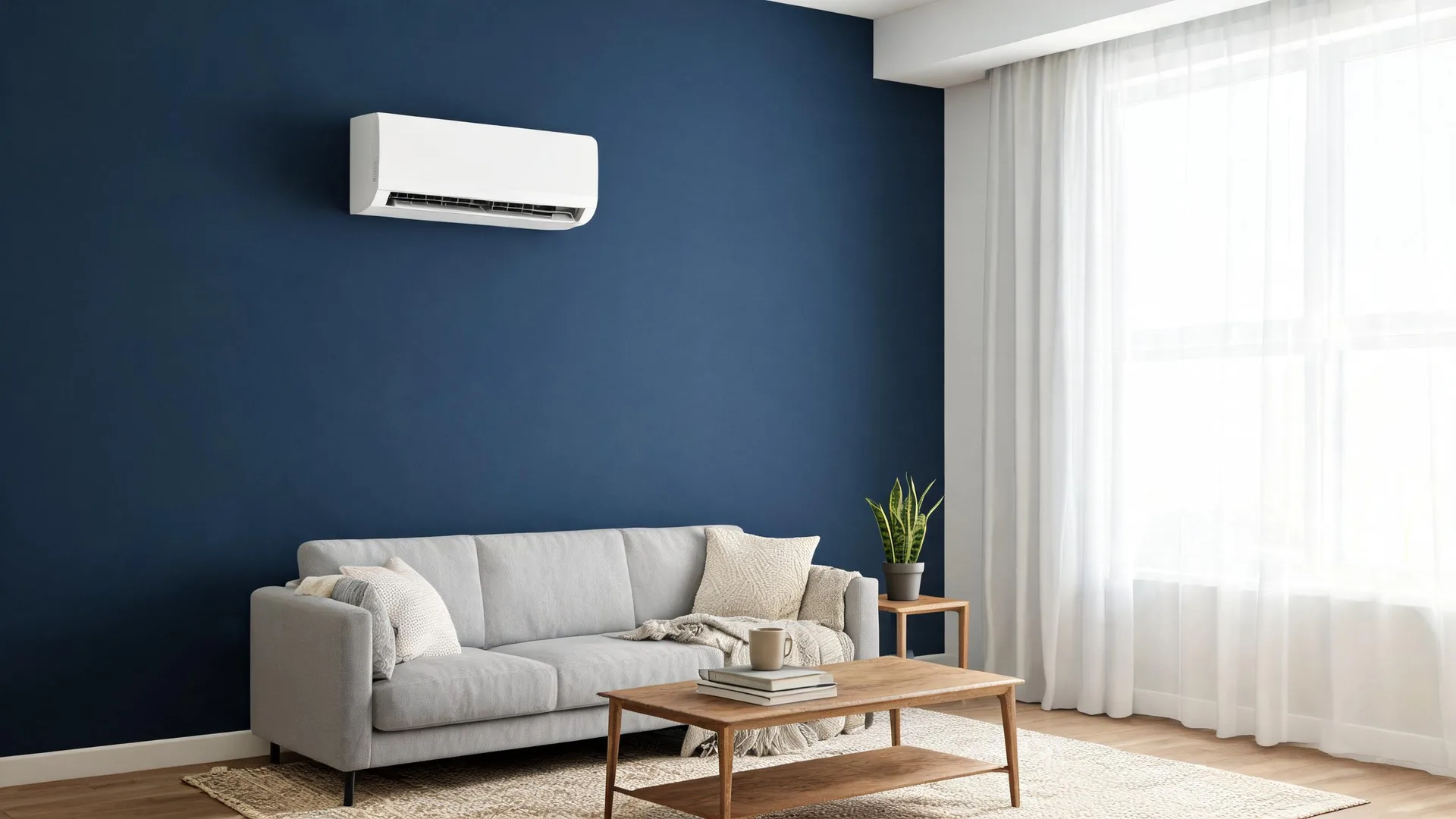
Ask how many indoor heads run off one outdoor unit

A single outdoor unit can run one indoor head or several, and that choice changes what happens if one room needs service. With several heads on one outdoor unit, losing that unit means losing heating or cooling everywhere it feeds. Separate systems cost more but keep rooms independent of each other.

The outdoor unit and the indoor head are only part of what gets priced. How far the refrigerant lines have to run between them matters, and so does whether they can take a straight path or have to snake through an attic or around framing. Every indoor head needs its own line set and its own spot on an outdoor circuit, so a multi-head system costs more to install than the same total capacity split across separate systems. The electrical side counts too. A mini split needs its own dedicated circuit, and if the panel has no room left, that's added work before the unit itself ever gets mounted. Where the outdoor unit sits matters as well. It needs clearance on every side to pull air through the coil, and a cramped or hard-to-reach spot costs more to set up right than open ground next to the wall.

Install day starts outside, not in. The outdoor unit gets set on a pad or bracket first, leveled, with clear space around it for airflow. Then comes the hole through the wall for the line set, the refrigerant lines, the electrical whip, and the condensate drain, all bundled together and run to each indoor head. Once the lines are connected at both ends, the system gets evacuated with a vacuum pump to pull out any air and moisture before refrigerant ever enters the lines. That step matters more than people expect. Any moisture left in the lines turns into acid once the system runs, and that shortens the life of the compressor. After the vacuum holds steady, the lines get charged, the indoor head gets mounted and leveled, and the whole system gets tested in both heating and cooling before anyone calls the job done.