





Two white Southern-style homes with wraparound porches lit by landscape lighting at night, flanked by live oak trees hung with Spanish moss.

Mini Split Installation in Opelousas, LA

Tell us about the job

Takes about a minute. No obligation.

New system or replacementMini-splitSt. Landry Parish, LA
Step 1 of 2

What ZIP code is the job in?

Electricity in St. Landry Parish runs 12.99 cents per kilowatt-hour on average, cheaper than most US counties. That sounds like good news, and it is. But a mini-split here still runs long hours most of the year to keep up with the humidity, so even a low rate adds up over that many hours of use. The efficiency of the unit you install decides how much of that cheap power actually turns into cooling instead of waste. A well-matched system makes the most of a rate this good. A poorly sized one just burns through it faster.

5 months
November through March, your system heats
7 months
April through October, it cools
43°F
the average winter night it heats against
91°F
the average summer afternoon it cools against
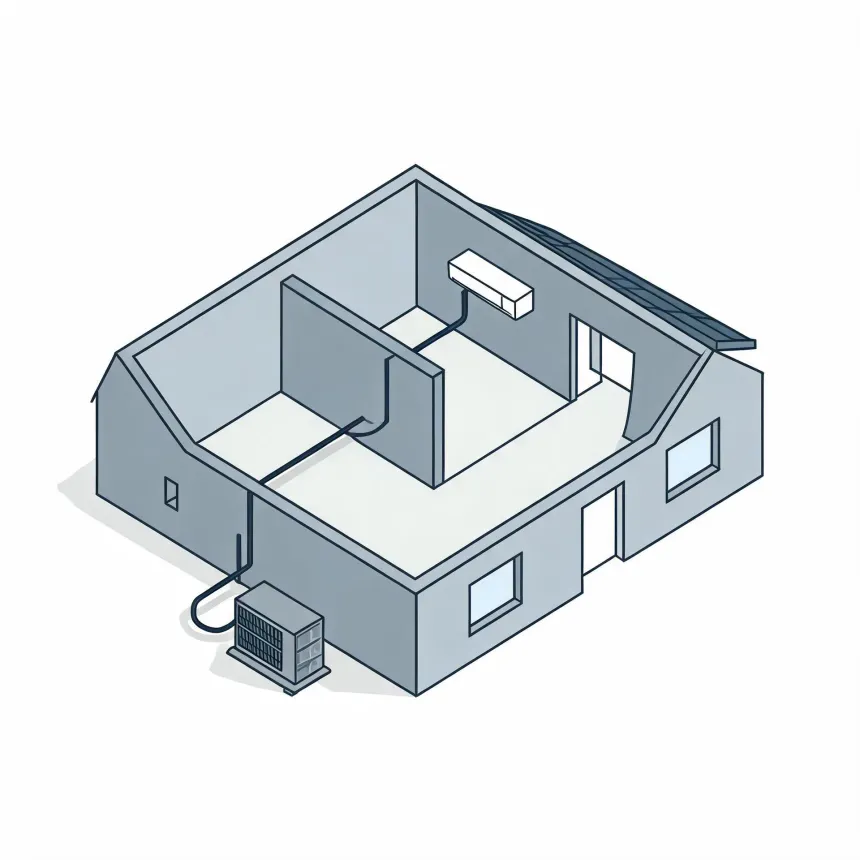
Isometric line illustration of a cutaway house showing an interior wall-mounted air conditioning unit connected by a line to an outdoor condenser beside the exterior wall.
Your system heats November through March and cools April through October.

NOAA nClimDiv, 1991–2020 normals

March is the month before cooling starts in St. Landry Parish.

Get the mini-split installed before April, and it's running on day one instead of during the first hot week.

St. Landry Parish gets hit with severe weather most counties don't

79 severe weather events from 2015 to 2024
49% of homes statewide lost power a day or more in 2024
52 damaging wind events from 2015 to 2024
A mini-split here works harder than mostCooling runs April through October here, with afternoon highs near 91°F and a dew point most of the country never sees.

Electricity heats 72.6% of homes in St. Landry Parish. Gas service only reaches about a quarter of the parish, and propane barely registers. That's why a mini-split fits so well here. It runs on the same power already wired into the house, so installing one doesn't mean adding a fuel line or any new service. Most homeowners replacing a system are swapping electric for electric, which keeps the job simpler and the outcome more predictable.

Get the sizing right, and the rate works for you

A mini-split sized and installed right gets the most cooling out of every kilowatt you're paying for. One that's oversized or undersized keeps running without keeping up, and you pay for that difference every month it's in the wall.

Find a contractor
A white outdoor air conditioner condenser unit mounted on metal wall brackets against gray horizontal siding, with a blue sky and white clouds behind it.

Seven months of runtime a year, every year

Seven months of cooling a year means this system logs more hours than almost anything in the house. That adds up to a lot of cycles on the compressor over a season, long before the next one starts. Sizing is what decides whether those hours wear the unit evenly or wear it hard. A mini-split matched to the space runs steady through the long stretch from April to October. One that's the wrong size is working against itself the whole time, and seven months is a long time to run a machine that's fighting its own job.

Ask for the load calculation, not a guess

A mini-split should be sized off a room by room load calculation, not a rule of thumb based on square footage. Window area, insulation, ceiling height and sun exposure all change what a room needs. Two rooms the same size can call for different capacity. If the installer can size the unit without walking the space or asking about it, that's a system sized for a guess, not for the house.
Ask how many zones and why

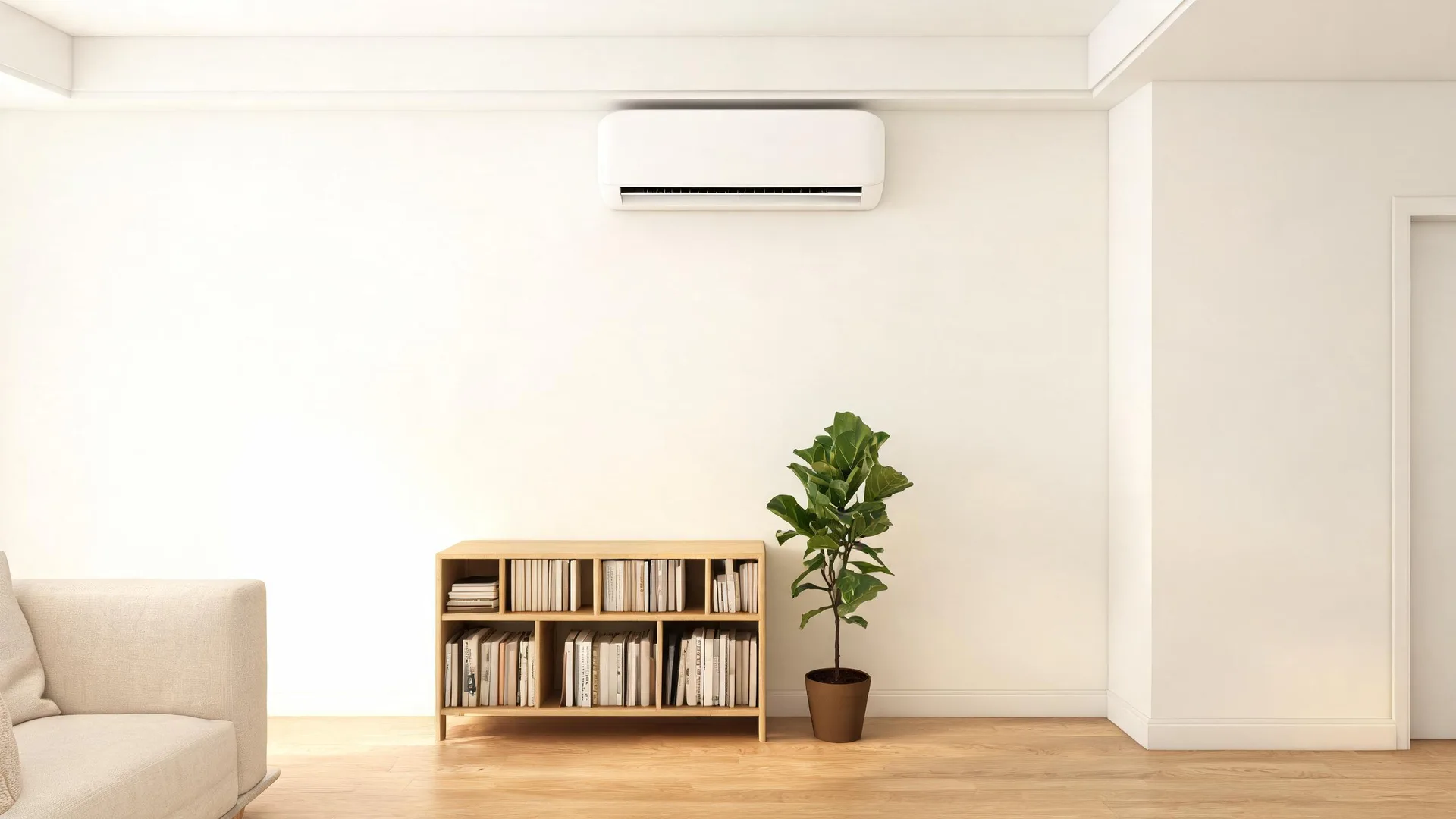
A single outdoor unit can run one indoor head or several, and the number of zones should match how the space is actually used, not just how many rooms there are. Too few zones and some rooms never get comfortable. Too many and the system cycles in ways that wear it down faster. The right zone count is a decision, not a default, and whoever is installing it should be able to explain the reasoning room by room.

A mini-split that's too big for the space cools the air fast and shuts off before it pulls the moisture out. The room feels cold and still damp, so it cycles on again sooner than it should. One that's too small never gets ahead of the load at all. It runs flat out and still can't hold the temperature on the hottest afternoons, so it just keeps running. Either mistake shows up as short, frequent cycling or endless runtime, and both wear the compressor down faster than steady, matched operation does. Getting the size right isn't about picking the biggest unit available. It's about matching output to what the room actually loses and gains through its walls, windows and ceiling.

St. Landry Parish sits in climate zone 2A, a hot and humid zone where cooling carries most of the load over a year. Any mini-split installed here, if manufactured from 2023 on, has to clear federal minimums built for that kind of load: at least 14.3 Btu of cooling for every watt-hour it uses over the summer, and at least 7.5 Btu of heat for every watt-hour over the winter. That's not a target to aim for. It's the floor a unit has to clear before it can be sold as a split-system heat pump at all. The parish's own climate rating doesn't raise that floor, but it does mean the units sold here are built to answer to zone 2A conditions, not to a mild climate somewhere else. A homeowner comparing models is comparing systems that already had to meet this bar, so the real differences show up above it.