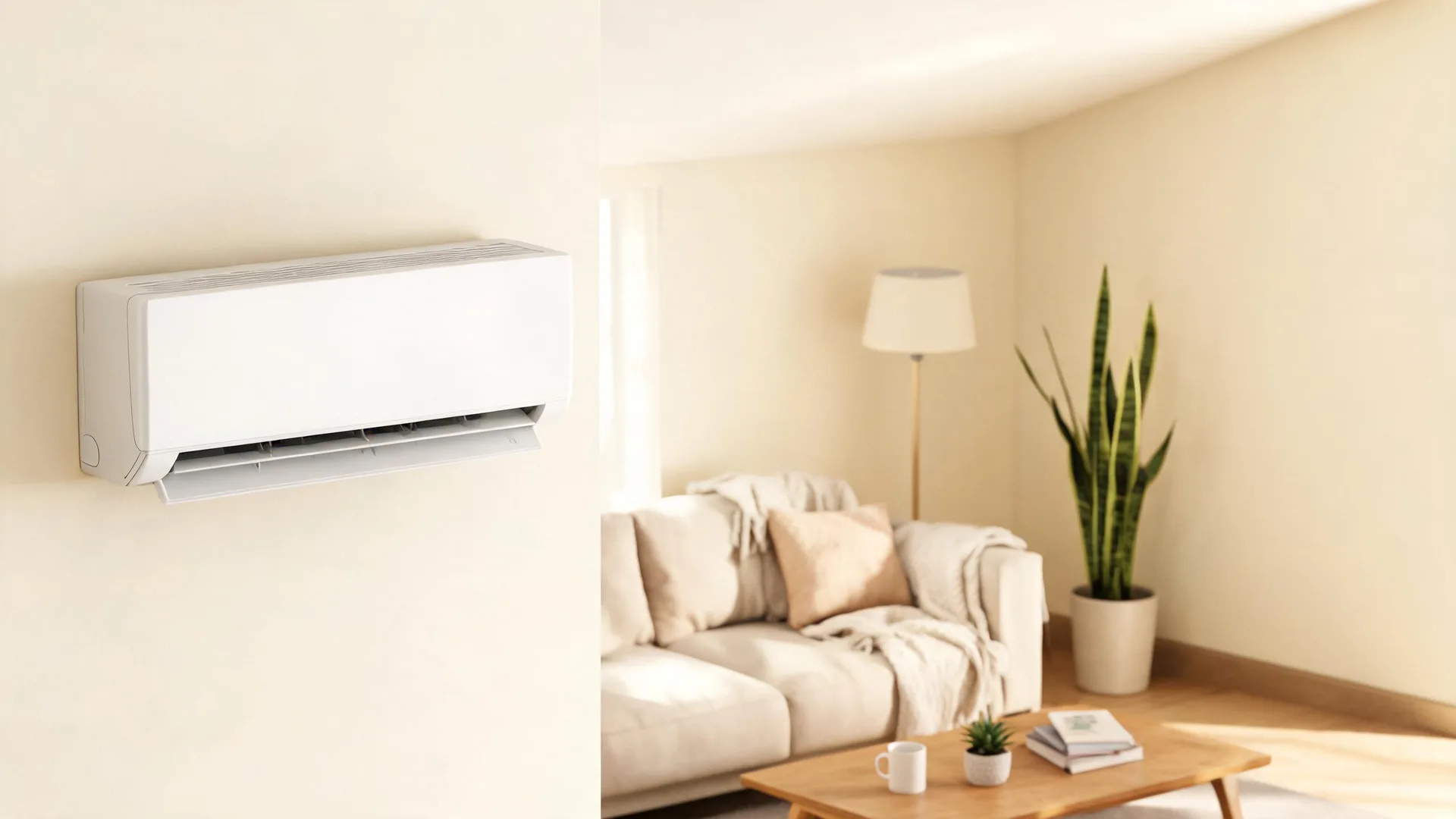
Most homes here run on electricity
Electricity heats 63% of occupied homes in Iberville Parish, against 31.7% on utility gas. A mini split fits an electric home without any change to how the house gets its energy.

Takes about a minute. No obligation.
Electricity heats 63% of occupied homes in Iberville Parish, against 31.7% on utility gas. A mini split fits an electric home without any change to how the house gets its energy.
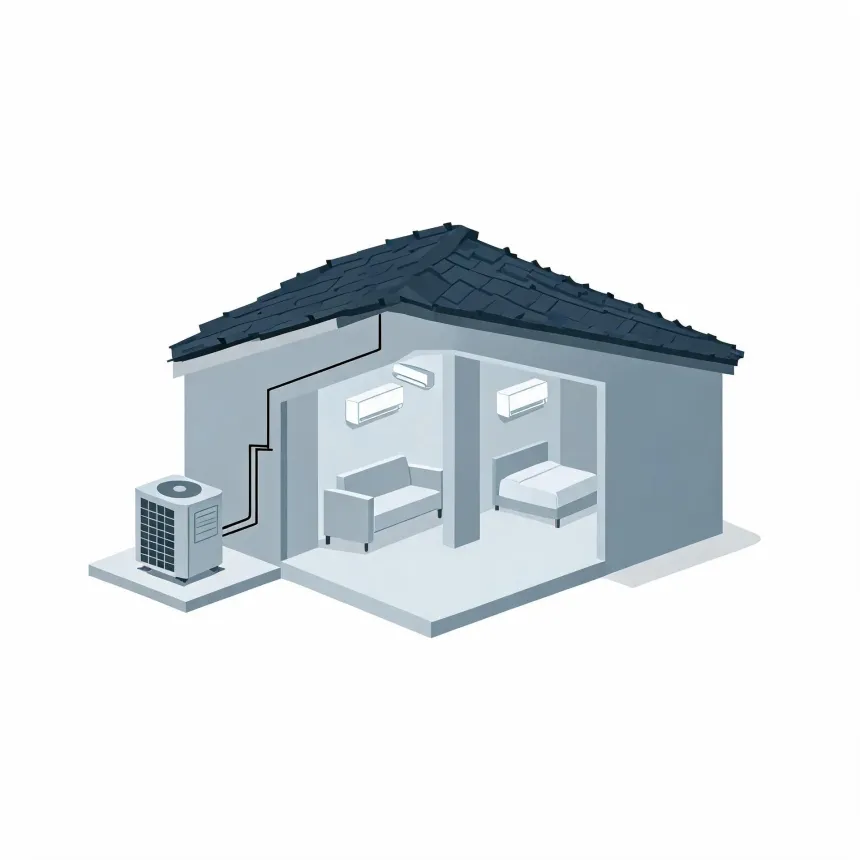
No gas line to work around, no venting to tie into. The job is running refrigerant line and power to the indoor and outdoor units, which is most of what a mini split install involves in a home already set up for electric heat.
NOAA nClimDiv, 1991–2020 normals
A mini split's efficiency is rated by SEER2 and HSPF2, not by how big or expensive the unit is.
A standard size sized to the room it heats and cools will run St. Gabriel homes fine at 11.73 cents a kilowatt-hour.




St. Gabriel sits in climate zone 2A, a hot, humid zone where cooling carries most of the year's load. Any mini split installed here has to meet the federal minimum for a split-system heat pump, since the standard doesn't treat ductless units as their own category. That means 14.3 SEER2 for cooling and 7.5 HSPF2 for heating, for units made from 2023 on. A contractor quoting something below those numbers isn't quoting something legal to install. Above that floor, a system may also qualify for the federal efficiency tax credit, worth checking against the specific model.
Cooling runs April through October here, and the afternoon high averages 91°F through June, July and August. A mini split sized for this house carries that load every one of those months. Get the sizing right from the start.
Find a contractorAn outdoor unit sized wrong for the rooms it serves fights itself every day of those seven months, not just on the hot afternoons. Too big and it short cycles, cooling the room fast and shutting off before it pulls the humidity down. Too small and it runs flat out all day without keeping up when that 91 degree heat hits. A contractor who does the load calculation on each room gets the size right. A contractor who sizes off the old unit or a rule of thumb is guessing.
A single indoor head tied to one outdoor unit is the simplest job there is. Add a second or third zone, for another room or another part of the house, and the install needs more line set, more mounting, more labor, and an outdoor unit built to handle multiple heads. Every zone added is another indoor unit to mount, another run of refrigerant line and wire, and another place for a bad connection to show up later.
An outdoor unit placed close to the indoor head, with a clear wall between them, is a short job. Line set run through an attic, under a slab, or across a long exterior wall takes more time, more material, and more care at every joint. The line set also has to be sized to the distance it runs, not just the units on either end, which a contractor should account for at the quote, not after the job starts.
Whoever takes the old unit out has to deal with the refrigerant still inside it. That refrigerant can't be vented to the air. A contractor recovers it into a tank with a recovery machine before the old lines get disconnected, the same way it would be handled on any system being retired. Once it's out, the indoor head, the outdoor unit, and the line set all come out too, not just the parts being replaced. If the new system uses a different refrigerant than the old one, which is common when the old unit is old enough, the line set usually can't be reused even if the path it runs is the same. That's one more reason the old equipment comes out complete rather than piecemeal.
Install day starts with the outdoor unit placement and the hole through the wall for the line set, and that hole only gets drilled once, so the spot gets picked early and checked against both the indoor and outdoor locations before anything is cut. The line set gets run, connected at both ends, then the whole system gets pressure tested with nitrogen to find any leak at the joints before refrigerant ever goes in. That test has to hold for a while, which means there's a stretch of the day where nothing looks like it's happening but the system is doing exactly what it should. After the pressure test holds, the line gets pulled into a vacuum to clear out air and moisture, because either one left behind will damage the compressor over time. Only then does the system get charged and the indoor head mounted, leveled, and powered on. The last part of the job is running it through both modes and checking the temperature split at the vent, not just confirming it turns on.