A red brick single-story house with a covered porch and a nearby cream-colored house with a wraparound porch, seen across a lawn behind a trimmed hedge, framed by large moss-draped oak branches.

Mini Split Installation in Thibodaux, LA

Tell us about the job

Takes about a minute. No obligation.

New system or replacementMini-splitLafourche Parish, LA
Step 1 of 2

What ZIP code is the job in?

Electricity here runs cheaper than most places

Homes in Lafourche Parish paid an average of 11.91 cents per kilowatt-hour in 2025, lower than most US counties pay. A mini split still uses less of it to do the same job than a weaker or oversized one would.

The rate doesn't do the work, the system does

A low rate only helps if the mini split sized for your space is running efficiently in it. One that's too big or too small for the rooms it serves works harder than it should, no matter what you're paying per kilowatt-hour.

4 months
November through February, your system heats
7 months
April through October, it cools
47°F
the average winter night it heats against
90°F
the average summer afternoon it cools against
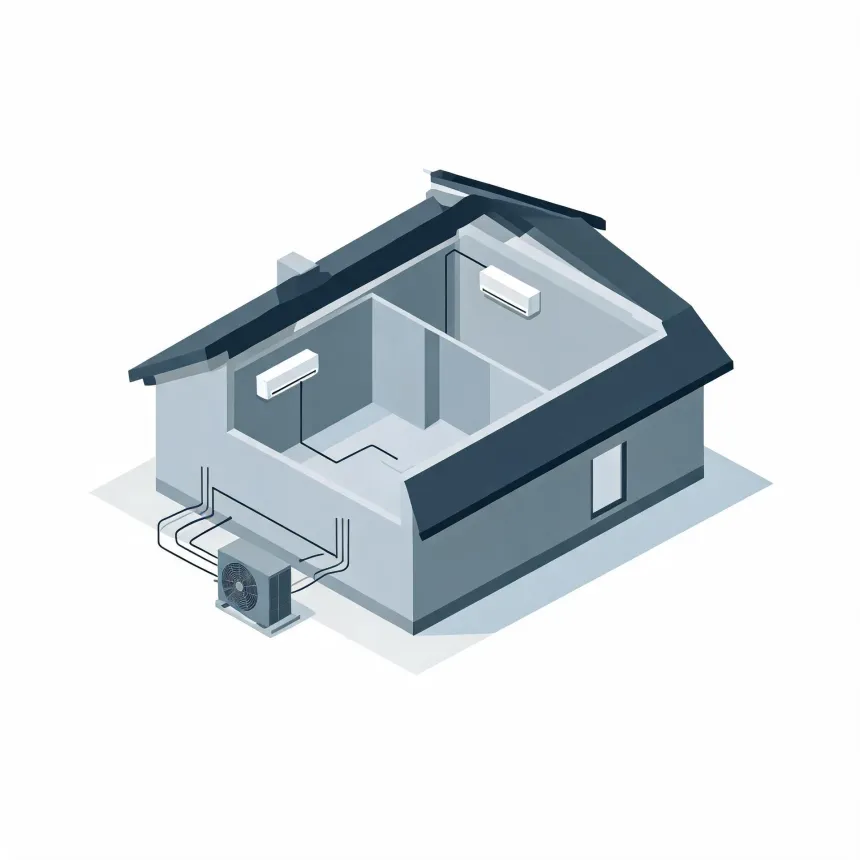
Isometric illustration of a cutaway house showing two wall-mounted indoor air conditioning units connected by line sets to an outdoor condenser unit on the ground outside.
Your system heats November through February and cools April through October.

NOAA nClimDiv, 1991–2020 normals

Electricity heats 67.6% of the homes in Lafourche Parish.

A mini split runs on electricity, so it fits into a slot most homes here already have.

Sixteen wind events and sixteen hail events in ten years. This county gets hit.

49 severe weather events from 2015 to 2024
49% of homes statewide lost power a day or more in 2024
16 damaging wind events from 2015 to 2024

Thibodaux falls in climate zone 2A, a hot and humid zone where cooling is the main job a mini split does here. Under the federal standard, a split-system heat pump sold new has to deliver at least 14.3 Btu of cooling for every watt-hour it uses over the summer, and at least 7.5 Btu of heat for every watt-hour over the winter. That's not a target to aim for. It's the floor every unit on the market has to clear before it can be installed. A mini split that clears it by a wide margin will cost less to run here than one that barely meets it, since the cooling load is the bigger share of the year's work.

Get the sizing right and you pay less for power every month after

Sizing this right is a job for whoever installs it, done before the unit goes in, not after. Get the sizing and the installation right and the efficiency on the label is what you actually pay for.

Find a contractor
A man seen from behind in a navy T-shirt and tan work pants carries a canvas tool bag up concrete steps toward a green front door, with a potted shrub to the right.
A beige split-system air conditioner outdoor condenser unit mounted on metal wall brackets atop a stucco wall.

Seven months of work a year starts in April. March is when to get ahead of it

Cooling here runs April through October, seven months of the year. March is the month before that starts, and it's the window to get a mini split installed. Do it then and the system is sized, set and running before the first warm week hits. Wait until the heat has already set in and the install happens under pressure, in a house that's already uncomfortable. Sizing a mini split right takes time, checking the rooms it serves, working out the load. That's easier to get right in March than in the middle of a muggy stretch.

Ask what the load calculation found

A mini split should be sized off a room by room load calculation, not a guess based on square footage or what the last system was. Ask what rooms were measured, what the windows and ceiling height were accounted for, and what size came out of it. If nobody ran the numbers, the size they're proposing is a guess.

Ask how many zones and why

A single indoor head can only serve the space it's pointed at. Ask why the installer is proposing one zone or several, and which rooms each head is meant to cover. More zones cost more to install, but a single head trying to cool rooms it wasn't sized for will run constantly and still leave some of them short.

The price of a mini split installation comes down to what the job actually involves, not just the equipment on the truck. Running a line set and power to a wall is a different job than routing it through an attic or up multiple floors to serve several rooms. Each indoor head needs its own run of refrigerant line, drain line and electrical back to the outdoor unit, so the distance and the path matter more than people expect. A straightforward wall penetration on an exterior room costs less labor than fishing a line through finished walls or framing to reach an interior space. The outdoor unit also needs a mounting pad or bracket set where it won't take direct runoff from the roof, and that groundwork is part of the job too. More zones means more indoor heads, more line sets and more time on the ladder, so a two zone system costs more to put in than a single zone even before you get to the equipment itself.

A mini split here spends seven months of the year running, April through October. For three of those months, June through August, it's working against a 90°F afternoon and a dew point averaging 74°F, heavier air than most of the country ever sees. That's the load it has to push against on an ordinary afternoon, not just the hottest week of summer. A unit sized right for the rooms it serves can keep up with that without straining. One that's undersized or mismatched to the space runs flat out trying to catch up, and the wear shows up sooner, in the compressor and in the parts that keep it running. Buying on the lowest price up front skips the question that matters more here than most places: how that system holds up across seven months of real work.