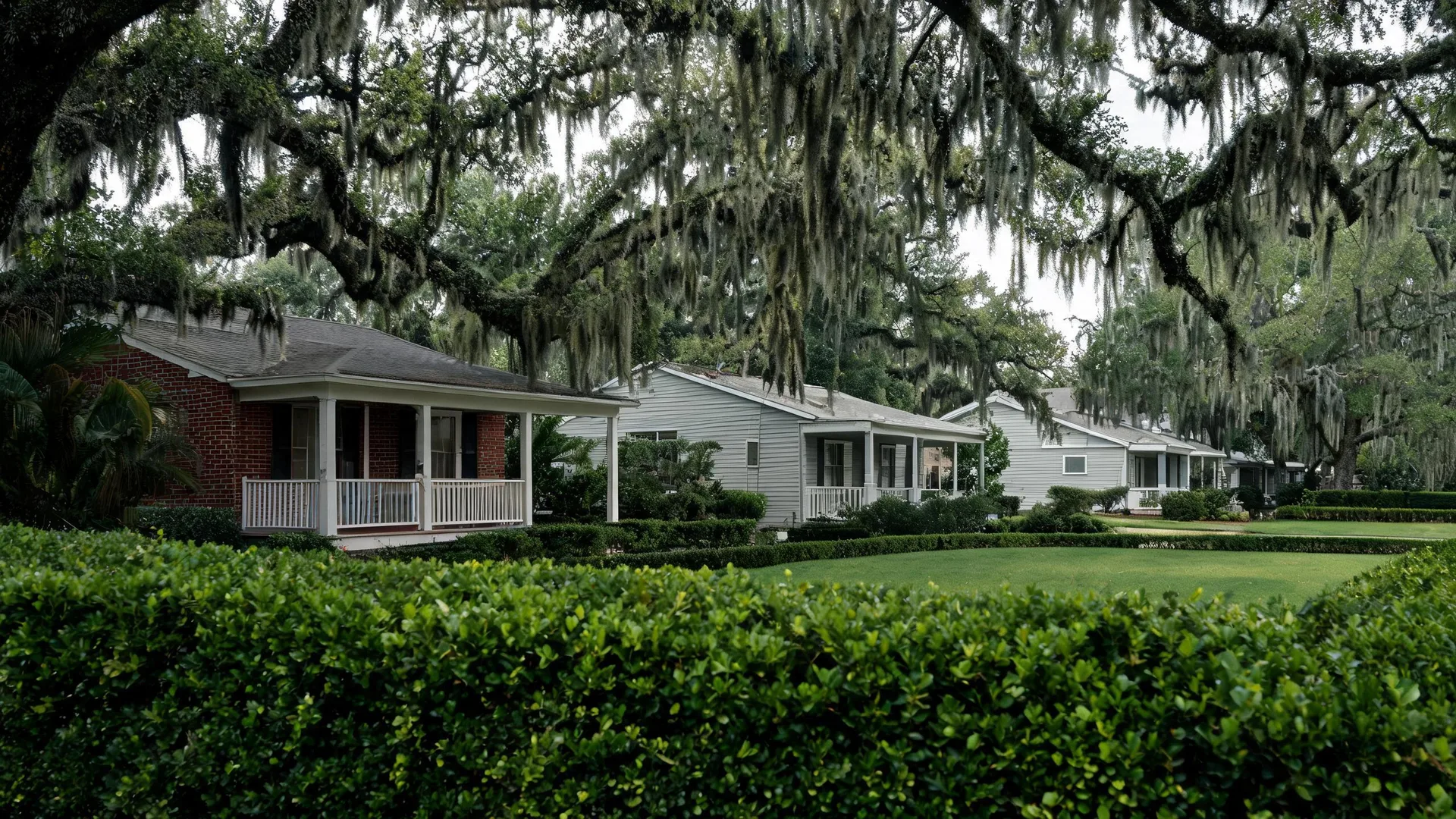







A row of single-story cottages, one brick and the others light gray siding with covered porches, behind a trimmed hedge and lawn, under large oak branches draped with Spanish moss.

AC Repair in Baton Rouge, LA

Tell us about the job

Takes about a minute. No obligation.

RepairCentral ACEast Baton Rouge Parish, LA
Step 1 of 2

What ZIP code is the job in?

Your AC runs about seven months a year here, April through October. For three of those months the afternoon high averages 91°F, and the air holds more moisture than it does in most of the country, with a dew point around 73°F. That means the system is dropping the temperature and wringing the water out of the air at the same time, for most of the year it runs. A unit working that hard, that long, wears parts down faster than the same unit would somewhere drier or cooler. When something starts acting up here, it's usually that wear catching up with it.

7 months
April through October, your air conditioner is on duty
91°F
the average summer afternoon it cools against
27 hail events
in ten years, and hail bends the fins on outdoor coils
100 wind events
in ten years, and wind drives debris into outdoor units
Isometric cutaway illustration of a small home interior with furniture and ducting, showing an indoor air handler connected by lines to an outdoor condenser unit on a pad.
Your air conditioner works hardest from May through September.

NOAA nClimDiv, 1991–2020 normals

Electricity here runs 12.50 cents per kilowatt-hour, cheaper than most of the country.

That's little comfort when the unit has to run most of the year to keep up, so a system working harder than it should still shows up on the bill.

Power here runs 12.50 cents a kilowatt-hour. A system working harder than it should spends that every day it goes unfixed.

Power here costs 12.50 cents per kilowatt-hour
Cooling runs April through October
Summer afternoons average 91°F
Storms here don't go easy on outdoor unitsEast Baton Rouge Parish saw 100 damaging wind events and 27 hail events between 2015 and 2024.

March is worth paying attention to. AC starts running in April and keeps going through October, so whatever was already weak by the end of last season gets tested the moment the first warm week hits. A capacitor or contactor that was already marginal doesn't heal over the winter. It just sits unused. Winters here are mild, the overnight low only averages 42°F across December, January and February, so the system doesn't get much of a rest before it's back to carrying a full load. Having it looked at before that first stretch of heat is easier than waiting for it to quit once the season is underway.

Worked this hard, it deserves a real diagnosis

A unit that runs from April through October and fights 91 degree afternoons for three of those months is going to show wear before you expect it. When it starts acting up, get someone out to find the actual part behind it, not just a quick fix that papers over it until next month.

Find a contractor
A man in a cap, dark shirt and brown work pants, seen from behind, climbs wooden porch steps toward a green front door while carrying a worn canvas bag.
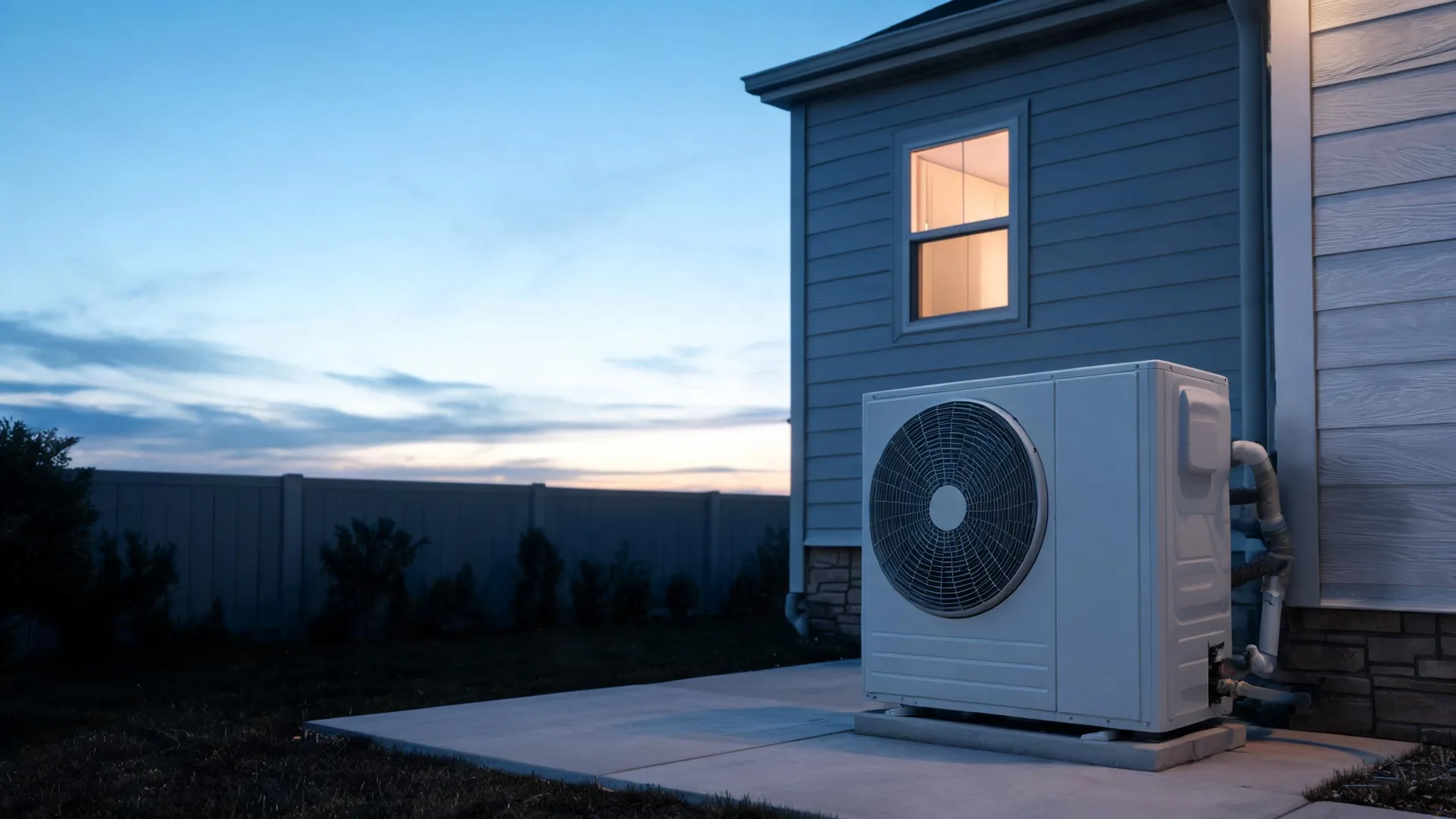
An outdoor residential air conditioning condenser unit mounted on a concrete pad, surrounded by gravel with a blue sky in the background.

A newer system is worth repairing

If your system came with the house and the house is newer, that history is worth telling the contractor. A unit installed with construction has a known age, and most parts have a working life measured in years, not months. That changes the call on a repair. A capacitor, a contactor, a failed run of refrigerant, none of that says the whole unit is done if it's got years ahead of it. Worth fixing almost always beats worth replacing when the age is on your side.

The capacitor goes first, most of the time

The run capacitor holds a charge that gets the compressor and fan motor started and keeps them turning. It's a wear part, and heat is what wears it. It weakens a little at a time, so the system might start slow, hum without starting, or have the outdoor fan stall, before the day it just doesn't start at all.

A refrigerant leak won't fix itself

Refrigerant doesn't get used up. If the level is low, it's leaking from somewhere, usually a coil or a fitting that's corroded or worked loose. Adding refrigerant without finding the leak just means doing it again in a few months, and running low makes the compressor work harder than it's built for.

Overhead view of an outdoor AC condenser unit on a concrete pad next to a house with a dark shingle roof.

A new air conditioner would cut about $60 a year off cooling for a typical East Baton Rouge Parish home.

  • A new one at the federal minimum, 14.3 SEER2$460 a year
  • An older air conditioner$520 a year

Estimates for a typical East Baton Rouge Parish home, compared with an older unit built to the previous federal minimum, from EIA household energy data, Louisiana fuel prices and NOAA climate normals. Your home will differ.

Repair makes sense when a part like a capacitor or contactor has failed.

Replacement makes sense when the compressor has failed or the system uses R-22 refrigerant, which is no longer made.

Age is the first thing to weigh, but it's not the only one. A unit that needs a second repair inside the same year is telling you something a single bad capacitor doesn't. The compressor is the one part that ends the conversation if it fails. It's sealed, it's expensive to replace on its own, and a contractor will almost always price a new system against a compressor swap rather than recommend the repair. Smaller parts are a different story. A blower motor, a capacitor, a control board, each of those can be replaced on its own without touching the rest of the system, and doing so doesn't shorten the life of anything around it. The question worth asking isn't just how old the unit is, but whether what's failing now is a part or the machine itself.