A illuminated white antebellum-style house with a wraparound porch, white columns, and Spanish-moss-draped oak trees, photographed at dusk.

AC Repair in Belle Chasse, LA

Tell us about the job

Takes about a minute. No obligation.

RepairCentral ACPlaquemines Parish, LA
Step 1 of 2

What ZIP code is the job in?

Seven months of run time

Your air conditioner runs from April through October here, with afternoon highs averaging 89°F in June, July and August. That's most of the year spent cycling on and off, pushing hard through the hottest months. The compressor and other parts rack up hours that a unit in a milder climate never sees.


What that means for your repair

A system that runs this much wears parts down sooner, and small issues turn into breakdowns faster than you'd expect. The dew point here averages 74°F in summer, heavier air than most of the country deals with, which makes the system work harder just to keep your house comfortable. Whatever's going wrong with your AC right now, it's worth having someone find the actual cause instead of patching the symptom.

7 months
April through October, your air conditioner is on duty
89°F
the average summer afternoon it cools against
11 hail events
in ten years, and hail bends the fins on outdoor coils
8 wind events
in ten years, and wind drives debris into outdoor units
Isometric line illustration of a cutaway single-story house showing interior rooms, ducted air handler, ceiling ductwork, and an outdoor condenser unit connected by refrigerant lines.
Your air conditioner works hardest from May through September.

NOAA nClimDiv, 1991–2020 normals

Plaquemines Parish logged 33 severe weather events between 2015 and 2024, including 8 windstorms, 11 hail events, 3 tornadoes and 10 tropical storms or hurricanes.

If your outdoor unit took hail or flying debris in any of that, it needs a look even if it's still running now.

Half the homes here are old enough to need this conversation

Half the homes here were built by 1997
Climate zone 2A
Power here costs 12.23 cents per kilowatt-hour
April is when weak parts failCooling starts in April here and runs through October, seven months on a system that's had all winter to hide a problem.

Electricity here runs 12.23 cents per kilowatt-hour, cheaper than most of the country pays. That's the one break you get. It doesn't last if the unit itself is working against you. A system low on refrigerant or struggling with a bad capacitor pulls more power to do the same job, and a machine that runs most of the year turns that into a bill you notice every month, not just once. A unit running weak all summer in a place with these rates still costs more than fixing it would. Worth having someone look at it now instead of riding it out.

Have it diagnosed right the first time

Seven months of cooling a year means this system doesn't get much downtime to show you what's wrong before it fails outright. Whatever's causing the problem now, a proper diagnosis finds the actual part at fault instead of guessing, so the fix holds through the rest of the summer instead of calling someone back out in August.

Find a contractor
A man in a cap, dark shirt and tan work pants walks up porch steps toward a green front door, carrying a canvas tool bag at his side, with a potted shrub beside the entry.
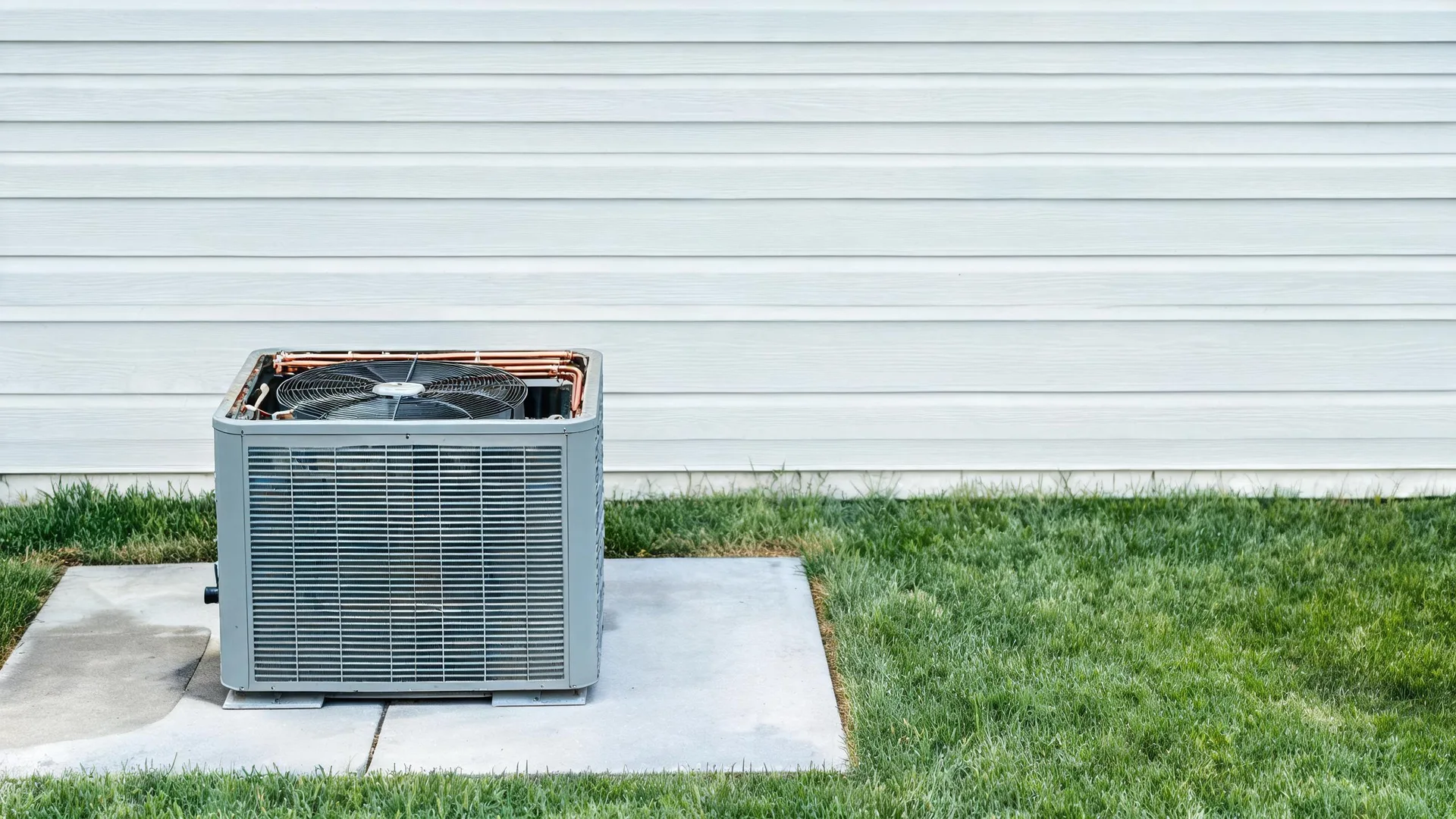
An outdoor air conditioning condenser unit mounted on a concrete pad beside a house, with electrical conduit running to a wall-mounted disconnect box.

Ask how much life is left, not just what today's fix costs

If your system came with a house built in 1997 or earlier, ask whoever comes out how much life it has left, not just what today's repair costs. A compressor or coil near the end of its run doesn't owe you another summer just because it's still cycling now. That's a five-minute question alongside any diagnosis, and it tells you whether you're paying for a fix or a fix that outlives the equipment around it by a few weeks.

What the sounds and smells tell you

Warm air coming out of the vents when the thermostat is set to cool points to a problem with the compressor or the refrigerant charge. A musty smell usually means mold or mildew sitting in the ductwork or on the evaporator coil. A burning smell is different and means an electrical part is overheating, which means shutting the system off until someone looks at it. Grinding, squealing or a hard metallic bang when the unit kicks on usually comes from the blower motor or the fan assembly, and it won't fix itself.

Patterns worth paying attention to

Short cycling, where the unit turns on and off every few minutes instead of running a full cycle, strains the compressor and usually traces back to a bad thermostat, a dirty sensor or a unit that was sized wrong from the start. Water pooling near the indoor unit means the condensate drain line is clogged and needs clearing before it backs up into the house. Ice on the refrigerant lines usually means airflow is restricted, often from a dirty filter, or the refrigerant charge is low. Rooms that never cool evenly, no matter how long the system runs, point to a duct problem or a system that's losing its grip on the whole house, not just one part of it.

Overhead view of an outdoor AC condenser unit on a concrete pad next to a house with a dark shingle roof.

A new air conditioner would cut about $70 a year off cooling for a typical Plaquemines Parish home.

  • A new one at the federal minimum, 14.3 SEER2$520 a year
  • An older air conditioner$590 a year

Estimates for a typical Plaquemines Parish home, compared with an older unit built to the previous federal minimum, from EIA household energy data, Louisiana fuel prices and NOAA climate normals. Your home will differ.

Repair makes sense when a part like a capacitor or contactor has failed.

Replacement makes sense when the compressor has failed or the system uses R-22 refrigerant, which is no longer made.

A diagnostic visit starts with the thermostat and works outward, not the other way around. Whoever comes out will check what the system is actually doing against what you've noticed, since a symptom like warm air or short cycling can trace back to a few different parts. They'll check refrigerant pressure, test the capacitor and contactor, and look at the condensate line before touching anything else. Amp draw on the compressor and fan motor tells them if something's pulling harder than it should, which often points to a part failing before it quits outright. A good diagnosis ends with the actual part named, not a guess, and a straight answer on whether fixing it makes sense or whether the unit's past the point where that's worth doing.