What to check before calling for AC repair in Louisiana

RepairCentral ACLouisiana
Step 1 of 2

What ZIP code is the job in?

What should I check before calling for AC repair?

Your AC isn't keeping up and you're about to pick up the phone. Before you do, it helps to know what a repair call actually involves. In Louisiana, where the system runs hard for most of the year, a few minutes checking the basics can tell you whether this is something simple or something that needs a licensed hand. It also means you can describe the problem clearly when you do call.

Check the thermostat, the filter, the breaker and the outdoor unit first

Make sure the thermostat is set to cool and set below room temperature. Check the air filter. A filter clogged with dust or pet hair blocks airflow and can make the whole system struggle, and it's the one thing you can fix yourself in a minute. Look at the breaker box for a tripped breaker, since AC units draw a lot of power and can trip one, especially on the hottest days. Walk outside and check the condenser unit. Clear away leaves, grass clippings or anything blocking it, since Louisiana's humidity means these units work almost nonstop and need clear airflow. If the air is running but not cooling, or the unit won't turn on at all after these checks, it's time to call someone licensed to look at it.

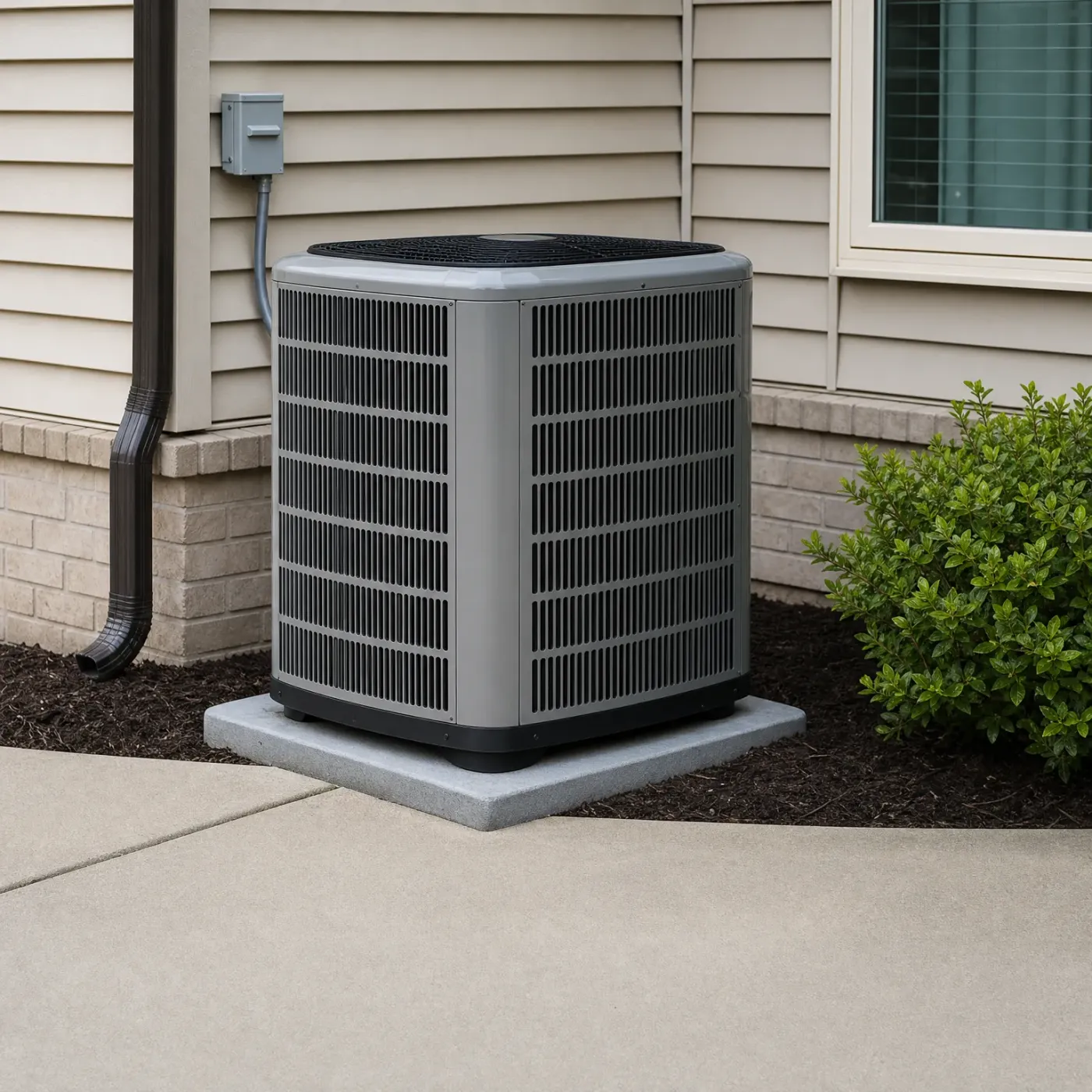
A gray outdoor air conditioning condenser unit on a concrete pad beside a house with horizontal vinyl siding, a brick foundation, downspout, electrical disconnect box, mulch bed and a green shrub.

Running as it should

Air moves out of the vents cold, the unit cycles off when the house reaches temperature, and the condenser outside runs quiet. The pad is clear, the fins are open, and nothing around the unit blocks airflow. This is what a working system looks like between calls.

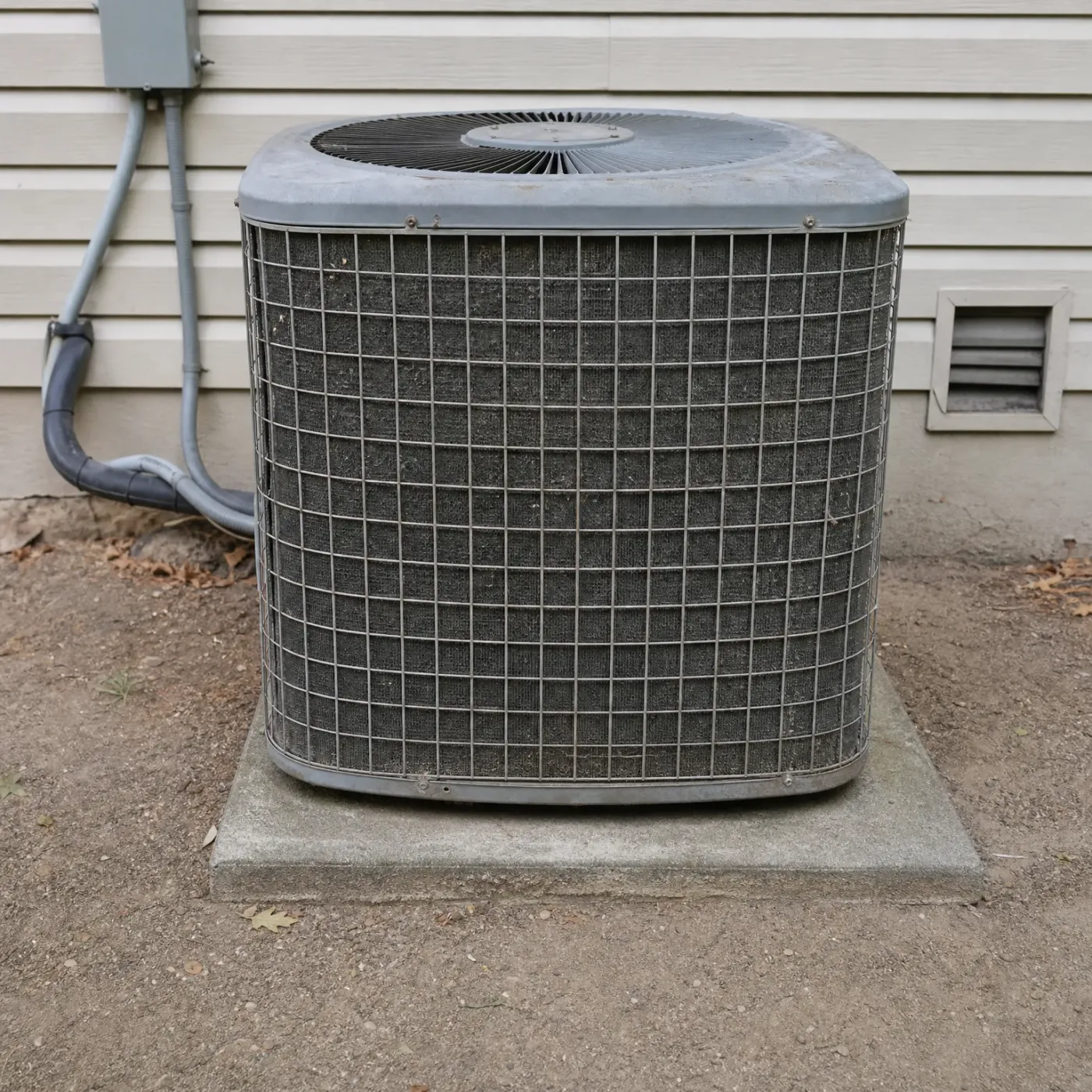
An outdoor air conditioning condenser unit with a dirty mesh coil guard sits on a concrete pad beside a house with horizontal lap siding, a wall vent, and conduit running to an electrical disconnect box.

Signs of trouble

The grille and fins are caked with dirt, and airflow through the condenser is choked off. A unit in this shape has to work harder to move heat outside, and it often shows up as warm air inside, higher bills, or a system that runs constantly without catching up.

A man with graying curly hair and a dark green sweater sits on a gray sofa in a sunlit living room, looking off to the side, with a framed picture, shelving, an armchair and a window with sheer curtains behind him.
A middle-aged man with graying hair and a short beard sits on a blue sofa in a living room, looking toward a window, with a bookshelf, lamp and framed picture in the background.
A gray-haired man in a dark blue sweater sits on a light gray sofa in a sunlit living room, looking off to the side, with a potted plant, shelving unit, and large glass doors behind him.
A gray-haired man in a dark sweater sits on a light gray sofa in a living room, looking toward a sunlit window with trees outside.

Reading the System Before You Call

  • A thermostat set below room temperature but no cold air usually points to the outdoor unit, not the thermostat itself.
  • Warm air from the vents often means the condenser outside has shut down on a safety switch, not that the thermostat failed.
  • A tripped breaker that won't reset after one try means something is drawing too much current and shouldn't be forced back on.
  • Ice on the indoor coil or the refrigerant lines means the system needs to run with the fan only, not cooling, until it clears.
  • A musty smell from the vents points to standing water in the drain pan or a clogged condensate line, not the air itself.
  • A breaker that holds but the outdoor fan still won't spin usually means a failed capacitor or motor, something only a contractor should open up.

A cooling system fails in a particular order, and where it stopped tells you something. The thermostat calls for cold air, the indoor blower moves air across the coil, and the outdoor unit does the work of pulling heat out of the house. When the vents blow warm, the break is almost always outside, where the condenser has either lost power or tripped off to protect itself. A breaker is a safety device, not a switch you get to retry. If it trips once, something briefly drew too much power. If it trips again, something is still wrong, and flipping it a third time risks the compressor itself. Ice on the coil or the lines means the system is still trying to run without enough airflow or refrigerant, and running it that way only adds more ice. Switching to fan only lets it melt without making the underlying problem worse. A musty smell usually has nothing to do with the air itself. It is standing water, sitting in the drain pan or backed up in the condensate line because it has nowhere to go. None of these fixes belong to the homeowner. A failed capacitor, a seized fan motor, a low charge, these need a gauge, a meter, or a replacement part, and a contractor who services AC systems in Louisiana every summer has usually already seen whatever yours is doing.

An outdoor air conditioning condenser unit on a concrete pad beside a house with horizontal lap siding, with a gray electrical disconnect box and conduit on the wall, mulch bed and shrub to the right, and mown grass in the foreground.
A clear pad and open fins let this condenser breathe, which is what keeps it cycling off like it should.
An outdoor air conditioning condenser unit on a concrete pad beside a house with light blue horizontal siding, with a shrub to the left and a conduit and disconnect box on the wall to the right.
Coils packed with dust and debris make the unit work harder and can trip it offline on a hot Louisiana afternoon.
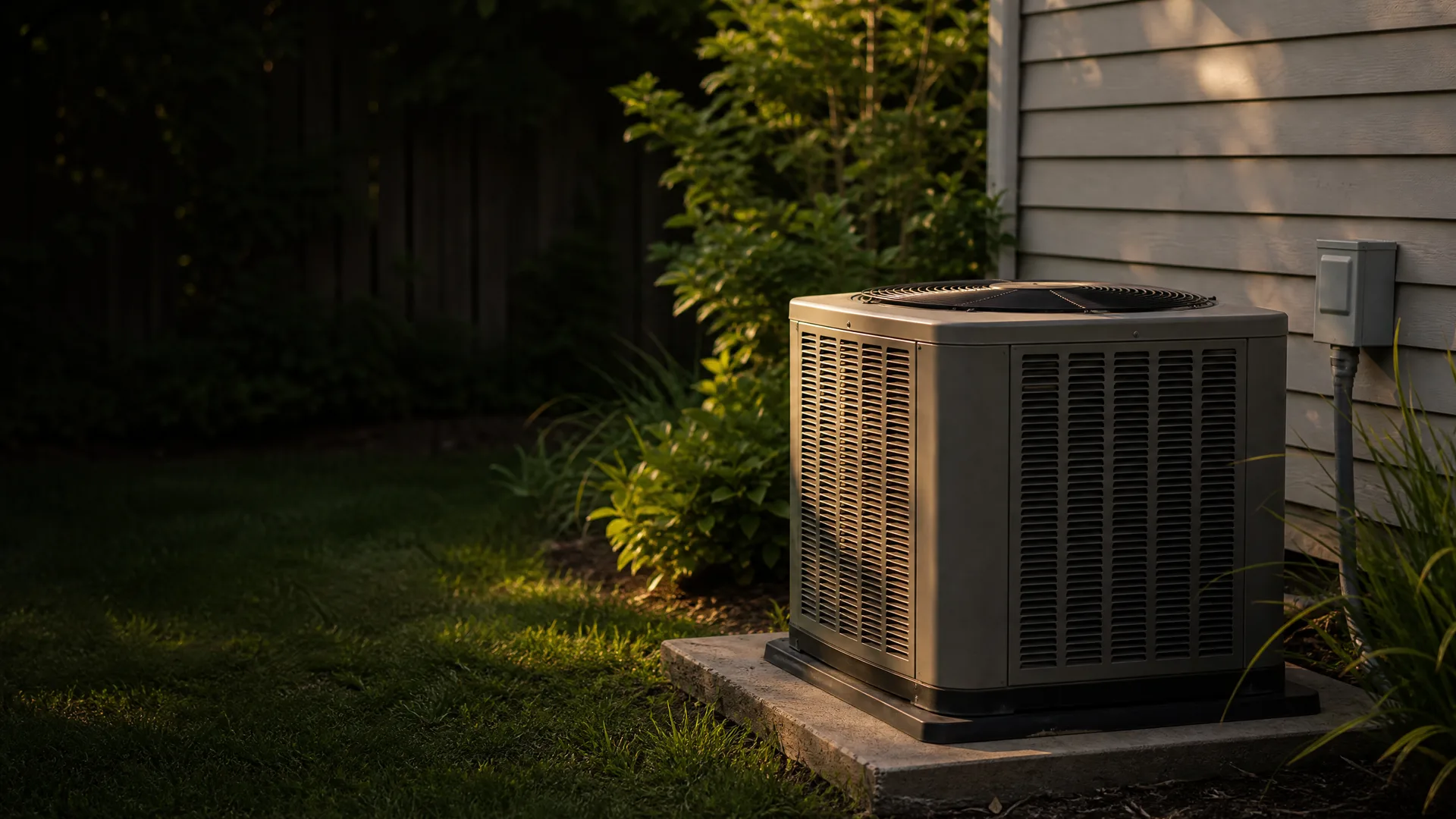
An outdoor air conditioner condenser unit sits on a concrete pad beside a house with horizontal lap siding, surrounded by grass and shrubs in low evening light.

You're out back around seven, grass still warm underfoot, and the light's gone that flat gold it gets before dark. You notice it because the house hasn't cooled down the way it should have by now. You walk over to the condenser and the fan inside the cage isn't moving. No hum, no spin, nothing. You crouch down and listen for a second, like that'll change something. A mosquito finds your ankle. Somewhere behind you through the kitchen window you can hear the unit indoors still running, blowing air that isn't cold anymore. The grass around the pad is still, no vibration, no draft coming off the side vents like there usually is this time of evening.
Why does the house feel warmer than the thermostat says

You set it to 72 and the house sits at 77. The air coming out of the vents feels more lukewarm than cold, or barely moving at all. Outside, the condenser might be humming along or might have gone quiet altogether. Inside, you may hear the blower running without any real cooling behind it, or notice the system turning on and off more often than it used to. Some rooms feel fine while others stay sticky. Left alone through a Louisiana summer, a system working this hard to keep up runs longer hours and pulls more power doing it, and a unit that keeps shutting off on its own is closer to a breakdown than a fix.

An outdoor air conditioner condenser unit on a concrete pad beside a house with light gray horizontal siding, with mulch and green shrubs on either side and a concrete walkway in the foreground.
Before you get your air conditioner repair
A gray outdoor air conditioning condenser unit on a concrete pad beside a house with horizontal siding and a stone veneer base, with refrigerant line and electrical disconnect box on the wall and flowering shrubs to the left.
After you get your air conditioner repair
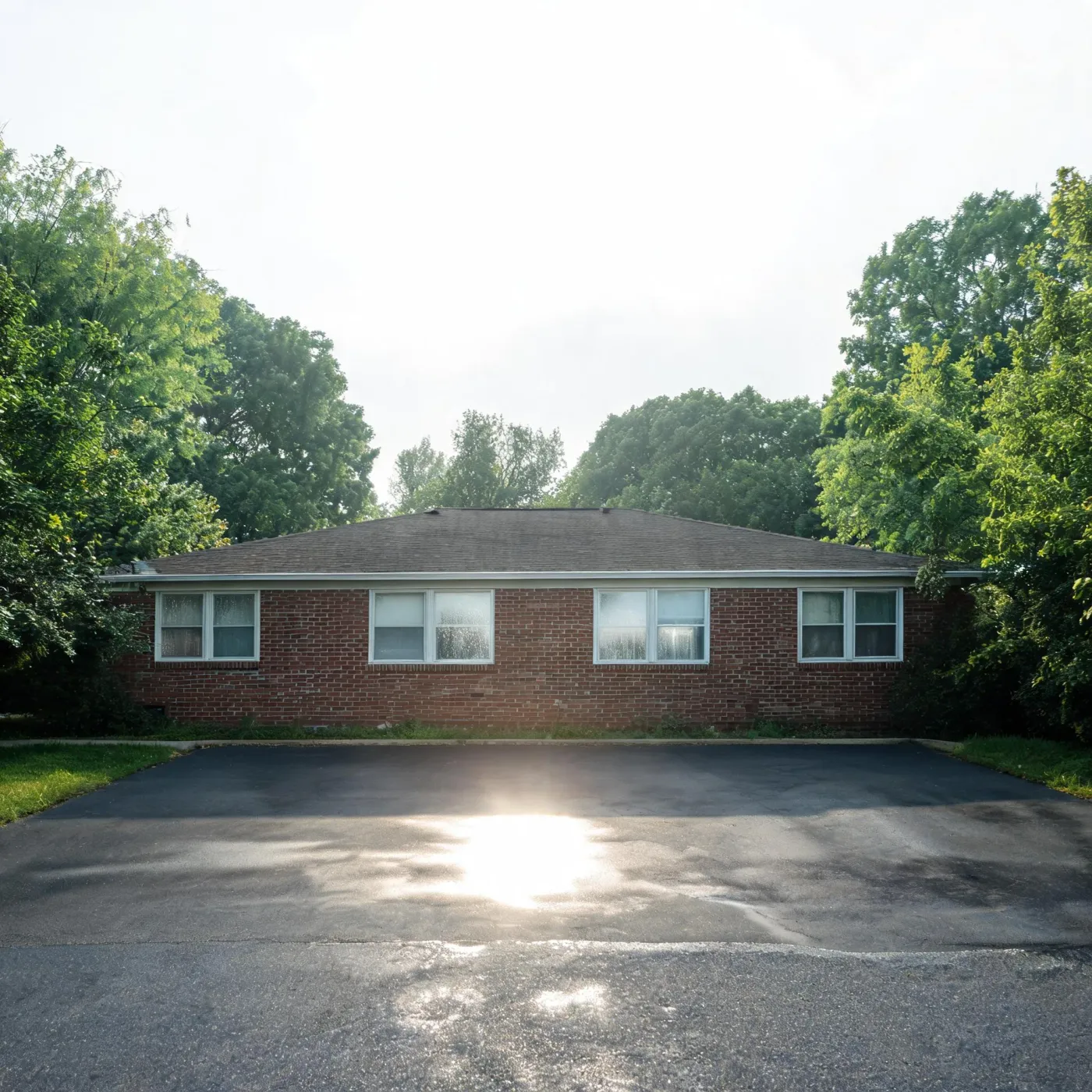
A single-story red brick house with a low shingled roof and several white-framed windows, fronted by a large empty asphalt lot with sun glare, surrounded by green deciduous trees under a bright overcast sky.

Summer air here averages a 73°F dew point across June, July and August, according to NOAA climate data. That's heavy, wet air, and your AC has to pull a lot of that moisture out before the house feels comfortable, not just cool it down a few degrees. That's extra strain on the system day after day, and it's often why a unit that's losing its edge shows it first in Louisiana rather than somewhere dry. When something's off, matching the symptom to the right cause matters more here, and getting it to the right local contractor, one who works on systems under this kind of load every summer, is worth more than a quick guess.

NASA POWER T2MDEW county cells weighted by homes

An air conditioner pro near you

The pro who reaches out is licensed in Louisiana.

Sending the form costs nothing.

What the breaker tells you

Flip the breaker back and watch what it does. If it holds and the unit starts, that part of the problem is solved. If it trips again within a minute or two, something is pulling too much current, usually the compressor or a failing capacitor, and that's not something to force by resetting it again and again. Breakers are built to trip before a part burns out, so a breaker that won't hold is doing its job. Leave it off and let a contractor who works on this equipment find the actual cause rather than the symptom.

Why the outdoor unit matters most

Louisiana summers put most of the load on the condenser outside, not the furnace or the indoor coil. Electric heat here runs on a different part of the system entirely, so a problem in summer is almost always the outdoor unit, the refrigerant charge, or the airflow across it. That's useful to know before you call, because it narrows down what a contractor needs to check first. A local contractor who services this equipment all summer has likely already seen whatever is happening at your house, on someone else's unit, within the past few weeks.

A woman with shoulder-length graying brown hair, wearing a beige cardigan over a white top, sits in a light upholstered armchair and looks off to the side, with a curtained window, bookshelf, and lamp shade behind her.
A woman with dark hair in a bun holds a sleeping child wrapped in a knitted beige blanket on a sofa, with a lit lamp and a window behind them.

Call it in yourself

You find the right contractor, explain what you've checked, and hope the one you picked knows this equipment and isn't booked out all week.

Find a pro near me

Get matched instead

A licensed contractor local to you, who works on AC units all summer, reaches out knowing what you already found.

Find a pro near me
A man in a gray polo shirt holding a clipboard walks up a paved path toward a light-colored house where a woman stands in the open front doorway.

What a stalled AC costs you at home

A house that's held at 77 instead of 72 doesn't just feel warmer, it stays wet. Furniture, bedding, and the air itself pick up moisture your unit isn't pulling out anymore, and that's when rooms start to smell closed up even with the windows shut. Keep running a system that's cycling wrong or tripping its breaker and you risk turning a part failure into a compressor failure, which is a bigger job than the one you've got now.

You don't have to figure out which it is before you make the call. A licensed contractor who works on AC systems all over Louisiana every summer has likely already seen whatever yours is doing this week. Getting matched with one means a single contractor who takes on your specific problem reaches out to you directly, not a list of names you have to sort through and vet yourself while the house sits warm.

Interior corner of a living room with a beige upholstered sofa and dark cushion in the foreground, a ceramic vase of leafy branches on a dark side table by a curtained window, a framed picture on the wall, and a wood-surround fireplace at right.
A gray outdoor air conditioner condenser unit on a concrete pad beside a house with horizontal vinyl siding, surrounded by mulch, flowering shrubs, and lawn.

Clear and open

The pad around this unit is bare concrete and mulch, nothing stacked against the cage. Grass is cut back from the sides and the shrub nearby isn't crowding the fins. Air can pull through the coil from all sides, which is what lets the compressor shed heat and cycle off on its own.

A weathered outdoor air conditioning condenser unit on a concrete pad beside a house with light horizontal siding, an electrical disconnect box and conduit on the wall, and mulched soil on either side.

Caked and blocked

This coil is covered in dirt and grime, built up fin by fin until the cage is more dirt than metal. The conduit running to the disconnect box is the only clean line on the unit. With airflow cut off like this, the system can run long, hot, and eventually shut down on its own safety switch.

Power costs 12.52 cents per kilowatt-hour statewide

At 12.52 cents a kilowatt-hour, running the AC in Louisiana isn't the expensive part of summer, so there's little reason to let it limp along on a bad capacitor or a dirty coil just to save a repair call. A unit working harder than it should still shows up on the bill, even with power this cheap.

EIA-861 2025 statewide residential average

What you check before you call tells you what's wrong. Who you call decides whether it gets fixed right the first time. A tripped breaker, a dirty coil, a safety switch that's done its job and shut the unit down, each of these points somewhere specific, and that's worth knowing before a contractor ever gets to your house. But the fix still takes someone who works on this equipment all summer in Louisiana heat, who's seen that failing capacitor or that clogged condensate line often enough to know it on sight. When you get matched, it's one licensed contractor local to you, not a handful of companies competing for the job and blowing up your phone. They show up knowing the climate they're working in and what tends to fail in it. Your AC is still warm air and a thermostat that won't catch up. What changes now is that you're not guessing who's on the other end of the call.

A corner of a room with a large textured stone pot holding a leafy branching tree, next to a wooden console table holding a dark shallow bowl and a pale vase, below a framed neutral-toned artwork on a beige wall, on a light oak plank floor.
Interior corner of an empty room with a wood-framed window showing green foliage outside, beige walls, wooden baseboard and hardwood floor, with angled sunlight falling across the wall.
A potted olive-like tree in a terracotta urn stands in the corner of a room with plaster walls, dark hardwood floor and a patterned rug, beside a large black-framed grid window showing green trees outside.
Low-angle interior view of dark hardwood flooring meeting a white baseboard at a wall corner, with a dark wood cabinet holding a plant in a pale vase at left and a bright window at right.
A dark wood three-drawer dresser holding a dark ceramic vase with leafy green branches stands in a corner of a beige room with white baseboards, a window with greenery outside, and a patterned rug on a wood floor.

Get the right pro for your air conditioner

Your request stays with one local pro.

Get my match

It costs nothing to send, and you don't have to hire anyone.