

Running quiet
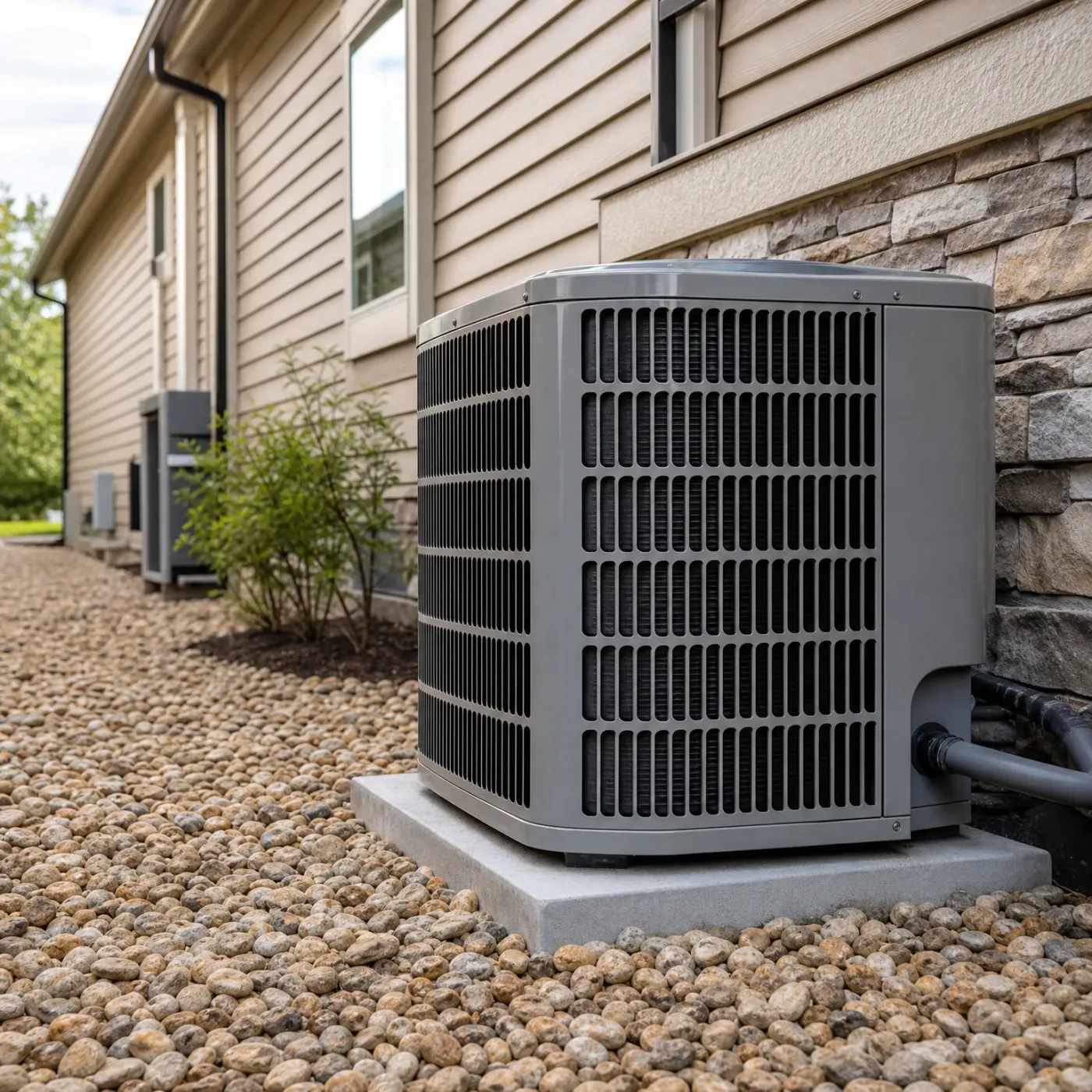
A healthy condenser hums at a steady, even pitch, nothing you'd notice from inside. The fan spins smooth, the fins are clear, and the pad underneath sits level. Air moves through without rattling or straining against anything.
Tell a local repair pro what your air conditioner is doing.
Find an air conditioner proYour AC is loud enough to notice over the TV or while someone's trying to sleep, and in a Louisiana summer you can't just shut it off and wait. You want to know if this is something that burns out the unit if you ignore it, or just an annoying sound that'll pass. Either way you need to know what's making the noise before you decide what to do next.
A grinding or screeching sound usually points to the outdoor fan motor or a failing compressor. A rattle is often a loose panel or screw vibrating with the unit. A hissing or bubbling sound can mean refrigerant is leaking, and a clicking that won't stop can mean the electrical relay is sticking. Running your AC this hard through a Louisiana summer puts more strain on these parts than a system that only runs a few weeks a year, so a noise that might sit unaddressed somewhere mild tends to get worse fast here. If the sound changes or gets louder over a day or two, that's the compressor working harder than it should, and it's worth having someone look at it before the unit shuts down in the middle of a hot stretch.

A healthy condenser hums at a steady, even pitch, nothing you'd notice from inside. The fan spins smooth, the fins are clear, and the pad underneath sits level. Air moves through without rattling or straining against anything.

Grime packed into the fins makes the unit work harder and can turn into a louder, rougher sound as the motor strains. Rattling, screeching or a hard clank usually means a part inside has worked loose or is wearing out.




A rattle that only shows up when the fan kicks on is usually something loose, a screw on the access panel or a piece of trim vibrating against the cabinet. It's worth a look but it won't strand you without cooling. Same with a hum that gets slightly louder on the hottest afternoons. The compressor works harder when it's 95 outside, and it'll say so. Keep the outdoor unit running, keep an eye on it, and get it checked when you have a free afternoon rather than treating it as tonight's emergency.
A grinding or screeching noise means metal is wearing against metal, usually a motor bearing going bad, and running it longer turns a repair into a motor replacement. A loud bang on startup can mean a broken part inside the compressor banging around the housing. If you hear either one, cut power to the unit at the breaker or the outdoor disconnect. In Louisiana humidity, a few hours without AC is uncomfortable but survivable. A seized compressor is not something a repair fixes cheaply.


The pro who reaches out is licensed in Louisiana.
A local pro who knows air conditioners gets your details and gets in touch.
You only hire the pro if you want to.


A compressor doesn't get louder for no reason. Grinding or screeching when it kicks on usually means something inside it is already damaged, and that noise tends to stay or get worse, not fade. A buzz while the unit runs is often electrical, a capacitor losing its charge or a contactor whose contacts have worn down from cycling on and off all summer. A squeal points somewhere else, to the fan motor bearings wearing thin, and a motor that squeals now can seize later. Not every noise means a part is failing. Refrigerant lines running up the wall can work loose from their clamps over years of vibration, and a rattle there is a mounting problem, not a mechanical one. Hissing is worth paying attention to, especially near the lines or the indoor coil, because that can mean refrigerant is getting out through a leak rather than staying in the system where it belongs. A clicking that keeps repeating, not just once at startup, usually traces back to a relay or control board having trouble holding the circuit closed.


A grinding or screeching compressor keeps drawing power while it wears down further. In a Louisiana summer, that's a unit that can quit on the hottest afternoon of the week.
A contractor who works on these condensers every summer can tell you from the sound alone whether it's a loose part or something failing inside.
At 12.52 cents per kilowatt-hour, a struggling compressor costs you more every hour it runs that way. A unit grinding or straining to push air pulls more power than a healthy one doing the same job, and in Louisiana that meter doesn't slow down once summer sets in.
EIA-861 2025 statewide residential average
Refrigerant moves through the compressor and starts picking up heat
A worn part inside the compressor starts grinding or screeching under load
The fan pulls hot air across the condenser coil and out the top
A loose panel, worn bearing, or bad capacitor turns normal operation into noise

A grinding compressor, a buzzing contactor, a rattling panel. Each one points to a different part, and each one tells you something different about whether it can wait. What you heard today is information, not just noise to tune out while the TV's on.
A contractor who works on condensers like yours all summer can match the sound to the part before ever touching it. Getting matched means one licensed contractor local to you reaches out, someone who's heard that same grind or buzz on units just like this one and knows what usually causes it. Not a handful of companies competing for the callback, just the one who's suited to the job.

Your request stays with one local pro.