
Running clean
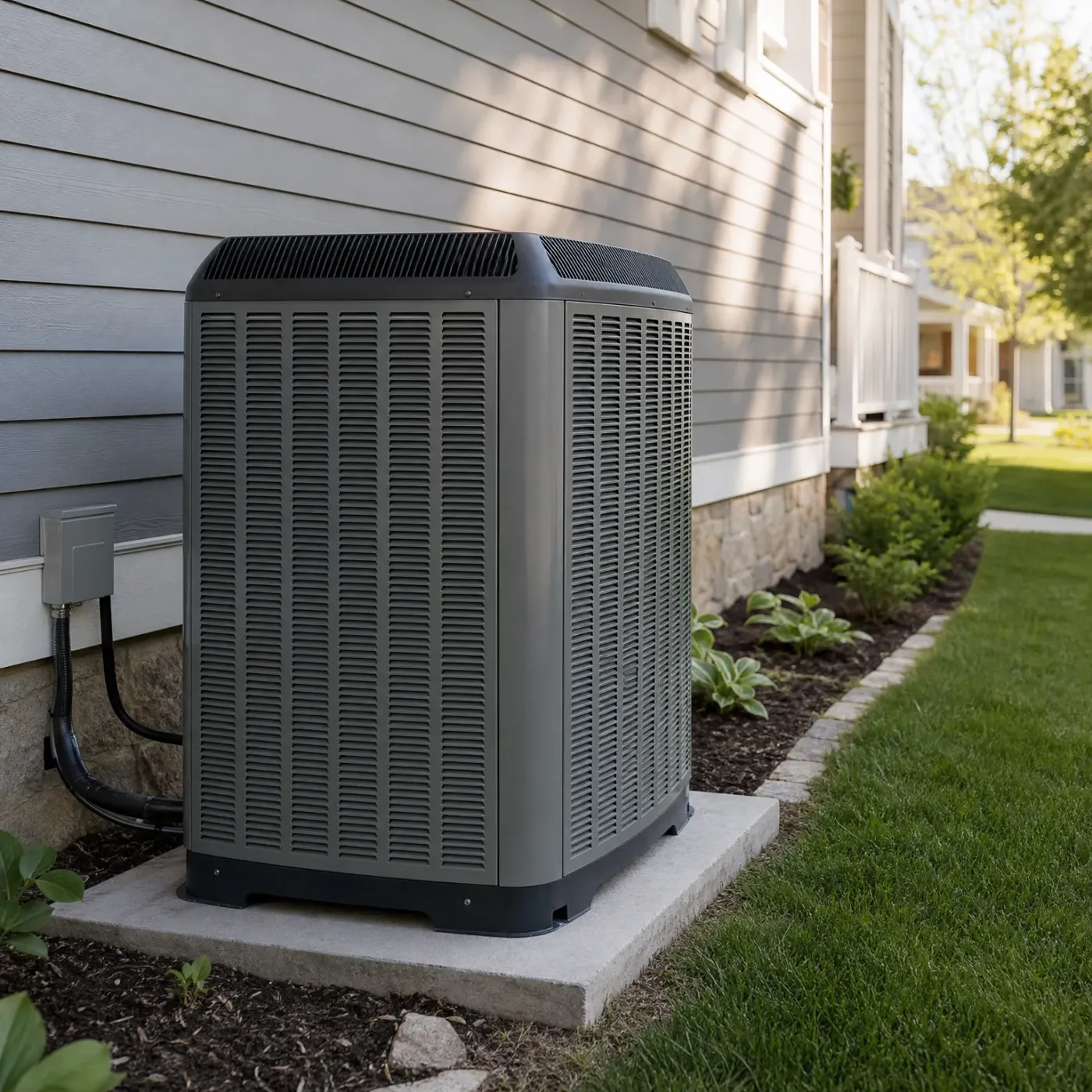
This is what your outdoor unit sounds like when nothing is wrong: a steady hum, maybe a low fan noise, and that's it. The lines and conduit run neat to the disconnect box, and the pad underneath stays clear.
A loud noise from the outdoor unit usually means something has changed, whether it just started or you have been hearing it for a few days. You want to know if it is something to shut off now or something that can wait for a service call. Hammond summers put a heat pump to work for months at a time, so the unit runs long hours and a new noise tends to get noticed fast.
A grinding or screeching noise is often the fan motor bearing or the compressor wearing out inside the outdoor unit. A rattle is loose panels or debris caught in the fan. A clicking at startup or shutdown is usually normal, but repeated clicking without the unit starting points to a failing relay or capacitor. A buzzing hum can mean an electrical issue at the contactor or a refrigerant line vibrating against the cabinet. With a heat pump running most of the year in Tangipahoa Parish to handle both the long summers and the mild winters, the moving parts put in more hours than they would somewhere with a shorter cooling season, so wear shows up as noise before it shows up as a breakdown.




This is what your outdoor unit sounds like when nothing is wrong: a steady hum, maybe a low fan noise, and that's it. The lines and conduit run neat to the disconnect box, and the pad underneath stays clear.

A unit caked in dirt and grime like this one is working harder than it should, and that strain shows up as noise before it shows up as a breakdown. If yours looks like this, the sound is worth paying attention to, not waiting out.
Walk out to the unit and stand near it for a minute. A rattle that picks up speed with the fan usually means something loose in the fan cage, a screw or a piece of debris. A squeal when the unit first kicks on points to the fan motor bearing. A buzz that stays steady and low can be the contactor, the relay that switches the compressor on and off. If you've let a grinding or banging noise go on for more than a day or two, you're not just looking at a noisy unit anymore. A failing motor or a loose compressor mount can turn into a unit that won't run at all, and in Hammond's heat that means waiting on repair with no air moving through the house.
The thermostat calls, and the outdoor unit's contactor closes to send it power.
The compressor starts up first, pressurizing refrigerant to move heat.
The outdoor fan motor spins up to pull air through the coil.
A worn bearing, loose blade, or failing motor shows up as noise right here.
At 11.91 cents per kilowatt-hour, running your heat pump here doesn't strain the budget, but a bad bearing or a failing compressor will still drive that bill up fast if you let the noise go. Catching it now keeps the fix small.
EIA-861 2025


A noise that is getting worse while you read this isn't going to fix itself by evening. Tangipahoa Parish summers put a heat pump through months of steady work, and a unit running rough in July doesn't get a break to recover on its own. Left alone, a loose blade can bend, a weak bearing can seize, and what would have been a simple repair turns into a compressor replacement. Figuring out which one you have means getting a contractor out to look at it, and normally that means searching around, calling a few places, explaining the same noise three different times, and waiting on quotes to compare. Send the form above and that work is off your plate. One contractor who covers Hammond gets your request, already knowing what you're dealing with, and you can go back to whatever you were doing before that noise started pulling your attention outside every few minutes.
A heat pump in Tangipahoa Parish runs most days of the year, not just a few weeks of deep summer. Mild winters mean the outdoor unit keeps cycling on and off almost year round instead of sitting idle for months. A loose blade or worn bearing that might sit quiet in a system used sparingly gets far more hours to fail here. Every cycle the fan spins, the bad part rubs or knocks again, and the damage adds up faster than it would somewhere the unit runs half as often. The noise you hear today is the same part failing a little more each time it starts.
The outdoor fan motor turns on a small bearing that keeps the shaft centered while it spins. When that bearing wears, the shaft starts to wobble instead of turning true, and the blade knocks against the fan cage or housing on each rotation. That knock is what you hear as the rattle or grind. A bearing doesn't repair itself or quiet down. It wears a little more with every hour the fan runs, and once it seizes, the motor either stalls or burns out trying to keep turning against it.
Winter nights average 42°F
Winter nights average 42°F, so the outdoor unit never truly shuts down for the season. A bad bearing or loose part keeps getting worked instead of resting.
Heat runs November through March
Heat runs November through March. That's five months where the outdoor unit cycles on cold mornings, and a noise that starts now won't wait until spring to get worse.
Cooling runs April through October
Cooling runs April through October. Seven months of steady compressor and fan work means a grinding or rattling noise has a long stretch to turn into a bigger repair.
NOAA nClimDiv 1991-2020
A loud noise from your heat pump is the unit telling you something changed, whether it's a loose panel or a bearing starting to go. Grinding and metal-on-metal sounds mean shut it off now. A bang or clank tied to the compressor cycling is worth a call before it turns into a bigger repair. Letting it run past that point costs you the compressor or the fan motor, not just the noise. You don't have to figure out which one it is on your own, or spend an afternoon calling around Hammond and Ponchatoula for someone who can get out to look at it. Send the form once and that search is done. No explaining the sound twice, no comparing quotes from three different companies while the unit keeps running rough in the meantime. You already know what you heard and when it started. That's enough to get the right person out to look at it.
Skip calling shops to ask who repairs heat pumps in Tangipahoa Parish.
Asking costs nothing, and the choice to hire stays yours.