Why your AC is running but not cooling in Louisiana
After this form, you can stop searching for an air conditioner pro.
The air is moving. You can feel it at the vent. It just isn't cold, and the house isn't losing that wet, heavy feeling that Louisiana summer puts into every room. That gap, between the AC running and the house actually cooling, usually points to something specific: a low refrigerant charge, a coil so iced up it can't move heat anymore, or a compressor that's struggling and losing the fight. None of those get better by running the system longer.
Letting it run while you figure out what's wrong isn't free. A unit working against a frozen coil or a refrigerant leak is burning power without doing the job it's built for, and in a Louisiana summer that's not a short stretch of time to wait out. Power here is cheap, but paying for a system that isn't cooling your house is still paying for nothing.
The part most people underestimate is what it takes just to get someone out to look at it. Finding a licensed contractor, checking if they even work on your brand of system, calling two or three for quotes, explaining the same problem over the phone three separate times, then waiting to see who calls back first. That's a half day gone before a single tool touches your unit.
Send the form below and that part stops being yours to do. You're not the one hunting down a contractor anymore, not the one sitting on hold or chasing a callback. That work moves off your plate the moment you hit submit. What's left is the actual repair, the part that was always going to take a licensed hand, and someone qualified to do it getting word that your system needs a look.
Why is my AC running but not cooling my house?
You've checked the thermostat, maybe even reset it, and the unit is running. Air comes out of the vents. But the house still feels thick and warm, the way it does when the air conditioner isn't keeping up with Louisiana humidity. You want to know what's actually wrong before you decide whether this is something to look at yourself or something that needs a contractor.
The system is low on refrigerant, or the coil is frozen and blocking airflow
Most of the time this comes down to one of two things. The refrigerant charge is low, so the coil can't pull enough heat out of the air passing over it, and what comes out the vents is just room temperature air. Or the evaporator coil has iced over, which chokes off airflow entirely until it thaws. A dirty filter or blocked return can cause that same freeze-up by starving the coil of airflow. In Louisiana, where the air is already carrying so much moisture, a system running low or struggling with airflow falls behind fast, because it's fighting humidity on top of heat. Either problem needs a contractor to find the actual cause and fix it, since a frozen coil can hide a refrigerant leak underneath it.
Running right
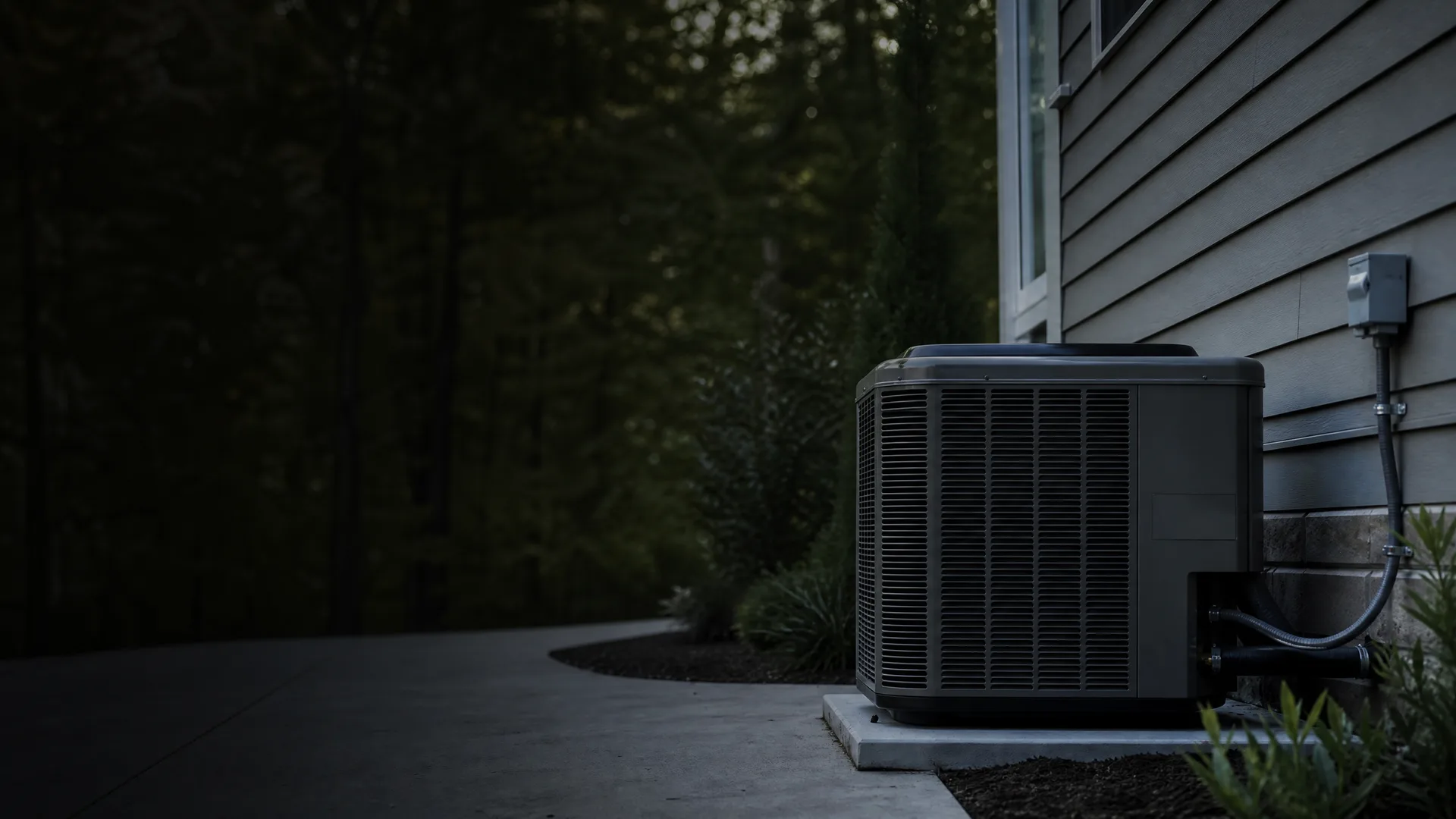
The condenser sits outside on its pad, coil guard clean, running steady. Air comes out of the vents cold enough to drop the room's temperature and pull the wet feeling out of the air within an hour or so of the thermostat calling for it.
Running, not cooling
Same unit, same spot, but the coil guard is caked with dirt and grime. Airflow through a coil that dirty drops off, the unit runs and runs, and the house holds onto that thick, warm feeling no matter how long it's been on.
Low Refrigerant or a Dirty Coil
Low refrigerant
The coil ices over because the refrigerant charge is too low to absorb heat the way it's supposed to, and that ice blocks airflow instead of helping it.
Warm air comes out of the vents even though the blower is running full speed, because there's nothing cold left in the coil to pull heat from the air passing over it.
A hissing or bubbling sound near the lines outside points to a leak, and a system low on charge will keep running long after it should have cycled off.
Refrigerant doesn't get used up on its own, so if the level is low, it left through a leak somewhere in the lines or the coil.
Letting it run low on charge for weeks at a time puts more strain on the compressor, since it has to work harder to move less cooling.
Dirty condenser coil
The outdoor unit sheds heat through that coil, and when it's packed with grass clippings, pollen, or cottonwood fluff, the heat has nowhere to go.
The compressor keeps running, pulling the same power, but the house stops dropping in temperature because the unit can't release what it's collecting.
A coil caked with debris raises the pressure inside the system, which shortens the life of the compressor over time.
Pine straw and grass clippings built up along the fins are something you can often see just by walking up to the unit and looking.
Hosing it down from the inside out restores airflow, but a coil that's been neglected for a season or more may need more than a rinse to clear.
A system that runs without cooling the house doesn't fix itself, and with Louisiana humidity sitting in every room, a few more days of this gets old fast. Figuring out whether it's the refrigerant charge, a frozen coil, or something electrical means someone has to get eyes on the unit, and that starts with finding a contractor who can actually take the job. That's usually a string of calls, voicemails, maybe a wait for someone to call back, then explaining the same symptoms over again to each one before you even get a quote to compare. Sending this request means you skip all of that. One contractor gets your information and reaches out, and from there it's their job to figure out what's wrong, not yours to keep chasing. You still have a repair ahead of you. But the part where you're the one hunting for help, that part is done once you send this.
Why warm air still has a smell
A coil caked in dust or pet hair can't pull heat out of the air the way a clean one does. The air crosses it too fast or too slow to drop much in temperature, and what comes out the vent feels closer to room air than to the 54 to 60 degrees a working system puts out. A dirty filter upstream often causes this, starving the coil of airflow long before anyone notices the coil itself.
What the outdoor unit tells you
The condenser outside has to dump the heat the indoor coil collects. If its coil is packed with grass clippings or the fan isn't turning, that heat has nowhere to go, and the refrigerant coming back inside is still carrying it. Stand near the unit when the system is running. A fan that isn't spinning, or a unit that's hot to the touch and silent, points to a problem out there instead of at the thermostat.
What does this feel like in your house right now
Walk through the house and check each room. Some feel okay, others feel sticky even though the vent is blowing. The air in the bedrooms might feel heavier than the air near the thermostat, so the system reads one temperature while the rest of the house sits warmer than that. You may notice the unit running longer than it used to, straight through the afternoon without shutting off. Furniture and sheets can feel damp to the touch. If this keeps up, the extra runtime without any relief shows up on the power bill, and a coil that stays iced or a system that strains for hours at a time tends to wear out the parts carrying that load.
Power costs 12.52 cents per kilowatt-hour statewide
At 12.52 cents a kilowatt-hour, running the AC longer while it fails to cool isn't cheap relief, it's just a higher bill with the same sticky air. A unit stuck blowing warm still pulls power the whole time it runs, so the cost shows up whether or not the house ever cools down.
EIA-861 2025 statewide residential average
An AC that runs without cooling almost always comes down to one of a handful of things: refrigerant too low, a coil frozen or caked with dirt, a blower not moving enough air, or an electrical part failing partway. None of those clear up on their own, and the longer the system runs like this, the more it costs to keep a house that still feels like Louisiana outside. Finding out which one it is usually means calling a few contractors, explaining the same symptoms each time, and waiting to see who calls back with a straight answer. Sending the form here instead means that part is done. You've already said what the air feels like at the vent and what the house feels like an hour after the thermostat calls for cool air. That's the information a contractor needs to start, and once it's sent, finding someone to take the job stops being something you have to manage.
Hand off the search today
Explain the job once and skip repeating it on every call.