Why your heat pump isn't cooling in Louisiana summers

RepairHeat PumpLouisiana
Step 1 of 2

What ZIP code is the job in?

Why isn't my heat pump cooling in the summer heat?

You expect the heat pump to keep the house cool once the Louisiana heat and humidity settle in, and instead the air coming out feels weak, or the house just won't get down to temperature no matter how long it runs. In a lot of homes this starts small, a degree or two off, before it turns into a system that runs most of the day without catching up. You want to know what's actually going wrong before it gets worse.

Your heat pump is low on refrigerant or losing airflow somewhere it shouldn't

A heat pump cools the same way an air conditioner does, by moving heat out of the house with refrigerant. If the charge is low from a slow leak, or the outdoor coil is caked with dirt, or the indoor coil is iced over, the system can't move enough heat and the house falls behind. In Louisiana that shows up fast, because the outdoor unit is working against heat and humidity for months at a stretch with barely a break. A system that's a pound of refrigerant low might keep the house comfortable in a mild April but lose ground once July and August push it to run nearly nonstop. The fix depends on which of these it is, and that takes a gauge set and a coil inspection to pin down, not guesswork.

A beige outdoor air conditioning condenser unit on a concrete pad beside a house with horizontal vinyl siding, with refrigerant lines and a disconnect box on the wall, surrounded by dark mulch and a green shrub at left.

Running right

Air moves steadily from every vent and the house actually pulls down to the temperature on the thermostat. The outdoor unit cycles on and off instead of running nonstop, and the line running to it stays cold to the touch. You can hear it kick on, run a while, then go quiet.


An outdoor air conditioner condenser unit on a concrete pad beside a house with beige horizontal siding, with conduit running from an electrical box on the wall.

Struggling in the heat

The unit outside runs and runs, and the house still sits a few degrees above what you set. Air from the vents feels room temperature instead of cold, or barely moves at all. Sometimes the outdoor unit is coated in ice even though it's 95 degrees out.

Is your house actually cooling down or just running

You set the thermostat to 72 and the unit runs and runs, but the house settles at 76 or 77 and stays there. The air from the vents feels cool, not cold, and a room with afternoon sun never catches up. The outdoor unit might run nonstop through the hottest part of the day instead of cycling off. Indoors, the air can feel damp even with the system on, since a heat pump that isn't cooling right also stops pulling moisture out of the house. Left alone through a full Louisiana summer, that's long stretches of high humidity indoors, which gives mold and mildew a place to start, on top of a power bill that reflects a unit running constantly for little result.

A gray-haired man in a dark sweater sits on a light gray sofa in a living room, looking toward a sunlit window with trees outside.
A gray-haired man in a dark blue sweater sits on a light gray sofa in a sunlit living room, looking off to the side, with a potted plant, shelving unit, and large glass doors behind him.
A bearded man with graying hair in a dark green sweater sits on a sofa in a living room, looking off to the side, with a sliding glass door and a dim kitchen doorway behind him.
A gray-haired man in a dark knit sweater sits on a light gray sofa in a living room, looking toward a sunlit window, with houseplants, a lamp, and framed art in the background.
An outdoor condenser unit on a concrete pad beside a gray lap-sided house, with an electrical disconnect box and conduit on the wall and shrubs with mulch to the right.
The coil fins are clean and the unit sits clear of leaves and debris, so air pulls through it the way it should.
An outdoor air conditioner condenser unit on a concrete pad beside a house with horizontal vinyl siding, with refrigerant lines and an electrical disconnect box on the wall and dry leaves on the ground.
Dirty coil fins and leaves piled against the base choke airflow, and the unit has to fight to move any heat at all.

Cooling your house means moving heat out of it, not making cold air. The refrigerant carries that heat from the indoor coil to the outdoor unit and releases it outside, and a part called the reversing valve is what tells the system to run that way instead of the winter way. When something in that chain goes wrong, the unit does not shut off. It just stops doing the job right. A stuck reversing valve can leave it running backward in the middle of July. A slow refrigerant leak drops the coil temperature so low that it ices over instead of cooling the air. The outdoor fan has to pull air through that coil to get rid of the heat the refrigerant is carrying, and a weak fan motor leaves nowhere for that heat to go. Even the compressor can keep turning and pulling power without moving enough refrigerant to matter. All of it starts at the thermostat, which tells the reversing valve which mode to run. A fault in that wiring can lock the system into heating while your house sits in Louisiana summer heat.

How a heat pump cools your house

  • A heat pump cools by pulling heat out of your house and pushing it outside through the refrigerant line, the opposite of what it does in winter.
  • A reversing valve switches the unit between heating and cooling, and if it sticks, the system can keep running like it's still in heating mode.
  • Low refrigerant from a slow leak lets the coil run too cold, and in Louisiana humidity that often shows up as ice on the line instead of cold air at the vents.
  • The outdoor fan has to pull air through the coil to dump heat outside, and a seized or slow fan motor leaves that heat with nowhere to go.
  • A failing compressor can still run and draw power without moving enough refrigerant to actually cool the house.
  • The thermostat tells the reversing valve which mode to run in, so a wiring fault there can leave the system stuck heating during a Louisiana summer.
An outdoor condenser unit on a concrete pad beside a horizontal-sided house, with insulated refrigerant lines running to a wall-mounted box, surrounded by bare dirt.
Before you get your heat pump repair
A gray outdoor condenser unit on a concrete pad beside a light-green sided house, surrounded by mulch, ornamental grasses and a shrub, with mowed lawn in the foreground.
After you get your heat pump repair
A dark gray outdoor condenser unit on a concrete pad beside a house with horizontal lap siding, with mulch beds, shrubs, and lawn nearby and conduit running to a wall-mounted box.

Hand off the heat pump problem

The pro who reaches out is licensed in Louisiana.

Get the heat pump repair search off your mind today.

Get a licensed local pro

No charge to send it. You decide if you hire them.

Call Now or Wait It Out

Call now

  • A stuck reversing valve or a low refrigerant charge gets worse with time, not better, so the unit works harder each week it runs like this.
  • A contractor licensed in Louisiana who services heat pumps all summer knows which of these failures shows up most in this heat and checks that first.
  • Sending one request gets you matched to one local contractor, not a handful of companies calling about the same job.
  • A heat pump straining to cool against July and August heat can run almost nonstop, and that shows up on the power bill even though electricity here is cheap.
  • Once the form is sent, finding someone to take the job stops being on you.

Wait it out

  • A weak reversing valve or a low charge does not fix itself, and the unit keeps running in the state it is in now.
  • A room that will not cool with the door shut and the vent open points to the same airflow or charge problem, and it will not resolve on its own.
  • The longer a low charge or a restricted coil goes unaddressed, the harder the compressor works to do the same job.
  • Most homes here rely on this system for both heat and cooling, so a problem that lingers through summer is still there when the weather turns in the fall.
  • Waiting does not tell you which part has failed, it only delays finding out.
A gray outdoor heat pump unit on a concrete pad beside a house with horizontal lap siding, connected by conduit and a flexible line to a wall-mounted disconnect box, with low shrubs and mulch nearby.

The unit sitting the way it should

Set on a solid pad next to the house, lines running clean to the disconnect box, nothing crowding the cabinet. A heat pump kept clear like this has room to pull air through the coil and push the heat it collects back outside without a fight.

An outdoor air conditioner condenser unit on a concrete pad beside a house with horizontal siding above a concrete block foundation, with insulated refrigerant lines and a vertical white pipe on the wall.

A unit that's been fighting for years

Weathered cabinet, lines running low along the block foundation where they catch grass clippings and ground moisture. Years of that wear on the coil and the lines is often what's behind a heat pump that runs all day and still can't pull the house down to temperature.

Power costs 12.52 cents per kilowatt-hour statewide

At 12.52 cents a kilowatt-hour, running a heat pump here doesn't cost much even on the hottest days. That's exactly why a unit that's struggling should get looked at rather than left alone. A failing reversing valve or low charge makes the compressor run longer for less cooling, and that adds up on the bill even at this rate.

EIA-861 2025 statewide residential average

What the refrigerant charge does

A heat pump is charged with a set amount of refrigerant, measured against what the manufacturer specifies for that model, not a rough fill. That charge is what carries heat out of your house and dumps it outside through the coil. Too little and the system runs long and never catches up, because there isn't enough refrigerant moving to carry the heat load out of a Louisiana summer. A line that should feel cold to the touch feels cool instead, or sweats where it shouldn't. Checking the charge means connecting gauges to the lines and reading the pressures against what that unit calls for, not guessing by feel. Refrigerant doesn't get used up the way fuel does, so a system low on charge has a leak somewhere, and adding more without finding it just means doing this again.

How the reversing valve fails

The reversing valve is what lets one unit heat in January and cool in July, by changing which direction the refrigerant flows through the lines. It's built to switch thousands of times over the life of the unit, and most do that without trouble. When one sticks, it usually sticks partway, so the system pulls some heat out and pushes some back in at the same time, which is why the air can feel cool but never cold. A stuck valve doesn't fix itself by running longer or by resetting the thermostat. It has to be replaced, and a contractor who works on these year-round will check it early rather than last, since it explains a weak-cooling complaint that a dirty filter or a low charge doesn't.

A middle-aged woman with shoulder-length dark hair, wearing a gray cardigan over a cream top, sits in an upholstered armchair and looks toward a sunlit window, with a shelf holding framed pictures and a plant behind her.
A woman and a child wrapped together in a knitted gray blanket on a couch, with the child's head resting on her shoulder and a lit table lamp and houseplant in the background.
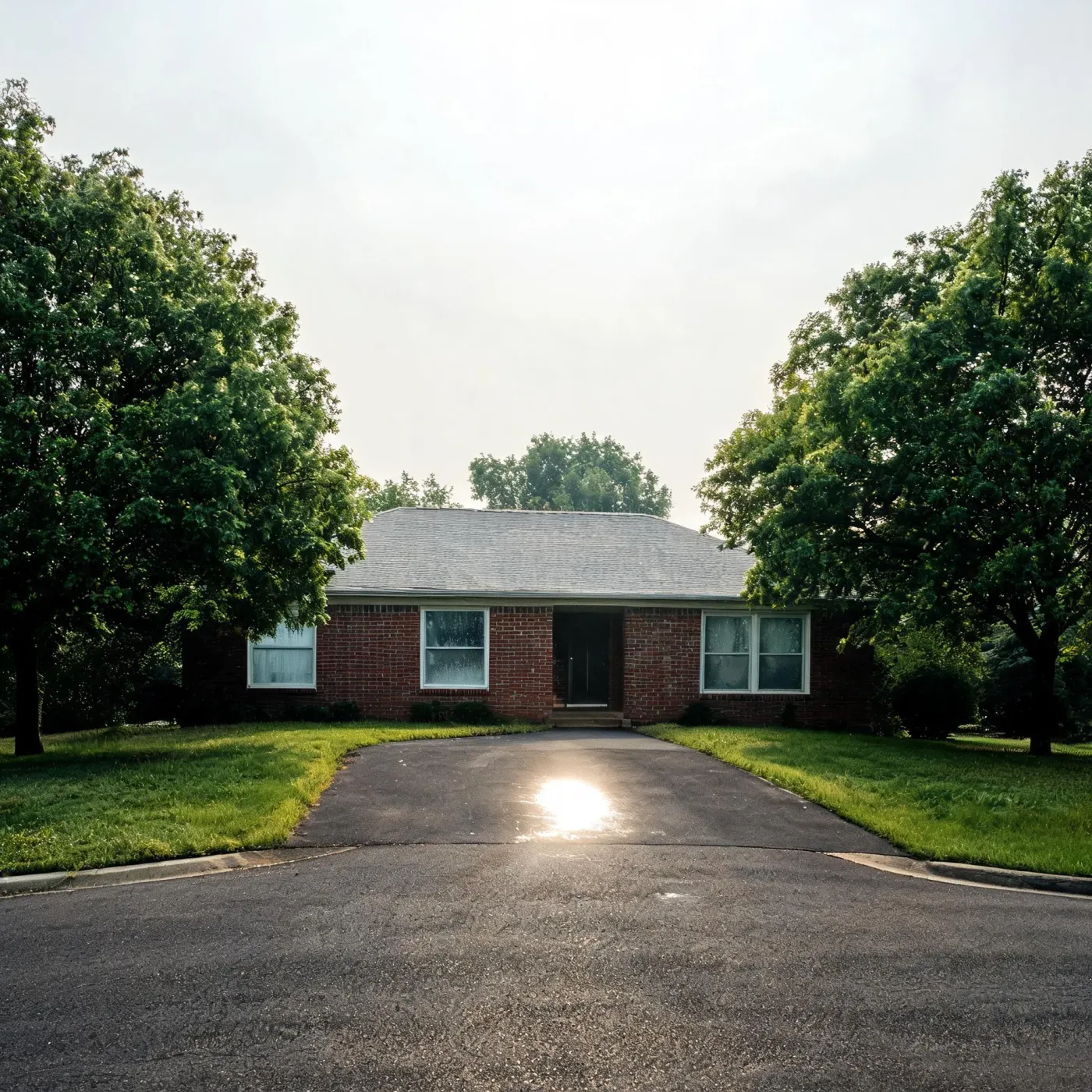
A single-story red brick ranch house with a gray shingled roof, white-framed windows and a central dark front door, fronted by a wide asphalt driveway, green lawn and large deciduous trees on both sides under a bright hazy sky.

Summer air here holds a lot of moisture. Averaged across the homes in Louisiana, the dew point sits at 73°F through June, July and August, according to NOAA climate data. A heat pump has to pull that moisture out of the air before the house feels cool, not just cold. When it's working right, you'll notice the air feels dry on your skin even before the temperature drops. When the system is struggling, the thermostat might get close to the number you set, but the house still feels damp, and that's the heat pump losing the fight against the moisture, not just the heat.

NASA POWER T2MDEW county cells weighted by homes

A heat pump that won't cool through a Louisiana summer is almost always down to a stuck reversing valve, a low refrigerant charge, or a coil that can't pull air through it anymore, and none of those get better by waiting. The unit will keep running, the compressor will keep working harder than it should, and the house will stay warm while the bill climbs. A contractor licensed in Louisiana and working heat pumps all summer has seen this exact failure before, often more than once that week, and knows which of the three it is before the panel even comes off. You get matched with one contractor, not a handful calling at once, someone local who already knows what tends to fail on these units in this climate. That's the shortest path from a house that won't cool down to one that does.

A gray outdoor air conditioner condenser unit on a concrete pad beside a house with horizontal lap siding, with an electrical disconnect box and conduit on the wall, a downspout, gravel edging and a green lawn with trees to the right.

Let someone else find the pro

I'm done searching

Only one pro gets your request, so you hear from one company.

There's no charge for the request.