
One more night like this
A unit running nonstop all night pulls more power to make the same heat. Left alone, the strain on the compressor doesn't ease up when the weather does.
 Hand off my repair
Send the request today and let a heat pump pro reach out to you.
Your heat pump has been running since the sun went down, and it never seems to shut off. Louisiana winters don't get brutal, but they sit in that cold, damp range in the 30s and 40s that keeps a heat pump working harder than most homeowners expect, longer than it would for real cold up north.
A heat pump moves heat instead of making it, and when the outdoor air is cold and wet, there's less heat to pull out of it. The unit has to run longer to move the same amount of warmth into your house. Add a coil that's icing over, or a thermostat holding the house a few degrees warmer than it needs to, and nonstop running turns from normal strain into a system that can't keep up or a bill that jumps even with cheap power.
Most of Louisiana heats with electricity, so a heat pump running nonstop shows up fast on your statement. That's worth checking out, not riding out.
Figuring out which one it is means getting a contractor out to look at the coil, the refrigerant charge, the defrost cycle, the thermostat settings. On your own, that means searching around for someone local, calling a few, explaining the same thing about your system three or four times, then sitting with quotes trying to tell a fair price from a markup.
Send the form here and that work is done. You're not the one tracking down who's available or vetting who's legitimate. That part stops being your job the moment you hit send, and a contractor who knows Louisiana heat pumps takes it from there.
Your heat pump kicks on at dusk and just keeps going, straight through the night. You're not imagining it, and you're checking it because a system that never cycles off is usually a system working too hard at something, not one that's fine and quiet about it.
A heat pump moves heat from outside air into your house instead of burning fuel to make it. At 65 degrees outside, that's an easy job. At 35 or 40, the kind of cold Louisiana sits in for weeks at a time in winter, there's far less heat in that air to grab, so the system has to run long stretches to pull enough of it inside. That's normal operation, not a sign something's broken. What's worth checking is whether the air coming out of your vents still feels warm. If it's running constantly but the house stays cold, or you hear it switch to a harsher, less efficient backup heat strip for long periods, something in the system isn't keeping up with the demand.






A Louisiana summer runs a dew point around 73°F, averaged across June, July and August, by NOAA's numbers for where homes sit in this state. That's the kind of air a heat pump has to wring moisture out of all summer long, and it leans on the same coils and refrigerant charge that carry the load in January. A coil that spent summer caked with condensation and dust doesn't come clean on its own once the weather turns. It just keeps losing ground, so the unit runs longer each night to make up for what the coil can't move anymore. If yours has been running nonstop since winter set in, that summer humidity is often where the strain started. Send in what's going on and skip the part where you're the one calling around for someone to look at it.
NASA POWER T2MDEW county cells weighted by homes
One form replaces the calls you'd make to find a heat pump pro.
You're not committing to anything by asking.
A heat pump moves heat instead of making it, and below the mid-30s outside, there's less heat in that air to move. The system has to run longer to pull the same warmth into your house.
That's expected on a cold Louisiana night. What isn't expected is a unit that runs that long and still can't hold the house at temperature, and that gap is what a repair call is for.


A unit running nonstop all night pulls more power to make the same heat. Left alone, the strain on the compressor doesn't ease up when the weather does.
A technician can catch a failing part while it's still running, not after it stops. Skip the search, the calls, and explaining the problem twice.

A heat pump heats by running refrigerant through an outdoor coil, pulling what warmth is in the air into that refrigerant, then pushing it through the indoor coil and out through your vents. A defrost cycle is built into this. When frost builds up on the outdoor coil, the system reverses itself for a few minutes, melts it off, then switches back to heating. You might hear it or see steam coming off the outdoor unit. That part is normal on a cold night.
What's not normal is a defrost cycle that won't end, or one that ends and starts again within minutes. That points to a stuck reversing valve, a defrost sensor reading wrong, or a fan motor not pulling enough air across the coil to clear the frost in the first place. Any one of those keeps the system locked in a loop instead of getting back to heating your house. Rather than pulling the panel off yourself or guessing which part is at fault, a technician can trace it to the actual component in one visit instead of you working through a list of possibilities on your own.


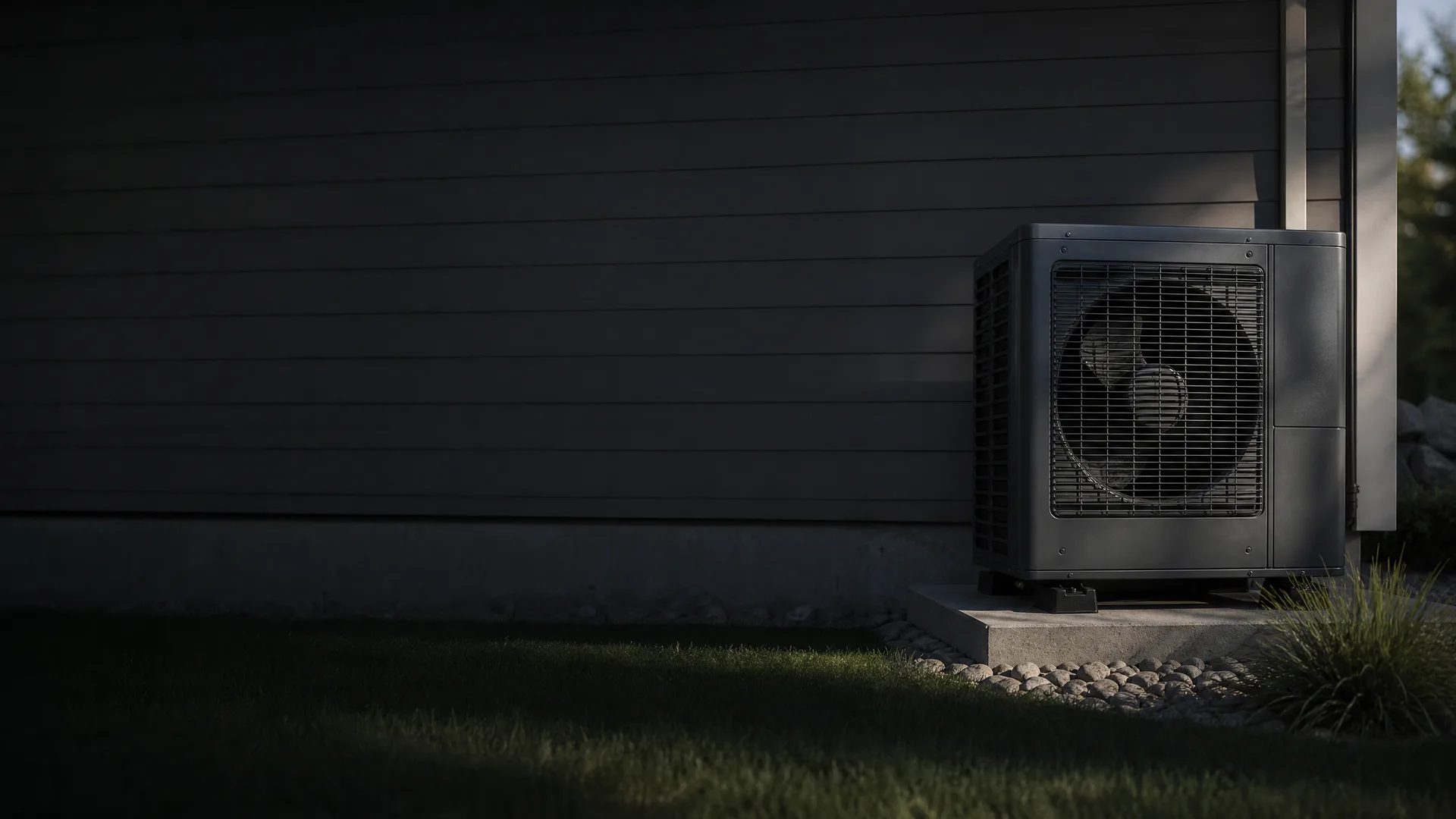
A heat pump like this cycles on when it's cold, satisfies the thermostat, and shuts off. The pad is clear, the fan grille isn't choked with leaves or mulch, and the lines running to the disconnect are doing their job without the unit straining to keep up.

This one's on and staying on, no break between cycles. Nothing about the siding or the pad tells you why. The answer is inside the cabinet, in a coil, a valve, or a motor that a homeowner can't see from the yard.
Walk through your house tonight and check a few things. The air coming out of the vents feels lukewarm, not warm, because a heat pump that's working this hard can't bring the temperature up as fast as it used to. Rooms farther from the unit take longer to warm, if they warm at all. Your thermostat might show it's still a few degrees short of the setpoint even though the system's been running for hours. Outside, the unit itself may be coated in frost that isn't clearing between defrost cycles. If you catch any of this early, it's usually a simple fix. Left alone, a system running nonstop pulls more from your electric bill every night it does this, and the part struggling to keep up is the one most likely to fail next.


At 12.52 cents a kilowatt-hour, a heat pump that runs nonstop all night is pulling a lot more of your money than one that cycles off and on. Most homes here heat with electricity, so that strain shows up on your bill before it shows up as a breakdown.
EIA-861 2025 statewide residential average

You keep an eye on it for another night, then another, hoping it sorts itself out. Meanwhile you're still the one calling around for a contractor who can actually come look at it, explaining the same thing to three different shops, then sitting with their quotes trying to figure out who you trust. The unit keeps running nonstop the whole time you're doing that legwork.

You send the form once and the search is over. No more calling around, no more repeating yourself to whoever picks up, no more sorting through quotes to guess who's honest. A contractor takes it from here, and that part of the job, finding someone, isn't yours anymore. The unit still needs the repair, but you're not carrying the search for it alone.
A heat pump that runs all night in a Louisiana winter is telling you something. Cold, damp air makes it work longer than it would in a dry climate, and that much is normal. What isn't normal is a system that never catches up, never satisfies the thermostat, never shuts off at all. That's a unit asking for a look before a cold snap turns it into a unit that doesn't run at all. You don't have to spend tonight searching for a contractor, calling around to see who answers, explaining the same thing to a second shop and a third, then sitting with quotes trying to guess who actually knows heat pumps. Send the form once and that search is off your plate. You still have a repair ahead of you, but you're not the one chasing down who's going to do it.
Answer a few questions instead of calling shop after shop.