
Why your heat pump blows cold air in a Louisiana winter

RepairHeat PumpLouisiana
Step 1 of 2

What ZIP code is the job in?

Why is my heat pump blowing cold air this winter?

A cold snap comes through and the air out of your vents feels cool instead of warm, right when you need the heat most. In Louisiana, winters don't run long, so a heat pump acting up on one of the colder nights stands out fast. You're not imagining it, and it's worth knowing which part of this is normal for the system and which part means something needs a repair call.

Air that feels cool is often normal, but air that stays cold means the system has stopped heating

A heat pump moves heat from outside air into your house, so the air coming out of the vents is naturally cooler than what a furnace puts out. That's true even when the system is working fine. The difference matters when the air stays cold for more than a few minutes, or when the house isn't warming up at all. That points to something else: the unit stuck in defrost, the reversing valve not switching back to heat mode, or the outdoor unit not running. Since most homes in Louisiana heat with electricity through this same system, a heat pump that won't heat isn't a minor issue. It's the only thing standing between you and a cold house on the nights you actually need it.

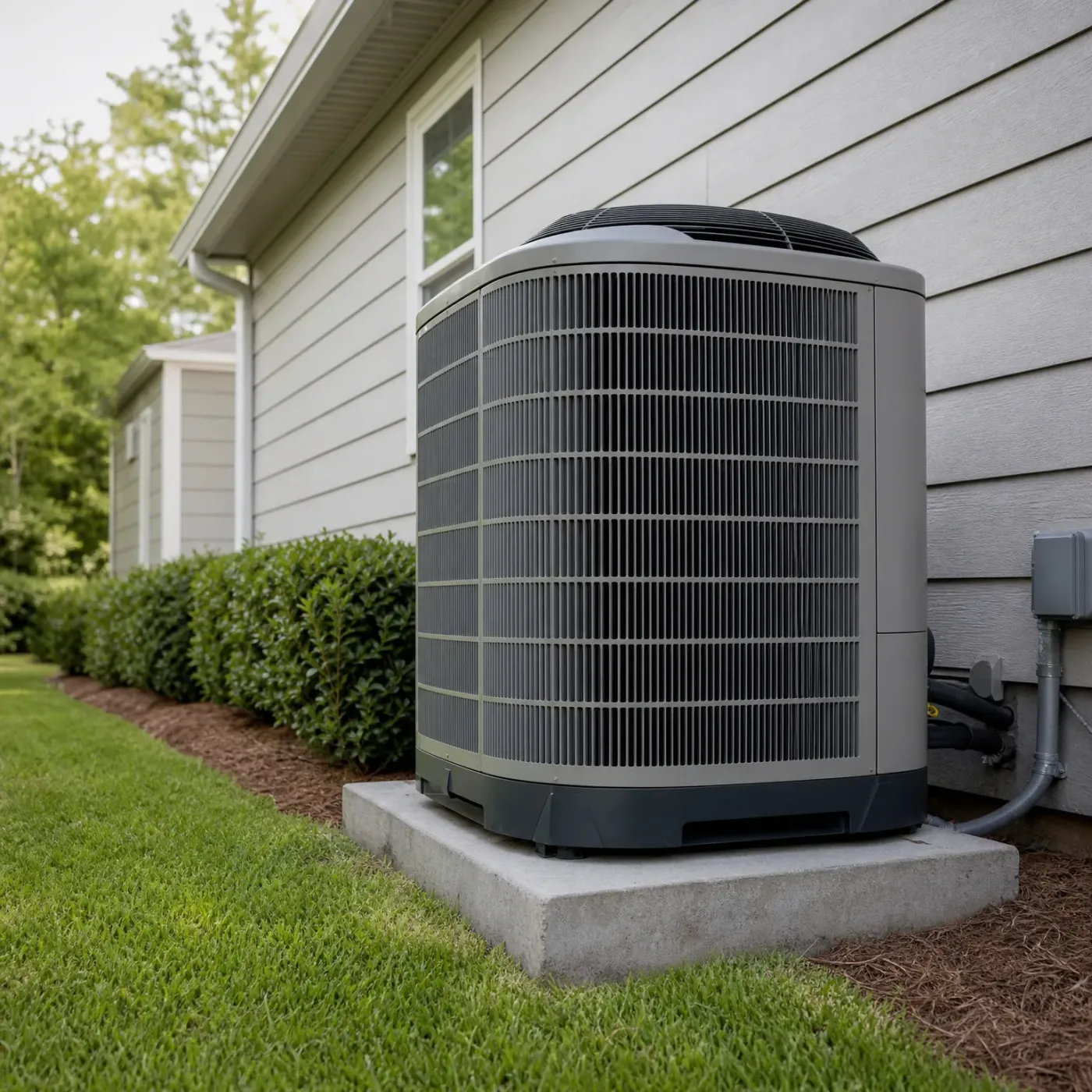
A light gray outdoor heat pump unit mounted on a concrete pad beside a house with horizontal lap siding, with refrigerant lines and conduit running to a wall-mounted electrical box, gravel and a leafy shrub nearby.

Running normal

A heat pump working right switches over to heat mode on its own when the temperature drops. The outdoor unit still runs, pulling what warmth it can from the air outside, and the vents put out air that feels warm to the hand. No ice built up on the coil, no short cycling, no cold blasts in between.

An outdoor air conditioner condenser unit on a concrete pad beside a house with horizontal siding, with conduit, cables and an electrical box on the wall and mulch beds at either side.

Stuck in trouble

A heat pump in trouble often shows it on the outside unit first. Dust and grime caked over the coil block the airflow it needs to pull heat from the cold air, so it runs longer and still can't keep up. A reversing valve stuck in cooling mode does the same thing from the inside, and either way your vents keep blowing cold.

Is the air actually cold, or just not warm enough?

Hold your hand up to the vent. If the air is flat out cold, something has it stuck in the wrong mode or the outdoor unit has quit. If it's running but just never feels warm on a cold night, the heat pump may be losing the fight against the temperature outside and leaning on backup heat that isn't keeping up. Check the outdoor unit too. A heavy, solid layer of ice across the coil, not the thin frost that melts off on its own, means it isn't defrosting the way it should. Left alone, a unit that can't shed ice or won't switch modes will run constantly without heating the house, and your electric bill will show it.

A dark bedroom at night with a rumpled duvet and pillows on a bed beside a rain-streaked, condensation-covered window with distant lights, a curtain, and a bedside lamp.

It's past eleven on one of the colder nights you get down here, cold enough that you finally shut the window. You're under the comforter you pulled out of the closet for the first time this winter, and the vent above the hallway is ticking away like it's working hard. You go stand under it anyway, palm up, and the air coming down is cool. Not icy, just not warm, like it gave up halfway. You bump the thermostat up two degrees and wait by the vent to see if that changes anything. The dog has already claimed the foot of the bed. Outside, the air is still and quiet, the kind of Louisiana cold snap that won't last the week.

Get It Fixed or Ride It Out

Call now

  • A contractor who works on heat pumps all winter knows what fails first on a cold Louisiana night, whether it's a stuck reversing valve or a dead defrost board.
  • You give the details once, and the contractor who shows up already knows what you told them.
  • It's one licensed, local contractor sent your way, not a string of calls from companies bidding against each other.
  • You skip the searching, the back and forth calls, and the job of comparing quotes from people you've never heard of.
  • Someone local who handles this equipment every season can often tell you over the phone what's likely going on before they even arrive.

Wait it out

  • If the air is just cool but not icy, the heat pump may still be heating, and a mild night might not push it to fail outright.
  • A heat pump that's merely struggling, not broken, can sometimes limp through one more cold snap before it needs attention.
  • Louisiana winters don't run long, so some homeowners choose to ride out a bad night or two rather than deal with it right away.
  • Waiting means living with cold air on the next cold night too, since the underlying problem doesn't fix itself.
  • If the outdoor unit has actually quit or ice has built up on the coil, waiting longer only means more strain on the system.
A woman in a cream sweater with her hair in a bun laughs while seated at a stone counter holding a glass of red wine, in a dimly lit interior with a sofa, houseplants and a large window at night.
A woman with long dark hair in a cream knit sweater laughs while looking off to the side, seated in front of a dimly lit kitchen with an island, stools, open shelving and a potted plant, with a glass of red wine in the foreground.
A smiling woman with long dark wavy hair in a light knit sweater sits at a marble counter with a glass of red wine, with a dimly lit living room and kitchen in the background.
A smiling woman with long wavy brown hair in a beige sweater sits at a white marble counter with a glass of red wine, with a living room, dining table and kitchen cabinets behind her.

Defrost cycles run 5 to 15 minutes

When your heat pump senses frost on the outdoor coil, it switches to cooling mode briefly to melt it off. That's the cold air you feel, and it should pass quickly.

Skip the search

35 degrees and below

Once outdoor air gets this cold, a heat pump leans on backup electric heat strips to keep the air warm. If those strips fail, the vents run cool until a contractor replaces them.

Skip the search
A wooden table in the foreground holds a closed laptop and a ceramic mug of coffee, with a spindle-back wooden chair behind it, a beige wall with paneled wainscoting, a window at left, and a kitchen counter with a cutting board, bowl of fruit and greenery at right.

Why the system switches itself into cooling for a few minutes

A heat pump moves heat, it doesn't make it, and the outdoor coil is where that heat gets pulled from the air. On a cold night that coil can frost over the same way a freezer does. The reversing valve flips the system into cooling mode for a few minutes, sends hot refrigerant out to that coil, and melts the frost off. That's the cold air at your vents. It should end on its own and go back to heat.

What a contractor checks is whether it ends. A reversing valve that sticks, a defrost board that misreads the coil temperature, or a sensor that's failed can leave the system parked in that mode. You'd otherwise be the one sorting that out: finding someone who works on heat pumps rather than just furnaces, explaining the same cold-vent story to two or three companies, and waiting to see which one actually knows this system. One call here gets you a local contractor who already knows what tends to fail on a cold Louisiana night.

A gray upholstered sofa with a beige cushion and knit blanket beside a curtained window, with a white mug and a book on a dark wooden table in the foreground and a lit lamp in the background.
A bearded man in a dark navy sweater over a collared shirt smiles and looks off to the side while seated at a dinner table with a glass of red wine, a lit candle, and a plate of food in the foreground of a dimly lit room.
A woman in a dark gray sweater reclines on a couch with her eyes closed and a knit blanket over her lap, an open book resting face-down in front of her, with a lit table lamp and shelving blurred in the background.
An outdoor condenser unit on a concrete pad beside a light-colored lap-sided house, with a trimmed hedge, mulch bed and mowed lawn nearby and an electrical box and conduit on the wall.

Skip the calls to every shop

The pro who reaches out is licensed in Louisiana.

Skip searching for a heat pump pro and answer a few questions instead.

Reach a local pro

Sending the form costs nothing.

A weathered gray outdoor condenser unit sits on a concrete pad beside a house with horizontal siding, with refrigerant lines entering the wall at left and a mulched shrub bed at right.
Before you get your heat pump repair
A gray outdoor condenser unit on a concrete pad beside a house with horizontal lap siding, with an electrical disconnect box and insulated refrigerant lines on the wall, gravel in the foreground and a planting bed at left.
After you get your heat pump repair
A single-story red brick house with a dark shingled hip roof, central door and four windows, fronted by a wide asphalt driveway and flanked by leafy green trees under a bright hazy sky.

That summer humidity you live with here comes from a dew point that averages 73°F across June, July and August, per NOAA. It doesn't touch your heating problem directly, but it explains why the outdoor coil on your heat pump works harder than one up north. All that moisture the system pulls out of the air every summer passes through the same coil that frosts over on a cold winter night. A coil that's been running humid for months isn't the issue by itself, but it's one more reason to have someone check it before the cold snaps get worse.

NASA POWER T2MDEW county cells weighted by homes

A gray outdoor air conditioner condenser unit on a concrete pad beside a house with horizontal lap siding and a stone veneer base, with a conduit running to a wall-mounted disconnect box and shrubs and evergreen trees to the left.
Reversing valve shifts on command and the vents put out air that's warm to the hand within minutes.
An outdoor air conditioning condenser unit sits on a concrete pad beside a white horizontal-siding house, with a gray electrical disconnect box and insulated refrigerant lines on the wall, mulch and green shrubs to the right, and a concrete slab in the foreground.
Reversing valve sticks partway and the vents keep blowing room-temperature air no matter how long it runs.

A stuck reversing valve doesn't fix itself by morning. You'll feel it in the rooms farthest from the air handler first, the ones that already run a few degrees cooler than the rest of the house. Leave it running and the unit just keeps pulling in power to move air that never warms up, so the bill for that cold week climbs while the house stays cold anyway. Pipes behind a cold exterior wall don't care that Louisiana winters are short. One hard freeze is enough if the heat you're counting on isn't actually there. And a heat pump that's stuck in the wrong mode is also one that isn't defrosting right, which means ice can build on the outdoor coil faster than it melts off, putting more strain on a unit that's already struggling to do its job.

Power costs 12.52 cents per kilowatt-hour statewide

Heating with electricity at 12.52 cents a kilowatt-hour is cheap next to what other states pay. That's the one break you get here. It doesn't fix a stuck reversing valve or a dead defrost board, and a heat pump running flat out on backup heat trying to warm a house will still push your bill up fast.

EIA-861 2025 statewide residential average

Cold air, warm air, and what to do

  • Warm air within a few minutes of startup means the heat pump is doing its job, cold or room-temperature air for more than fifteen minutes does not.
  • A short defrost cycle below 35 degrees is normal; a stuck reversing valve or a dead defrost board is not, and neither one clears up on its own.
  • The rooms farthest from the air handler will show the problem first, so that's worth checking before you call.
  • A local contractor who works on heat pumps through the cold snaps here already knows whether a stuck valve or a dead board is the more likely cause.
  • Asking for help means describing what you're feeling at the vent once, to one contractor, instead of repeating it on call after call.
  • Cheap electricity here doesn't change what's wrong with the unit, and it doesn't fix itself before the next cold night.

The question you started with has a simple test. Hold your hand to the vent. Warm within a few minutes, normal. Cold or lukewarm past fifteen minutes, something has failed, most likely the reversing valve or the defrost board, and neither clears up on its own. A short cold spell under 35 degrees doesn't mean trouble by itself. A heat pump that stays cold through the night does.

Check the far rooms first. They'll show a stuck valve or a dead board before the rooms near the air handler do, and knowing that before you call saves you a step.

When you do call, you're not stuck describing a cold vent to three or four companies and comparing what each one tells you. One contractor takes the details once. The ones who service heat pumps through Louisiana's cold snaps have seen this before, on nights like the one you're dealing with, and they know which part tends to go first on a system like yours. That's not a guess about your house. It's what shows up on calls like this one every winter here.

Cheap power is the one thing working in your favor in this state, and it isn't going to fix a stuck valve or a board that's quit. That part needs a hand on the unit, not a mild electric bill. The cold air told you something was wrong. The fix is the part that's left.

A covered porch with a wood front door with six upper glass panes, a lantern wall sconce, tapered column on a stone base, potted ferns and flowers, a woven doormat, and wide steps leading to a paver walkway bordered by shrubs and white hydrangeas.
A beige upholstered sofa with a cream cushion and chunky knit throw sits beside a white-framed window, with a leafy potted plant in a stone vase against a tan wall.
Sunlit corner of a room with a linen curtain beside a window, built-in shelves holding ceramic vases, wooden bowls, a potted green plant, stacked books and a woven basket, above a textured rug.
A dark wood three-drawer dresser against a pale wall holds a tall ceramic vase with leafy branches, stacked books and a shallow bowl, with a framed print above, a woven basket on the wood floor at left, and an upholstered sofa with a green pillow in the foreground.
A cream upholstered sofa with a textured ivory cushion and a rust-colored cushion sits beside a window with sheer linen curtains, with a potted leafy plant behind it and a wooden bowl on a wood table in the foreground.

Skip calling around

Only one pro gets your request, so you hear from one company.

Find a licensed heat pump pro

You're not committing to anything by asking.