Heat runs, house stays cold
Air is moving from the vents but it's not warm. That points to a stuck reversing valve or a failing compressor, not the weather outside.
A heat pump that runs but blows cool or lukewarm air is usually stuck in the wrong mode or losing the fight to outside temperatures. In Shreveport winters stay mild, so the outdoor unit rarely has to work as hard as it would farther north, which means if it is not heating at all, something is actually wrong rather than the system just struggling against the cold. Often the reversing valve has not switched the system over from cooling to heating, or the outdoor coil has iced over and needs to defrost before it can pull in heat. A tripped breaker or a thermostat set to the wrong mode causes the same complaint. Since most homes here heat with electricity, a heat pump that stops working often means the whole house has no heat until it is fixed. Worth checking before anything else: the thermostat mode, the breaker, and whether the outdoor unit is caked in ice.




Winter nights average 38°F
Nights sit near 38°F in winter here, not far below freezing, which is exactly the range where a heat pump should still keep up on its own.
Heat runs November through March
Five months of heat a year is a short run, but it's those same five months where a stuck heat pump leaves you cold fast.
Cooling runs May through October
Six months of cooling means the system switches modes twice a year, and a heat pump that won't heat often points back to that switch.
NOAA nClimDiv 1991-2020
A heat pump doesn't make heat the way a furnace does. It moves heat. Refrigerant runs through a cycle that pulls warmth out of the outside air and carries it into your house, and in summer the same system runs backward to do the opposite. The reversing valve is what tells it which direction to run. That valve has a sliding core, and if it sticks between positions, the system can be stuck trying to cool and heat at once, which is why a unit running hard can still blow air that feels cool at the vents.
Cold weather adds another step. Once the outdoor coil drops below about 40°F, moisture in the air freezes onto it, so the system switches into a defrost cycle to melt that off. For a few minutes, it works like an air conditioner, which is why the air coming inside turns cool right when you'd expect heat. That's normal and it should pass. It's a problem when the defrost cycle doesn't shut off on schedule, because the coil stays iced over and the system can't pull in enough heat to keep up.
There's a backup for exactly this kind of shortfall: heat strips built into the indoor unit that kick in when the heat pump alone can't carry the load. They run on a relay and a breaker of their own, and if either fails, that backup heat never shows up. A low refrigerant charge causes a quieter version of the same problem, weakening the whole cycle so the air out of the vents stays barely warm no matter how long the blower runs.


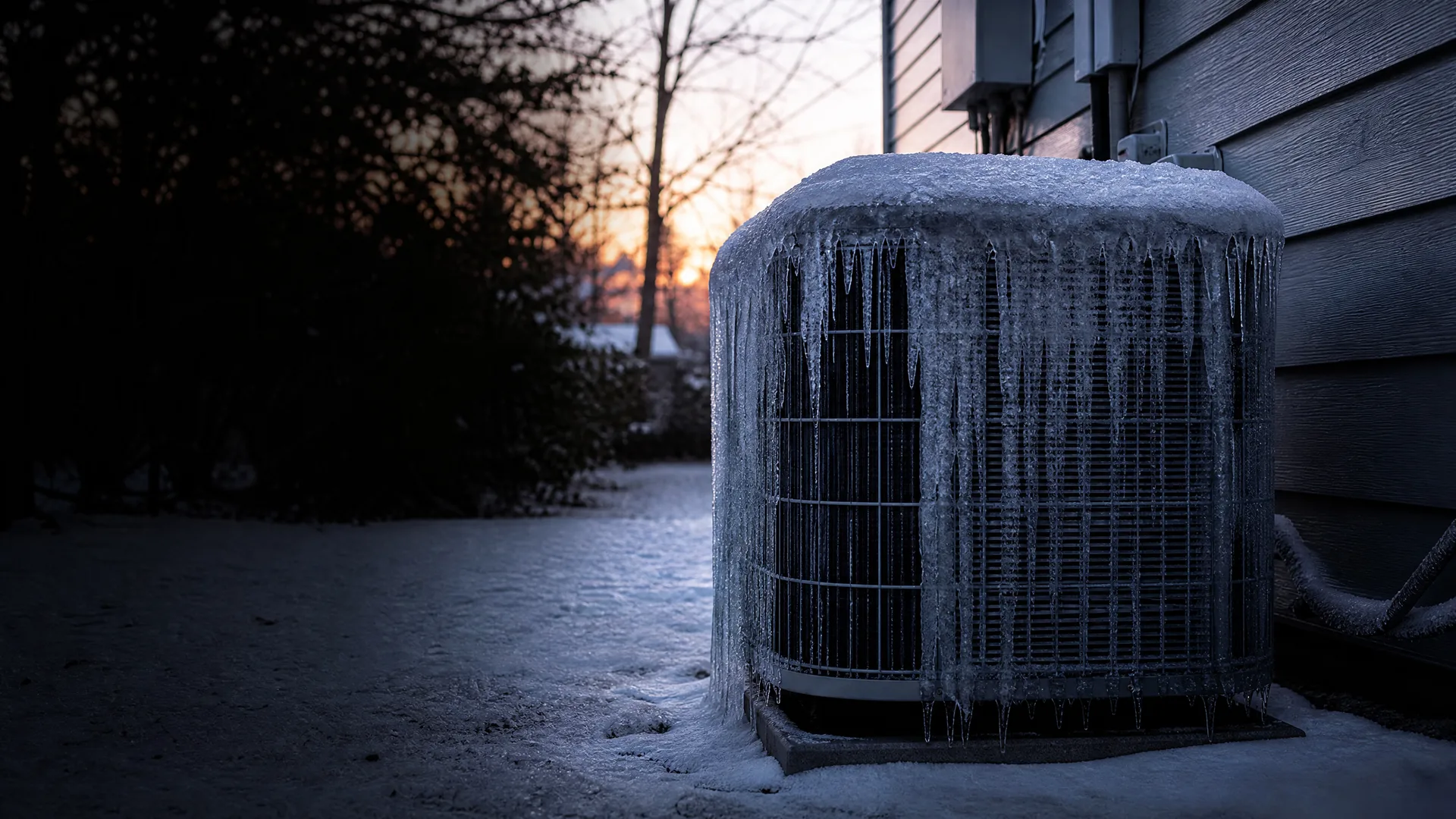
You walk out to the side yard a little after six, coffee still in hand, because the house felt cooler than it should overnight. Dawn is just coming up gray over Caddo Parish, one of those January mornings that dropped well below the usual mild low. The outdoor unit is coated in ice, thick over the coils and the fan guard, not the thin frost that melts off by mid-morning. The fan sits still under the weight of it. Inside, the air coming through the vents is cold. You stand there a minute, looking at it, trying to decide if this clears on its own or if it's time to get someone out who deals with these units every winter and knows what a freeze-up like this usually means.
A heat pump that won't heat in a town where winter barely tests it usually means something specific is wrong, not something seasonal. Mild nights near 38°F don't strain a working system, so when yours can't keep up, that points to a stuck reversing valve, a low charge, or a coil too dirty to pull in heat, not bad luck with the weather. Figuring out which one takes someone who works on these units through every mild Shreveport winter and knows which part usually gives out first in this climate. A local contractor who sees this equipment season after season can look at your system and tell you straight what's wrong, rather than guessing over the phone. Caddo Parish winters are short, but a house that stays cold through even part of one is a house worth getting looked at now. Handing this off to one contractor who knows the area means someone who already understands what mild winters do, and don't do, to a heat pump gets to it directly.
Below 32°F, most heat pumps lean on a backup heat strip to make up the difference, since the outdoor coil alone can't pull enough heat from freezing air.
Shreveport rarely sees nights that cold, so that backup strip may sit unused most winters, and a homeowner often has no way of knowing if it still works until a hard freeze proves it doesn't.


Air is moving from the vents but it's not warm. That points to a stuck reversing valve or a failing compressor, not the weather outside.
No response at the thermostat usually means a tripped breaker, a bad control board, or a blown capacitor keeping the unit from starting.
Nothing about Shreveport winters should keep your heat pump from doing its job. Mild nights don't ask much of it, so when it runs and the house stays cold, or it won't come on at all, that points to a part that failed, not weather it couldn't handle. A stuck reversing valve, a failed capacitor, a tripped breaker, a frozen outdoor coil. Whatever it turns out to be, it's fixable, and knowing that much puts you ahead of most people calling about this.
Getting it looked at means getting matched with a contractor who works on heat pumps in Caddo Parish every winter and knows which of these failures shows up most. You'll hear from one contractor, not a handful competing for your number, and they'll come at your system already knowing what a mild Shreveport winter should and shouldn't do to it.

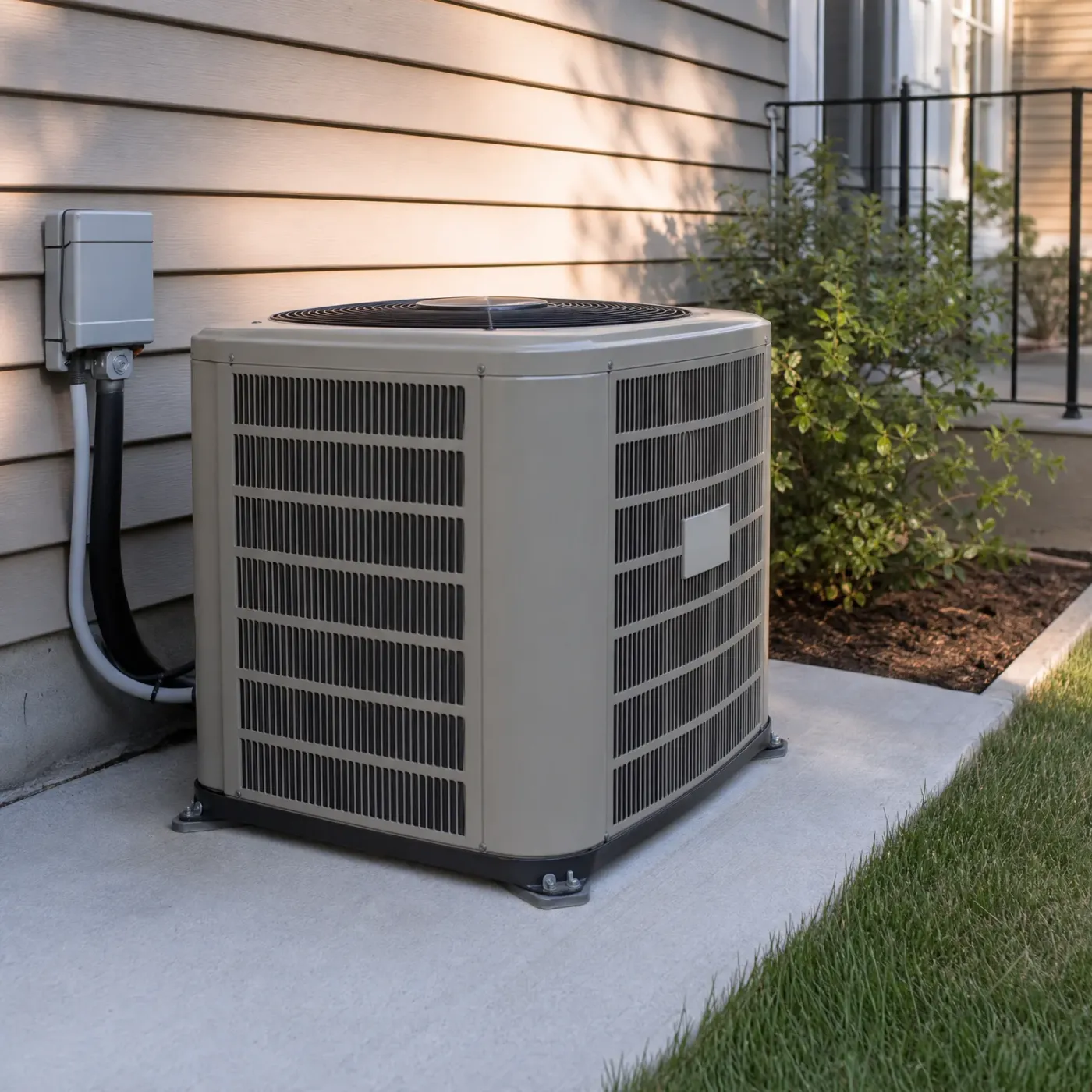
A licensed pro who works in Caddo Parish gets your request.
No fee to send it, and nothing to sign.