
Heat pump tune-up in Shreveport, LA

Tune-up, service, or cleaningHeat PumpCaddo Parish, LA
Step 1 of 2

What ZIP code is the job in?

A heat pump tune-up is a yearly check of the system that heats and cools your home, usually done once in spring and once in fall. A technician checks the refrigerant charge, cleans the outdoor coil, tests the compressor and the reversing valve that switches it between heating and cooling, and checks the thermostat settings. Since most homes around Shreveport heat with electricity, your heat pump runs nearly year round, switching between cooling through the long muggy summer and heating through the mild winter, with barely a break. That constant switching back and forth wears on the reversing valve and the compressor in a way a furnace or a plain AC never deals with. A tune-up catches a weak part before it fails on the first cold morning or the first hot week, and keeps the system running on the power it was built to use instead of more.

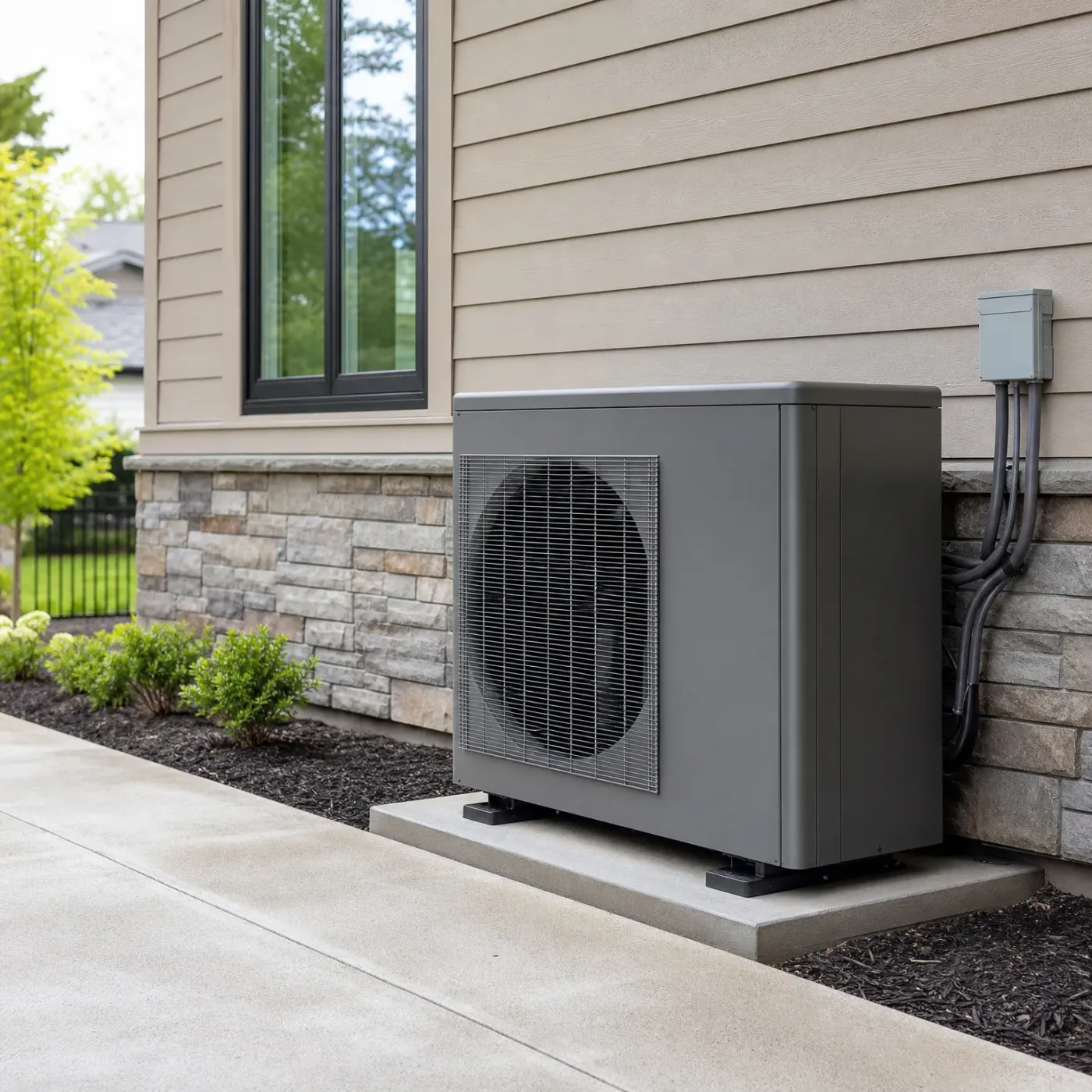
A gray outdoor condenser unit on a concrete pad beside a house with horizontal lap siding, a conduit and disconnect box on the wall, a shrub with white flowers at right and evergreen foliage at left.

Running clean

The coil is clear, the pad is level, and the lines run straight into the wall. A unit kept like this switches between heating and cooling without strain, and the compressor doesn't work any harder than it has to.

A weathered outdoor condenser unit on a concrete pad beside a house with white horizontal vinyl siding, with refrigerant lines and conduit running to a wall-mounted electrical box.

Falling behind

Grime on the grilles blocks airflow across the coil, and the unit has to run longer to move the same heat. Left alone through another Shreveport summer, that strain is what pushes a compressor toward failure.

How much work does your heat pump do in Caddo Parish?

  • Winter nights average 38°F

    Winter nights here average 38°F, cold enough that the system leans on the reversing valve and the compressor most mornings.

  • Heat runs November through March

    Heat runs November through March, so the switch into heating mode gets tested by the cold five months straight.

  • Cooling runs May through October

    Cooling runs May through October, the longer half of the year, which is most of the wear the unit sees.

NOAA nClimDiv 1991-2020

Why the reversing valve matters

The reversing valve is what makes a heat pump different from a plain air conditioner. It switches the refrigerant flow so the same unit that cools your house in July can warm it in January. In Shreveport, that valve shifts back and forth most of the year, since winters are mild enough that the system still relies on it on cold mornings. A technician tests it during a tune-up because a valve that sticks will leave you stuck in one mode, cooling on a cold morning or never warming up at all.

What the outdoor coil does

The outdoor coil is where the heat pump gives up heat in summer and pulls it in during winter. Pollen, grass clippings and dust settle on it over a Shreveport summer, and that coating slows how much heat it can move either direction. A technician cleans the coil during the tune-up and checks that the fins are straight so air passes through freely. A clogged coil makes the compressor run longer to do the same job, which is the part most likely to fail if the strain keeps up.


A bearded man in a gray fleece pullover sits with eyes closed in a brown leather armchair in a living room, with a floor lamp, bookshelf, potted plants, a side table holding newspapers and a dark mug, and a bright window behind him.
A man in a gray fleece jacket sits reclined in a leather chair with his eyes closed, in a room with bookshelves, a table lamp, a window, and a desk holding a folded newspaper and a dark mug.
A man in a blue henley shirt reclines on a leather chair with his eyes closed, beside a window, a houseplant, a side table with a newspaper and a dark mug.
A man in a navy sweater reclines with closed eyes in a beige armchair in a living room, with a lamp, wooden cabinet, bookshelf, potted plant, and a side table holding a newspaper and mug nearby.

Your heat pump switches between heating and cooling more than once a season in Shreveport, and the reversing valve takes that strain every single time it happens.

A valve that sticks leaves you with a system stuck in the wrong mode, cold air blowing in January or warm air blowing in July, until someone resets it.


An outdoor air conditioning condenser unit on a concrete pad beside a house with light horizontal siding and a concrete block foundation, with bare soil and small green plants around it.
Before you get your heat pump maintenance
A beige outdoor air conditioning condenser unit on a concrete pad beside a house with horizontal vinyl siding, with refrigerant lines and a disconnect box on the wall, surrounded by dark mulch and a green shrub at left.
After you get your heat pump maintenance
A gray outdoor heat pump unit on a concrete pad beside a house with horizontal siding and a stone veneer base, with conduit and an electrical box on the wall and shrubs and mulch nearby.

It's off your list after this

A licensed local pro takes the request for your heat pump tune-up.

Send the form, and lining up the heat pump tune-up stops being yours to chase.

I'm done searching

Asking costs nothing, and the choice to hire stays yours.

Tune-up or wait for a failure

With a tune-up

  • A technician checks the refrigerant charge before a low charge forces the compressor to run longer than it needs to.
  • The reversing valve gets tested in both directions, so you find out it's sticking before a cold morning does.
  • The outdoor coil gets cleaned, which lets the system move heat in and out of your house the way it was built to.
  • A loose electrical connection gets caught and tightened before it turns into a part that fails on the coldest night of the year.
  • You know going into November that the system can actually switch into heat without a service call.

Without one

  • A refrigerant leak goes unnoticed until the heat can't keep up and the compressor is straining to make up for it.
  • A reversing valve that's starting to stick doesn't get caught until it fails to switch, usually on a cold morning.
  • Dirt on the outdoor coil builds up slowly, and the system works harder for months before anyone notices.
  • A worn electrical connection sits until it heats up and fails, usually without warning.
  • The first sign of trouble is the system not heating or not cooling, not a technician's notes from months earlier.
  1. Technician checks refrigerant charge against the system's rated pressure

  2. Outdoor coil gets cleaned of dirt, grass clippings and grime

  3. Reversing valve is tested switching between heating and cooling

  4. Electrical connections and capacitor get checked for wear

An older man with gray hair and a beard, wearing a dark blue fleece zip jacket, leans back in an upholstered chair with his eyes closed in sunlight near large windows, with a potted green plant and bare trees behind him.
A woman in a cream knit sweater sits in an armchair with her eyes closed beside a window showing orange autumn foliage, with a lamp behind her and a cup of tea and white flowers on a side table.
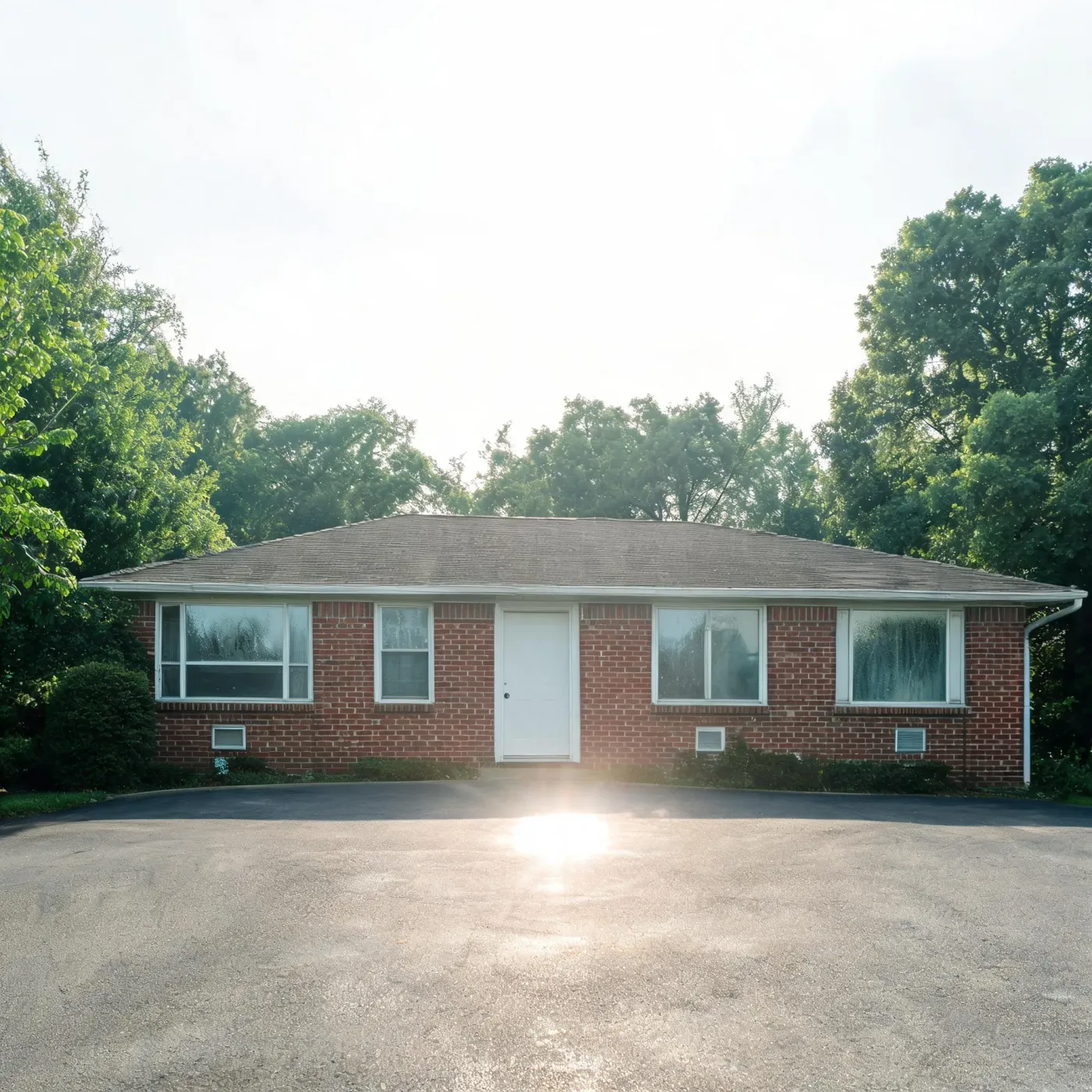
A single-story red brick ranch house with a white front door, large windows and a shingled roof, fronted by a wide paved lot with sun flare, surrounded by green deciduous trees.

That thick, sticky air in Shreveport carries a summer dew point of 70°F, according to NOAA climate data for Caddo Parish. Air that heavy makes your heat pump pull more moisture out of the house every time it runs, on top of cooling it. The outdoor coil is doing two jobs at once, wringing out humidity and dropping the temperature, and a dirty coil struggles more with both when the air is this wet. You'll notice it as a house that feels cool but still clammy, or a system that seems to run longer than it should on an ordinary July afternoon.

NASA POWER T2MDEW

An outdoor condenser unit on a concrete pad beside a gray lap-sided house, with an electrical disconnect box and conduit on the wall and shrubs with mulch to the right.
The coil is clean and the grille is clear, so air moves through it the way it was built to.
A weathered gray outdoor condenser unit on a concrete pad beside a house with horizontal vinyl siding, with conduit, refrigerant lines, and an electrical disconnect box on the wall behind it.
Dirt cakes the grille and dead leaves pile against the base, and the coil underneath can't shed heat right.

Power here costs 13.67 cents per kilowatt-hour

Electricity here runs cheap next to most of the country, and a heat pump that's running clean makes the most of that rate since it's moving heat instead of burning fuel to make it. Let the coil stay dirty or the charge run low and the compressor works longer to do the same job, and that's where the savings leak out.

EIA-861 2025

What a tune-up settles

  • A tune-up checks the refrigerant charge, the coil and the reversing valve twice a year, in spring and fall.
  • Catching a sticking valve or a weak charge before a cold morning keeps the system in the right mode when you need it.
  • A clean coil lets the unit shed heat and pull moisture the way it's built to through a long Shreveport summer.
  • The contractor who takes this job works on heat pumps in Caddo Parish all year and knows what tends to fail first.
  • Your request goes to one licensed local contractor, not a handful of companies competing for the same call.
  • A system that's been checked runs the way it did when it was new, switching modes without strain on the compressor.

Twice a year, someone checks the charge, cleans the coil and tests the valve that switches your system between heat and cool. That's the whole job. It's not complicated, but skipping it is how a heat pump ends up stuck in the wrong mode on a cold morning or straining to keep up through a muggy Shreveport afternoon.

The contractor who takes this request isn't new to the area. Heat pumps in Caddo Parish get run hard both ways, cooling through the long summers and leaning on the reversing valve all winter, and a technician who services them here year-round has seen which parts give out first and what a system sounds like right before they do. That's worth more than a general call-out.

You're also not handing this to a call center that spreads your number across five companies. One licensed contractor, local to this area, gets your request. That's who shows up, and that's who already knows what a heat pump in this climate needs to keep running the way it did when it was installed.

A system that gets checked twice a year doesn't work any harder than it has to. The coil sheds heat the way it's supposed to, the valve switches clean, and the compressor isn't fighting a low charge or a dirty coil to do its job. That's the whole point of the visit.


A woven wicker basket holding a cream fringed blanket sits on a wood floor in a corner with vertical paneling, beside a linen curtain at a window and a wooden dresser at right.
Sunlit interior corner with a white-framed window showing green trees outside, beige paneled wainscoting wall, wood floor with a woven rug, and a potted olive-like plant in a terracotta jar at right.
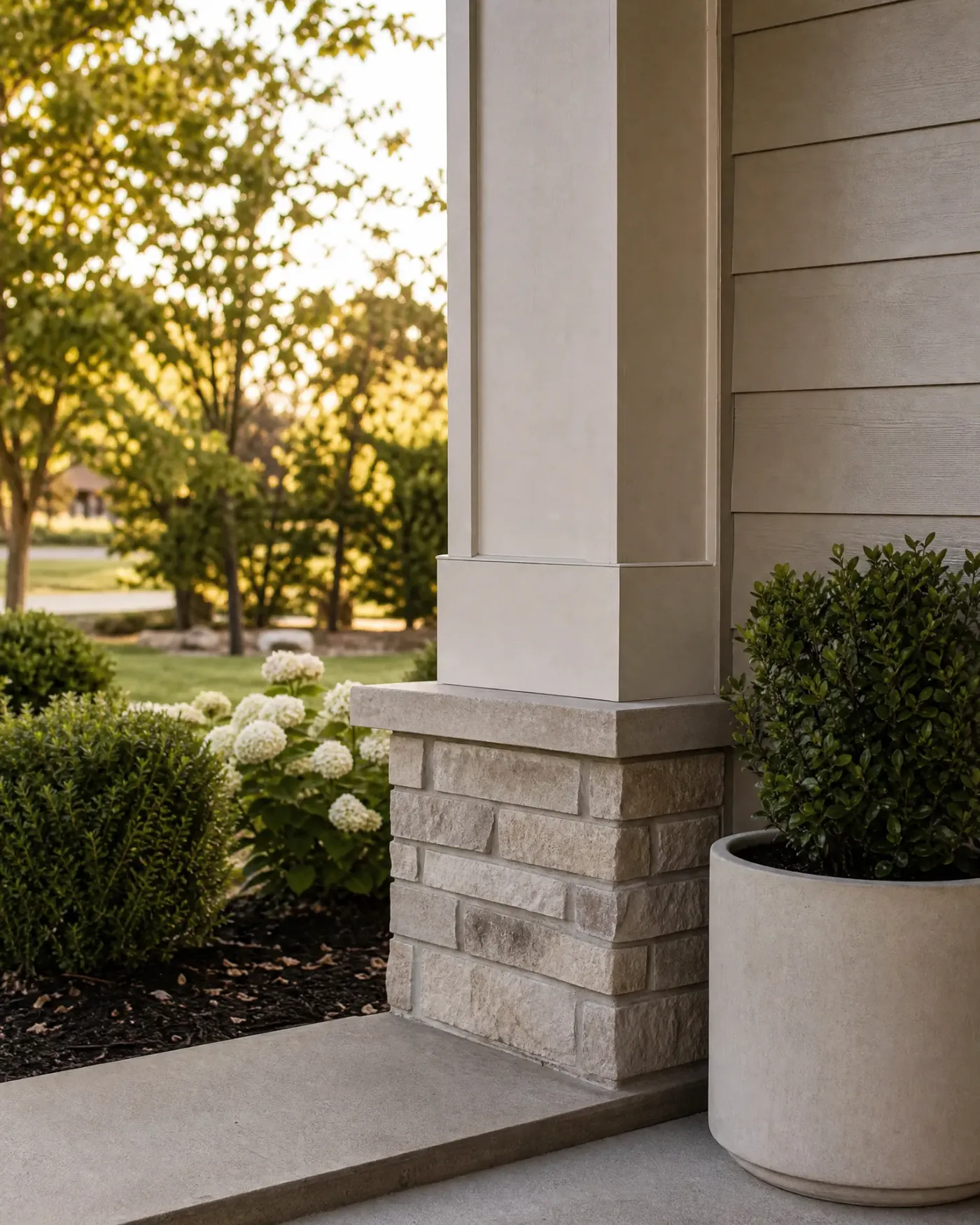
Close view of a covered porch corner with a white column on a stacked stone base, horizontal lap siding, a round planter holding a boxwood shrub, and white hydrangeas and shrubs in a mulched bed beyond.
A foundation planting of white hydrangeas, variegated hostas and low shrubs in dark mulch beside a house with beige lap siding, a white-trimmed window and a white corner board, with a young tree at right.
View through an open sliding door onto a wooden balcony with a slatted railing, a wooden chair draped with a cream throw, a log side table holding a wooden bowl, potted plants including a woven basket planter, and green trees beyond.

Stop chasing a heat pump pro

A licensed pro who works in Caddo Parish gets your request.

Hand it over

No fee to send it, and nothing to sign.