

What an AC tune-up covers before a Louisiana summer

A local pro who services air conditioners gets in touch about the tune-up.

Tune-up, service, or cleaningCentral ACLouisiana
Step 1 of 2

What ZIP code is the job in?

What does an AC tune-up actually include in Louisiana?

Your AC is about to carry you through another Louisiana summer, and you'd rather know what you're paying for before someone's out at the unit. "Tune-up" can mean a lot of things, from a five-minute look to real work on the system. Before the heat sets in is when you want to know your coils are clean and your refrigerant charge is right, not in July when the air's not keeping up.

It covers the parts that fail from running hard all summer

A proper tune-up means a contractor checks the refrigerant charge, cleans the condenser coil outside and the evaporator coil inside, tests the capacitor and contactor, and looks at the condensate drain so it isn't clogged when the humidity is heaviest. They'll check airflow at the vents and look over the electrical connections, since loose wiring is what strands a system mid-summer. With electric heat pumps and straight AC units both common here, the contractor also checks the system is actually built to handle the stretch from April through October, not just running without shutting off entirely.

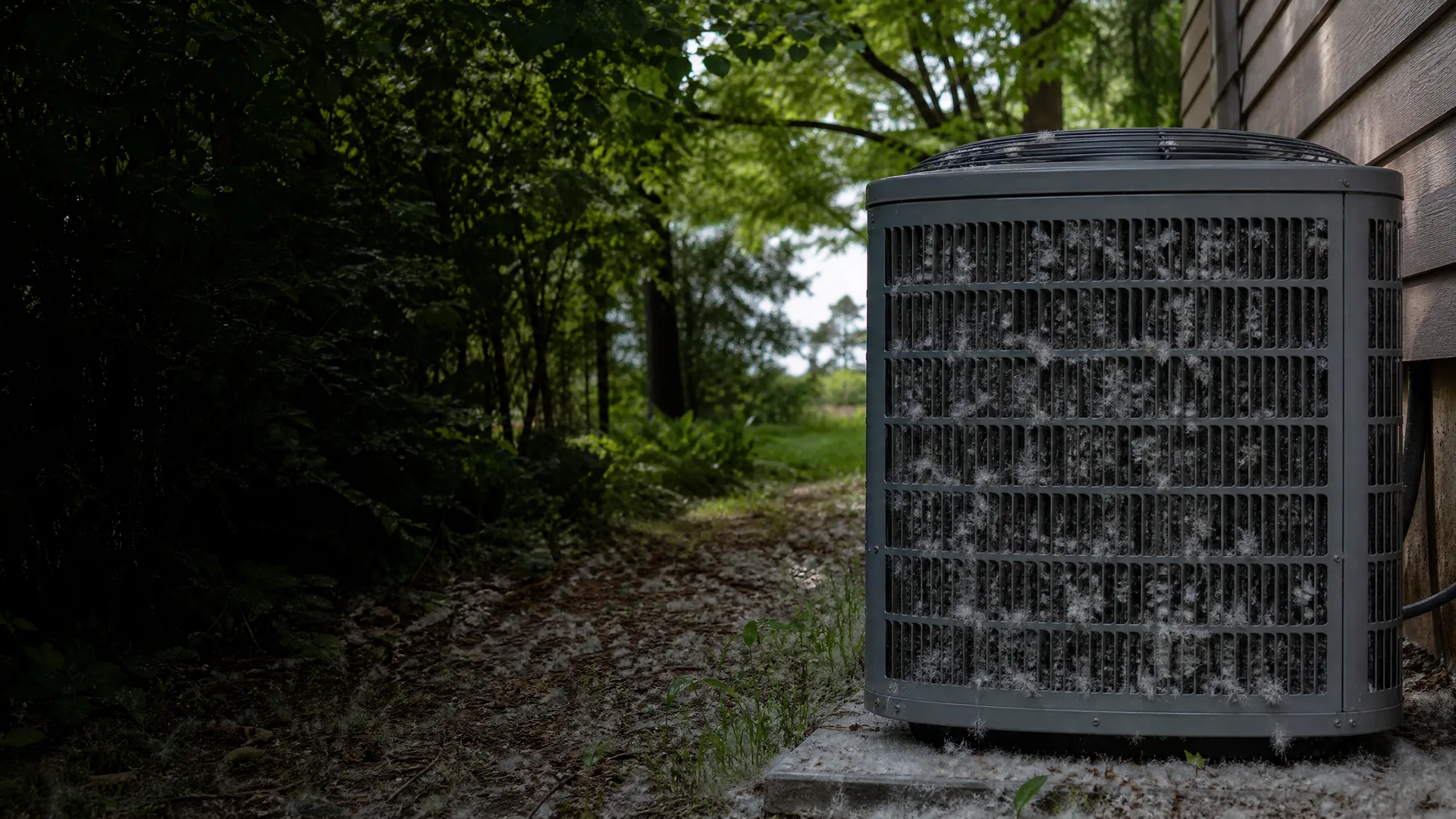
An outdoor air conditioning condenser unit beside a wood-sided house, its coil fins covered with white cottony seed fluff, with a shaded wooded path and green trees behind.

You're out in the side yard in May, cutting the grass back before it gets away from you, and you notice the cottonwood has been at it again. The fins on your condenser are coated white, a soft layer of fluff caught in the metal like lint in a dryer trap. You crouch down to look closer and the airflow through the coil feels thin where it should feel steady. It's not hot yet, not the kind of hot that's coming in July, but the unit's about to be asked to run most of the day, every day, and right now it's breathing through cotton.

Tune-Up Now or Wait and See

Tune-up now

  • A contractor checks refrigerant charge before the heat sets in, so the system isn't already short when it's working hardest.
  • Coils get cleaned while they're only lightly fouled, which matters in Louisiana where humidity keeps condensate and grime building on the coil surface.
  • Electrical connections and capacitors get checked while they're still holding, catching a weak part before it fails on a 95 degree afternoon.
  • The condensate drain gets cleared before the heavy months, which matters here since a clogged line backs up fast when the system runs for hours at a stretch.
  • You get a known starting point for the summer, so if something does go wrong in July, you already know what was working in April.

Waiting it out

  • The system runs on whatever charge and condition it has going into summer, for better or worse.
  • A capacitor or connection that's already marginal gets found when it fails outright, usually on one of the hottest days of the year.
  • A dirty coil keeps working, just less efficiently, and that shows up on the power bill all summer rather than in a single visit.
  • A slow condensate clog usually isn't caught until it's already backing up, sometimes with water where you don't want it.
  • If something fails mid-summer, you're calling around for a contractor during the exact weeks everyone else with an AC problem is doing the same thing.
An outdoor air conditioning condenser unit on a concrete pad beside a house with horizontal lap siding, with an electrical disconnect box and conduit on the wall and a green shrub in the lower left foreground.

What the contractor actually checks

The refrigerant charge gets checked against what the manufacturer specifies for that unit, not a general range. Low charge makes the compressor work harder and pulls less moisture out of the air, which matters here more than in a dry climate. The contractor also checks the capacitor's readings against its rating. A capacitor can look fine and still be weak enough to make the compressor struggle to start on a hot afternoon.

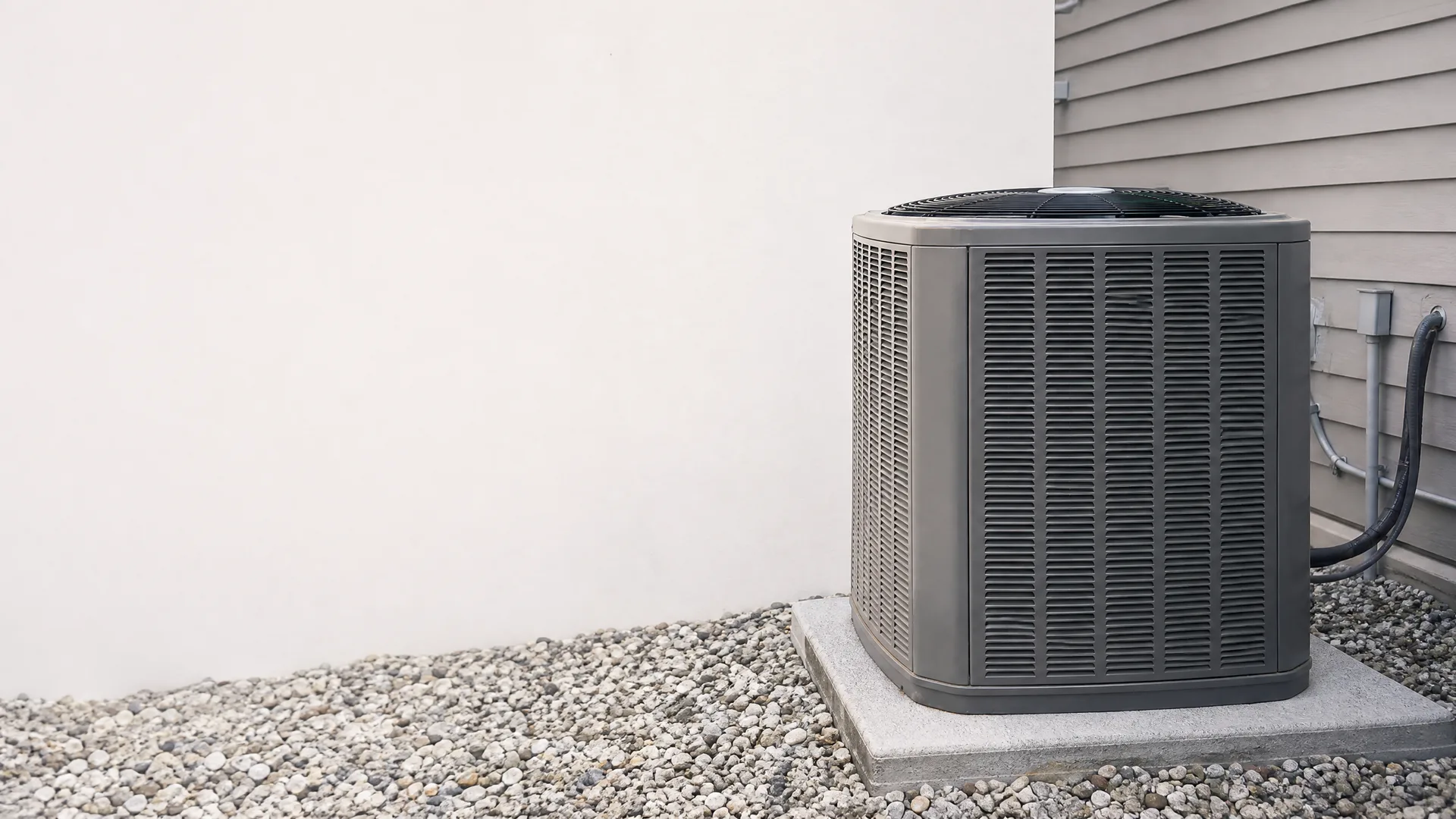
An outdoor air conditioner condenser unit on a concrete pad beside a light stucco wall and vinyl-sided wall, surrounded by gravel.

Why the drain line matters

Condensate drain lines clog with algae faster in Louisiana because the system runs long enough each year to keep the line wet most of the time. A clogged line backs water up into the pan, and in some units that shuts the system down or sends water into the house. Clearing that line is a standard part of a tune-up here, and it's one of the few checks that can prevent a service call by itself.

Is your AC already telling you something?

You've probably got a sense of how your unit sounds when it's fine. Lately maybe it's running longer than it used to, or the air coming out of the vents isn't as cold as you'd like on a hot afternoon. Maybe there's a musty smell when it first kicks on, or the house feels a little damp even with the thermostat set where it always is. None of that means the system is about to fail. But a unit that's low on refrigerant or working with dirty coils has to run longer to do the same job, and in a Louisiana summer that means it's running most of the day. Left alone through a full season, that strain is what tends to turn into a repair call instead of a maintenance visit.

A gray outdoor air conditioner condenser unit on a concrete pad beside a house with horizontal lap siding, with a wall-mounted disconnect box and conduit to its right and shrubs to the left.

A unit that's kept up

This is what a serviced condenser looks like: clean coil guard, clear pad, nothing blocking airflow around it. It's been checked before the heat arrived, not after it started struggling. Whatever's wrong with it gets caught while it's still small and cheap to fix.


An outdoor air conditioning condenser unit on a concrete pad beside a house with horizontal lap siding, with a conduit and electrical disconnect box on the wall at right.

A unit left alone

Dirt has built up on the coil guard over time, and nobody's looked at the charge or the drain in a while. It'll likely still run, but it's working harder than it should to do it, and a small problem now gets expensive once July hits and it's running nonstop.

A smiling man with curly graying hair and a dark knit sweater sits at a candlelit dinner table with a glass of red wine, a water glass and a bowl of salad in the foreground, in a dimly lit room with a lamp, framed picture and window behind him.
A woman in a cream knit sweater reclines on a gray sofa with her eyes closed and a slight smile, covered by a fleece blanket with a closed book on her lap, a lit table lamp and potted plants behind her.
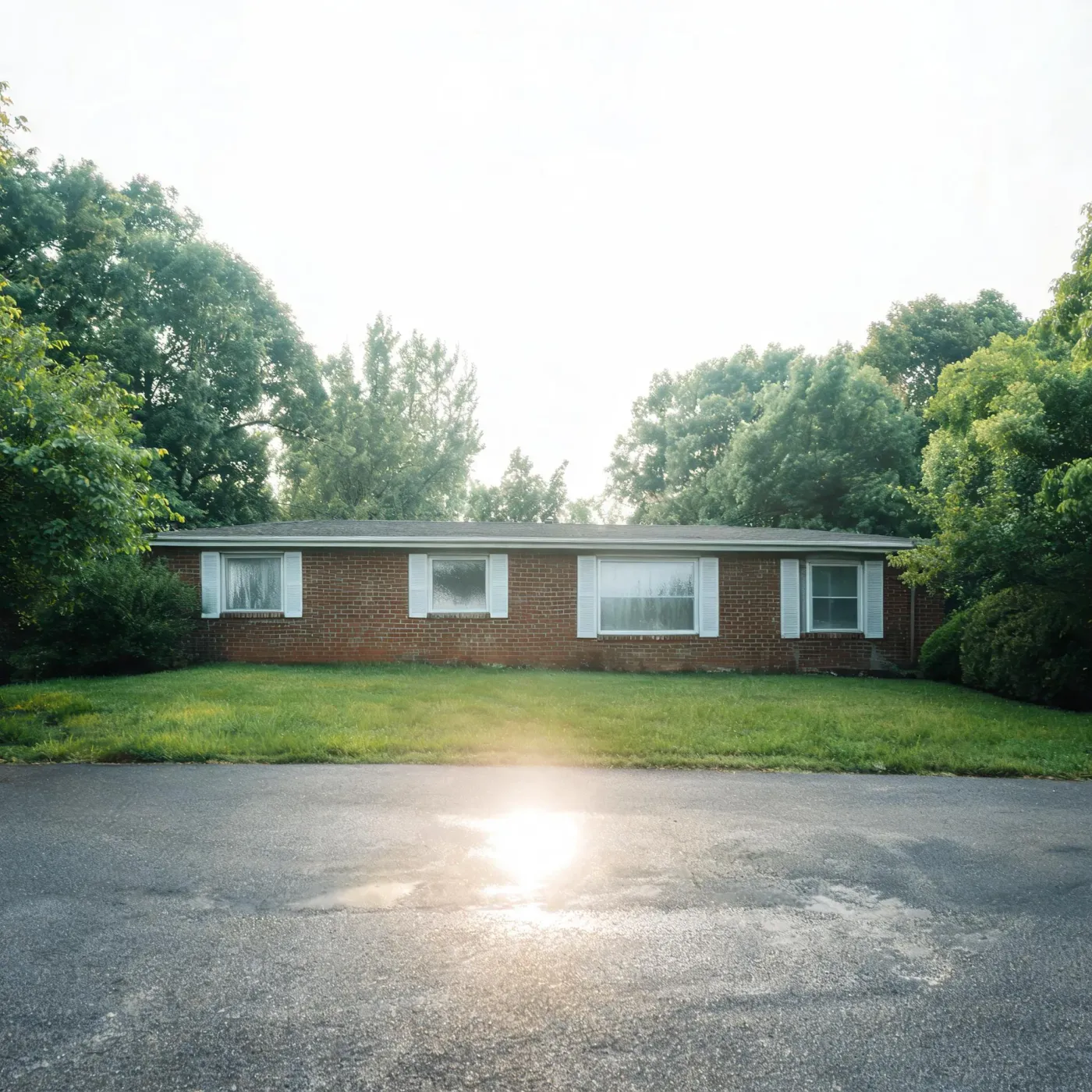
A single-story red brick ranch house with white-trimmed windows and shutters, set behind a mown lawn and a wide asphalt driveway, with deciduous trees behind it and sun flare in the foreground.

Summer air here holds a dew point around 73°F on average across June, July and August, according to NOAA climate data. That's heavy air, the kind where a towel left on the line won't dry and the windows sweat from the outside. Your AC isn't just dropping the temperature against that, it's wringing water out of air that doesn't want to give it up, and that's the harder half of the job. A tune-up checks whether the system still has what it needs to do that work before July asks for it. Skip that check and you're the one who finds out at three in the afternoon, not before, when the unit's running long and the house still feels damp. Getting matched with a contractor who knows what this air does to a system means that check happens on your schedule, not in the middle of a heat wave when every crew in the parish is already booked.

NASA POWER T2MDEW county cells weighted by homes

A pro who works on air conditioners

You could spend an afternoon on this yourself. Call a few contractors, explain the same thing about the cottonwood fluff and the long runtimes three separate times, wait on quotes, try to tell which one is actually going to check the charge against the manufacturer spec and which one is going to spray the coil and call it done. That's real time, and it's time against a deadline, because the heat is coming whether or not the unit is ready for it. Handing that off means one contractor who serves your area gets your request and reaches out, instead of you working the phone yourself. What doesn't change is the muggy stretch ahead and what it asks of a system that's already been running hard. A unit that gets looked at now, before June and July lean on it, is in a different position than one that doesn't get touched until it's struggling. That's the part worth not putting off.

What gets measured, not guessed

  • A contractor measures static pressure in the ductwork to see if the blower is straining against a restriction.
  • Amp draw on the compressor and fan motor gets checked against the rating stamped on the nameplate.
  • The contactor's points get inspected for pitting, since a pitted contactor can stick and run the compressor nonstop.
  • Capacitor readings are tested in microfarads, not just by whether the unit starts, since a weak one still lets it start but not run right.
  • The condensate line gets flushed, since algae and sludge build up fast in Louisiana humidity and back the pan up.
  • Refrigerant lines get checked for proper insulation, since bare line in a hot attic costs you cooling before the air reaches a vent.

A tune-up worth paying for runs on numbers, not a glance at the unit. Static pressure in the ductwork tells a contractor whether the blower is pushing air through clean duct or fighting a restriction somewhere it can't see. Amp draw on the compressor and fan motor gets held up against the nameplate rating, because a motor pulling more than it should is a motor wearing out faster than it needs to. The contactor gets a look too, since the points pit over time, and a pitted contactor can stick closed and leave the compressor running when it should have cycled off. A capacitor gets checked in microfarads, since a weak one will still let the unit start every time, right up until it won't, and the only way to catch it early is the actual reading, not whether the fan spins. The condensate line gets flushed out, because algae and sludge build up fast in Louisiana's humidity, and a clogged line means a pan that backs up and overflows somewhere you'll notice too late. Refrigerant lines get checked for insulation that's intact, not just present, since bare line running through a hot attic lets the system lose cooling before the air ever makes it to a vent. None of this shows up by looking at the outside of the unit. It shows up in the numbers a contractor writes down, and in what those numbers mean against what the manufacturer says they should be.

A smiling woman in a cream knit sweater sits at a marble counter with a glass of red wine, with a dining table, pendant lights, and French doors in the dim background.
A smiling woman with long dark hair in a cream sweater sits in a dimly lit open-plan home interior, with a glass of red wine in the foreground and a dining table, fireplace and shelving behind her.
A woman with long dark hair in a black turtleneck laughs while seated at a light stone counter with a glass of red wine, in a dimly lit interior with a potted plant, framed pictures and a hanging lamp behind her.
A woman in a dark sweater laughs while seated at a white marble counter with a glass of red wine, in a dimly lit open-plan interior with a pendant lamp and dining table behind her.
  1. Technician shuts power to the unit at the disconnect first.

  2. Outdoor condenser coil gets rinsed clean of dirt and debris.

  3. Refrigerant charge gets checked against the manufacturer's specified level.

  4. Electrical connections get tightened and the contactor points get inspected.

Power costs 12.52 cents per kilowatt-hour statewide

At 12.52 cents a kilowatt-hour, a compressor pulling extra amps because the charge is low or the coil's caked with fluff shows up fast on your bill. A tune-up catches that strain before it runs the whole summer, not after you've already paid for it.

EIA-861 2025 statewide residential average

A gray outdoor air conditioning condenser unit on a concrete pad beside a house with horizontal siding and a stone veneer base, with a wall-mounted disconnect box and conduit, next to a shrub bed and a concrete patio.

Running the way it should

This is a unit that's had someone out before the heat got bad. The pad is clear, the fins are open, nothing's stacked against the housing to choke the airflow. It'll sit there and run all summer without anyone thinking twice about it.

An outdoor air conditioner condenser unit on a concrete pad beside a house with light gray vinyl siding, with a gray electrical disconnect box and conduit on the wall, gravel beds and dried plants nearby, and a concrete sidewalk in the foreground.

Running on borrowed time

Weeds have grown up through the gravel bed and the housing's gone dull from sitting out through one summer after another with nobody checking it. It might still be cooling the house fine right now. It's also the one a contractor gets called out to in August, once it isn't.

A tune-up before summer means a contractor checks the refrigerant charge, cleans the coil, tightens the electrical connections, and catches the strain before it turns into a July afternoon with no cold air. That's what the visit covers, plain and simple. What you don't have to do is find the person to do it. You don't have to call around, explain the cottonwood fluff and the long runtimes to three different companies, or sit there comparing quotes trying to guess which one actually checks the charge against the manufacturer's spec instead of eyeballing it. You already know what the work involves now. The part that's left, the part where you track down someone licensed and available before the heat sets in, is the part this page hands off for you. Someone reaches out, and you take it from there.

A house with dark standing-seam metal roofs, gabled dormers and a stone chimney, surrounded by trees with hanging moss, with cloud-covered mountains in the background.

Get your air conditioner to the right pro

Start one form

There's no charge for the request.

You don't have to spend an afternoon calling contractors and explaining the same thing about your AC over and over. Send one request, and someone who services your area reaches out to you directly, before the heat sets in and your unit is left to carry the summer on a charge or a coil nobody's looked at.