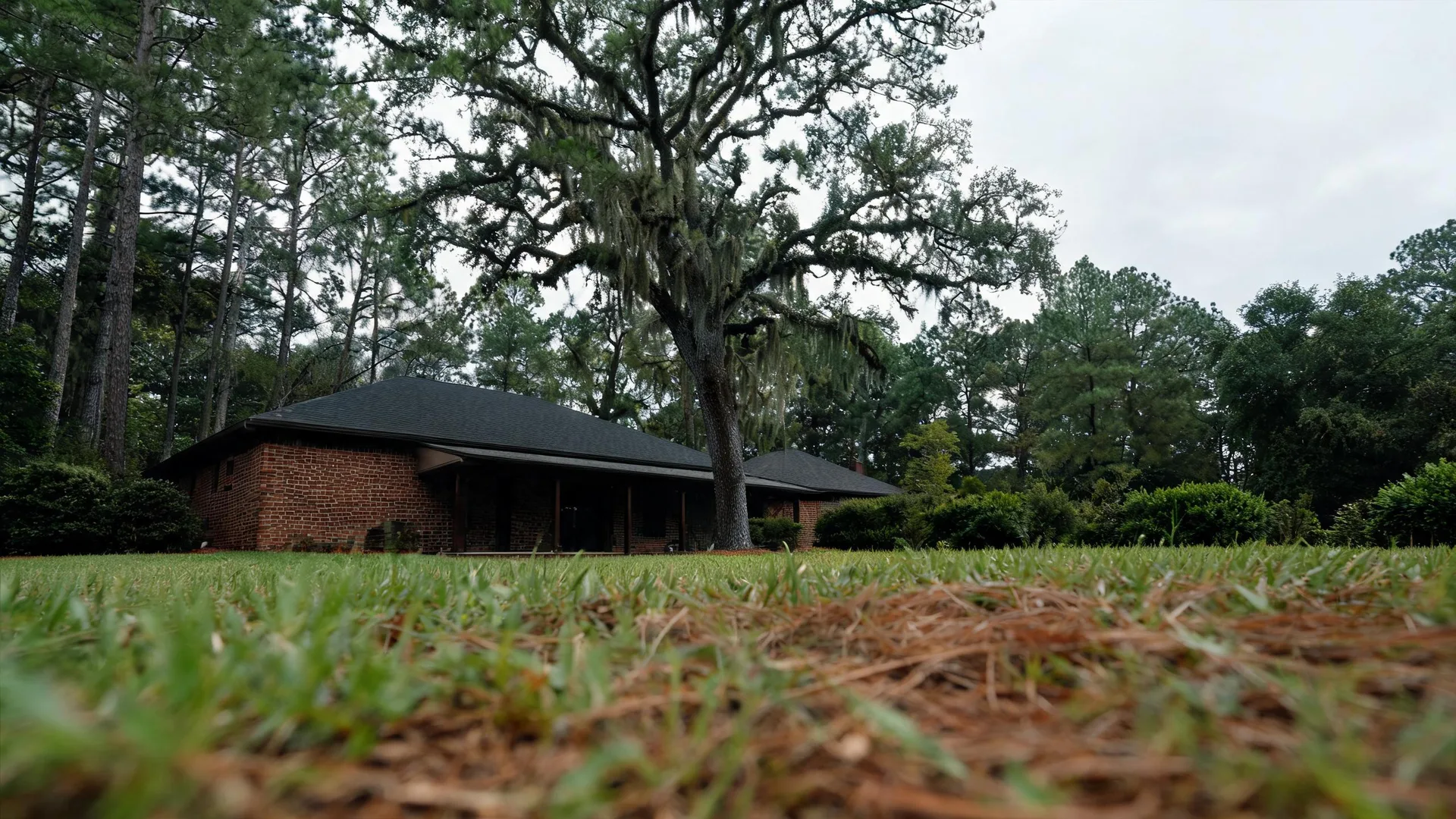




Low ground-level view across a lawn toward a single-story brick house with a dark shingled roof, framed by a large moss-draped oak and tall pine trees under an overcast sky.

AC Repair in Breaux Bridge, LA

Tell us about the job

Takes about a minute. No obligation.

RepairCentral ACSt. Martin Parish, LA
Step 1 of 2

What ZIP code is the job in?

Your AC runs about seven months a year here, April through October. During June, July and August the afternoon high averages 91°F, and the air holds more moisture than it does almost anywhere else in the country, with a dew point near 74°F. That combination makes the compressor work longer and harder to pull both heat and humidity out of the air. A system doing that for most of the year wears differently than one that only kicks on a few months at a time. Parts that would hold up fine somewhere milder start slipping here sooner, a capacitor weakening, a coil staying dirty longer because it never really gets a break. When something in your system is acting up, that steady strain is usually part of why.

7 months
April through October, your air conditioner is on duty
91°F
the average summer afternoon it cools against
14 hail events
in ten years, and hail bends the fins on outdoor coils
24 wind events
in ten years, and wind drives debris into outdoor units
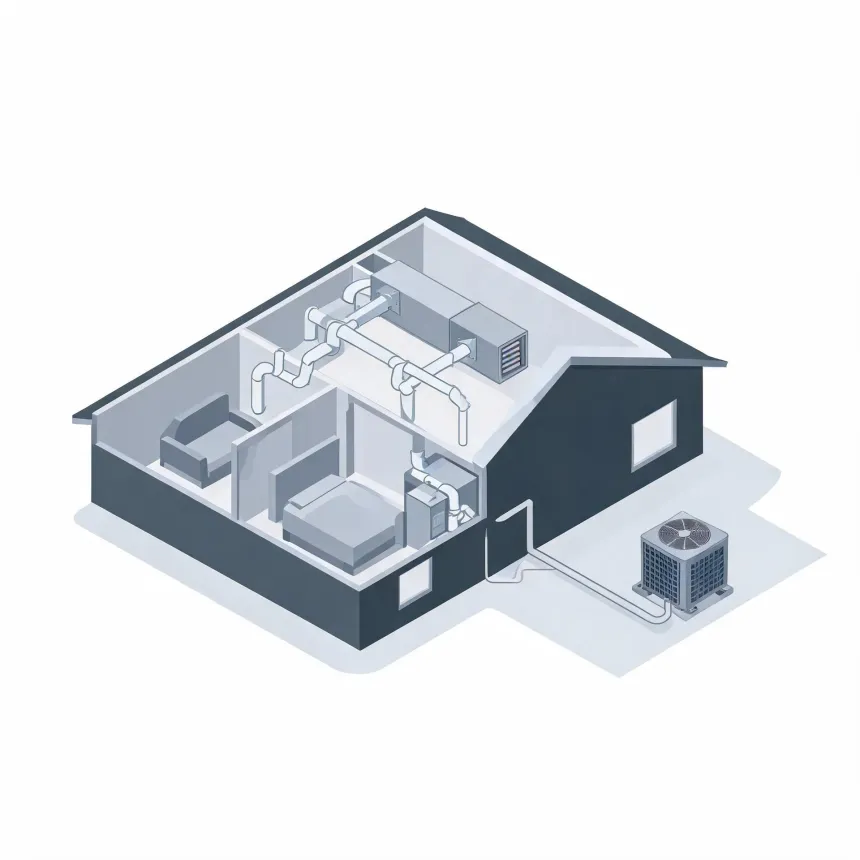
Isometric cutaway illustration of a house showing interior ductwork, an air handler and furnace unit, and an outdoor condenser connected by lines outside the wall.
Your air conditioner works hardest from May through September.

NOAA nClimDiv, 1991–2020 normals

St. Martin Parish logged 55 severe weather events between 2015 and 2024, including 24 rounds of damaging wind and 14 hail events.

If your outdoor unit took a hit and still runs, get it checked anyway. Hail dents coil fins and wind-blown debris strains the fan before you notice a problem.

Seven months of work a year wears a system down faster than two or three ever would

Cooling runs April through October
Climate zone 2A
Power here costs 12.28 cents per kilowatt-hour

Electricity here runs 12.28 cents a kilowatt-hour, cheaper than most of the country pays. That's one break this climate gives you. But a system that runs most of the year still adds up, even at a low rate, and a system that's struggling adds up faster. A weak capacitor or a dirty coil makes the compressor run longer to do the same job, and longer runtime on a cheap rate can still cost more than short runtime on an expensive one. A problem that costs you a little every day is worth fixing before it runs all season on your bill.

Have it looked at now, not after another season of this

Whatever's acting up in your system has probably been building since April. Get a contractor to diagnose it properly before it runs the rest of the summer that way.

Find a contractor
A gray residential air conditioning condenser unit mounted on a concrete pad outdoors, surrounded by green grass under a partly cloudy blue sky.

Running it while something's wrong rarely buys you time

A system that keeps running with something wrong doesn't just tolerate it, it builds on it. A refrigerant leak starts small, but as charge drops the compressor pulls harder to move what's left, and that extra strain shortens its life. A dirty coil blocks airflow, so the system runs longer to reach the same temperature, and that longer runtime pushes dust further into the blower and the motor bearings. A failing capacitor makes the compressor struggle on startup every time it cycles on, and every hard start wears the windings a little more. None of these fix themselves by running. The machine doesn't rest and recover overnight, it just starts the next cycle already behind. Left alone, a problem that would have been a single part replacement turns into one that takes the compressor with it.

What you'll notice first

Warm air coming out of the vents when the thermostat is set low, or the system running nonstop without ever quite reaching the set temperature. Sometimes it's a smell, musty from a dirty coil or sharp like burning dust from a motor working too hard. Water pooling near the indoor unit means the drain line is clogged or the coil is icing over and melting onto the floor. A grinding, squealing or clicking sound that wasn't there before almost always points to a part struggling, a motor bearing, a contactor, a fan blade hitting something it shouldn't.

What those signs are worth

None of these mean the same thing, so they're not worth the same response. A strange smell or a new sound is worth a call soon, before the part behind it fails outright. Warm air or weak airflow can mean the system is still cooling, just losing the fight, and it's worth having a contractor look before a mild problem turns into a no-cool call. Water where it shouldn't be is worth acting on right away, since it usually means something is already blocked or frozen. The system won't tell you which of these matters most. A contractor checking it can.

An overhead view of a residential air conditioning condenser unit mounted on a concrete pad next to a house with vinyl siding.

A new air conditioner would cut about $70 a year off cooling for a typical St. Martin Parish home.

  • A new one at the federal minimum, 14.3 SEER2$480 a year
  • An older air conditioner$550 a year

Estimates for a typical St. Martin Parish home, compared with an older unit built to the previous federal minimum, from EIA household energy data, Louisiana fuel prices and NOAA climate normals. Your home will differ.

Repair makes sense when a part like a capacitor or contactor has failed.

Replacement makes sense when the compressor has failed or the system uses R-22 refrigerant, which is no longer made.

A contractor can usually tell you fast whether what's wrong is minor or not, and that's worth knowing before another month on the meter passes. If it's a weak capacitor, that's a quick fix and the bill stops climbing right after. If it's low refrigerant from a slow leak, the compressor keeps working harder every week the leak goes unfound, and the cost keeps climbing with it. Either way, the machine isn't going to use less power by itself. Getting it looked at now is what actually stops the extra cost, not waiting to see if it gets worse.