







Aerial view of a gray outdoor air conditioning condenser unit mounted on a concrete pad next to a house with vinyl siding.

AC Repair in DeRidder, LA

Tell us about the job

Takes about a minute. No obligation.

RepairCentral ACBeauregard Parish, LA
Step 1 of 2

What ZIP code is the job in?

Beauregard Parish saw 100 severe weather events between 2015 and 2024. Damaging wind came through 48 times, hail fell 24 times, and the county had 24 tornadoes in that same stretch. An outdoor condenser unit sits outside through all of it, exposed to whatever the wind carries. A storm can bend the fins on the coil or crack the fan blade without stopping the unit from running. Statewide, nearly half of Louisiana households lost power for a day or more in 2024, and a long outage puts its own strain on a system when it cycles back on.

7 months
April through October, your air conditioner is on duty
92°F
the average summer afternoon it cools against
24 hail events
in ten years, and hail bends the fins on outdoor coils
48 wind events
in ten years, and wind drives debris into outdoor units
Isometric cutaway illustration of a single-story house with a dark shingled roof, showing interior rooms with ductwork and an indoor air handler connected to an outdoor condenser unit beside the building.
Your air conditioner works hardest from May through September.

NOAA nClimDiv, 1991–2020 normals

Your AC runs about seven months a year here, April through October.

That kind of run time wears parts down early, so a repair now is worth doing right.

Power here costs 13.82 cents a kilowatt-hour. A system running wrong burns it all summer.

Power here costs 13.82 cents per kilowatt-hour
Climate zone 2A
Cooling runs April through October
Ready Before It RunsCooling starts up again in April here, and that first stretch finds whatever went weak over the winter.

Half the homes in Beauregard Parish were built in 1992 or earlier. That puts a lot of the AC units in this area well past their original installation, especially if nobody has swapped the system out since the house was built. An old condenser working through a Louisiana summer is already under load. Add age on top of that and a breakdown stops being a surprise. If your system came with the house, it's worth finding out how much life is actually left in it before spending money on a repair that might just delay a replacement.

If It's Been Through a Storm, Get It Checked

If your outdoor unit has been through a storm, a working system now doesn't rule out bent fins or a cracked fan blade. Worth a look even if it's still running fine.

Find a contractor
A man in a dark long-sleeve shirt and tan work pants carries a worn tool bag up concrete steps toward a green front door of a house with siding and a potted shrub.
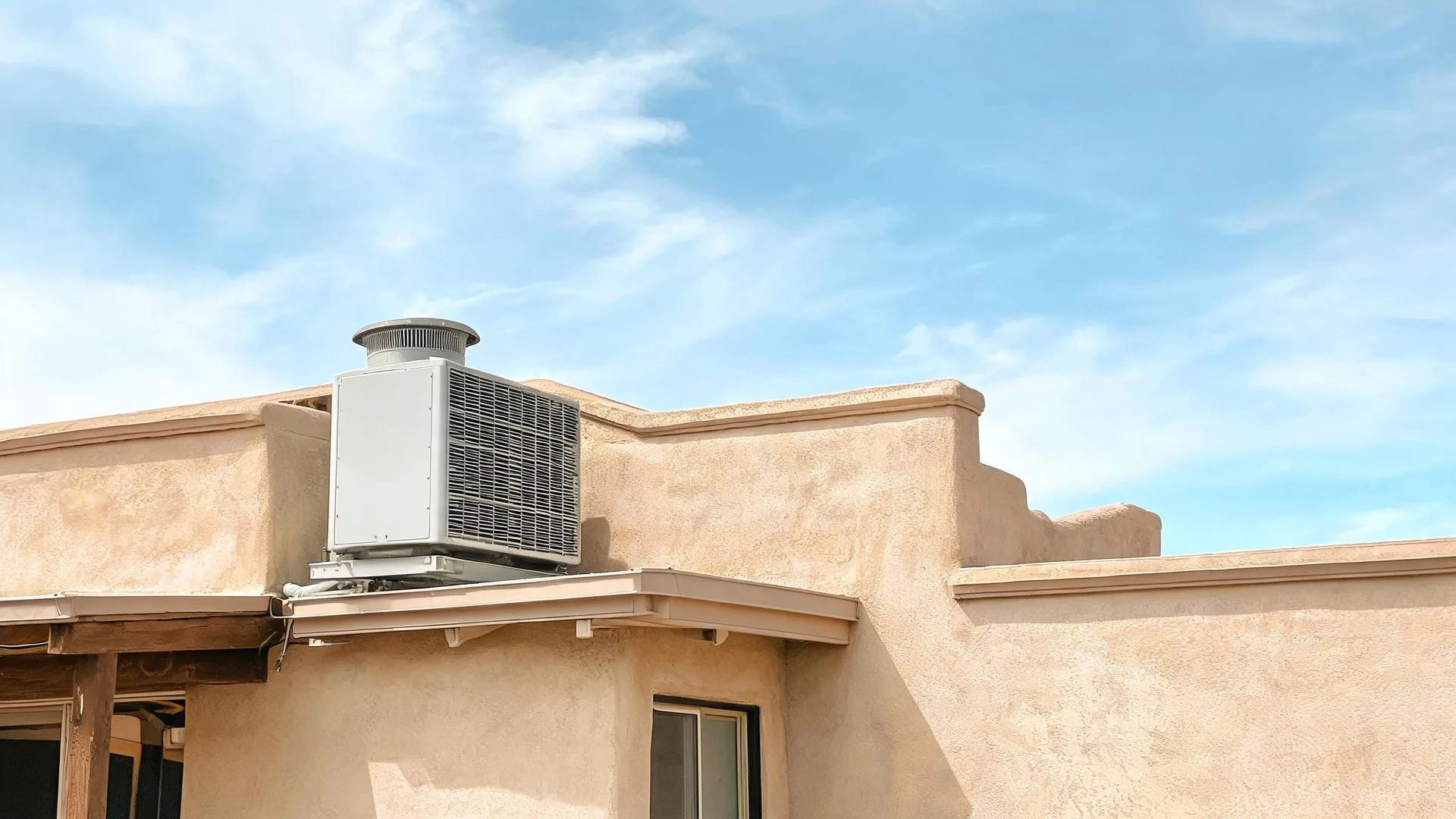
An outdoor air conditioning condenser unit mounted on a concrete pad surrounded by gravel, photographed against a partly cloudy blue sky.

Seven Months a Year, No Real Break

Seven months of cooling means close to five thousand hours of runtime before October gets here. The compressor, the fan motor, the capacitor, all of it is working through afternoons that average 92 degrees in June, July and August. That heat load doesn't let up in the evening the way it does further north. A part that's starting to go gets no break to recover before the next hot day asks something of it again. Whatever's acting up on your system right now has likely been building since sometime in the summer stretch, not overnight.

What a Failing AC Sounds Like

A grinding or screeching noise points to a motor bearing giving out. A hard metallic bang on startup often means a fan blade is hitting something it shouldn't, sometimes the bent housing around it. Clicking that repeats without the unit ever kicking on can mean a failed capacitor or a relay that's stuck. None of these fix themselves, and running the system through them tends to turn a cheap part into a damaged compressor.

Warm Air Isn't Always the Compressor

Warm air coming out of the vents gets blamed on the compressor first, but a dirty coil, a low refrigerant charge, or a clogged filter will all do the same thing. Ice on the copper line or the indoor coil usually means airflow is restricted somewhere, not that the system is working harder than it should. Shutting it off and letting the ice melt before calling someone keeps a simple problem from turning into a frozen compressor.

An overhead view of a residential air conditioning condenser unit mounted on a concrete pad next to a house with vinyl siding.

A new air conditioner would cut about $60 a year off cooling for a typical Beauregard Parish home.

  • A new one at the federal minimum, 14.3 SEER2$450 a year
  • An older air conditioner$510 a year

Estimates for a typical Beauregard Parish home, compared with an older unit built to the previous federal minimum, from EIA household energy data, Louisiana fuel prices and NOAA climate normals. Your home will differ.

Repair makes sense when a part like a capacitor or contactor has failed.

Replacement makes sense when the compressor has failed or the system uses R-22 refrigerant, which is no longer made.

A repair decision really comes down to what's failing and what it's connected to. A capacitor, a contactor, or a fan motor can be replaced on its own without touching anything else in the system, so fixing one of those is rarely a hard call. A compressor is different. It sits at the center of the refrigerant circuit, and replacing one usually costs enough that a contractor will walk you through comparing that number against a new system outright. The other thing worth asking is whether the refrigerant in your unit is still widely available, since older systems can use a type that's being phased out, and that alone can tilt the decision. A unit that's needed two or three service calls in as many years is telling you something even if each visit was minor. None of this means guess. A contractor can check the compressor, the coil, and the refrigerant type in one visit and tell you plainly which side of the line you're on.