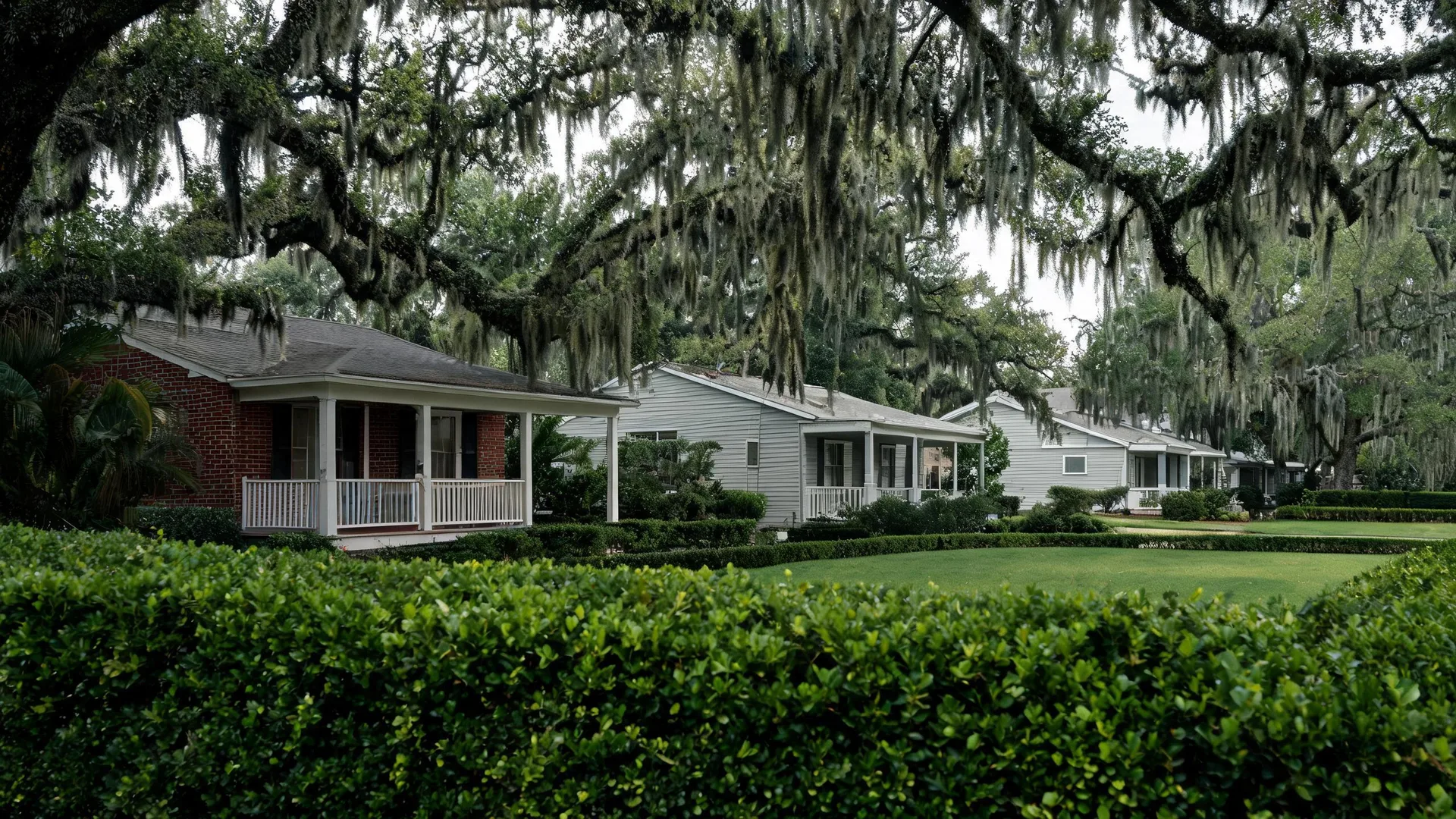






A row of single-story cottages, one brick and the others light gray siding with covered porches, behind a trimmed hedge and lawn, under large oak branches draped with Spanish moss.

AC Repair in Gonzales, LA

Tell us about the job

Takes about a minute. No obligation.

RepairCentral ACAscension Parish, LA
Step 1 of 2

What ZIP code is the job in?

Your air conditioner runs about seven months a year here, April through October. In June, July and August the afternoon high averages 91°F, and the dew point sits around 73°F, heavier air than most of the country deals with. That means the system is pulling moisture out of the air on top of cooling it, every day of summer. A capacitor or a contactor that might hold on another two summers somewhere milder can give out here first. When something's not working right, it's worth finding the actual cause instead of guessing, so the fix holds through the next stretch of heat.

7 months
April through October, your air conditioner is on duty
91°F
the average summer afternoon it cools against
14 hail events
in ten years, and hail bends the fins on outdoor coils
30 wind events
in ten years, and wind drives debris into outdoor units
Isometric line illustration of a cutaway house showing interior rooms, ceiling ductwork connected to an indoor air handler, and an outdoor condenser unit linked by refrigerant lines.
Your air conditioner works hardest from May through September.

NOAA nClimDiv, 1991–2020 normals

Half the homes in Ascension Parish were built in 2002 or later.

A system that age still has years in it, which makes repair the right call over replacement.

March is when a weak part finally gives out

Cooling runs April through October
Summer afternoons average 91°F
Power here costs 12.36 cents per kilowatt-hour

Ascension Parish recorded 54 severe weather events between 2015 and 2024, and 30 of those were damaging wind. Hail hit the parish 14 times in that same stretch. Your outdoor unit sits outside with no cover from any of it, and a hard enough hit can bend the fins or crack a fan blade without stopping the system right away. It might still run after a storm and still be worse off than it was. If a bad storm has come through recently, it's worth having the unit looked at even if the air coming out still feels cold. Power loss is its own problem here too. Close to half of Louisiana households went at least a day without power in 2024, and while an outage doesn't hurt the unit itself, it does mean a hard restart once power comes back on.

Find out what's actually failing before it fails again

A part that's run this hard all summer deserves more than a guess. Have it diagnosed properly, so whatever gets fixed actually holds through the next stretch of heat.

Find a contractor
A man in a dark cap, dark long-sleeved shirt and brown work pants walks up porch steps toward a pale green front door, carrying a worn canvas tool bag in his right hand, with a potted evergreen shrub beside the entry.
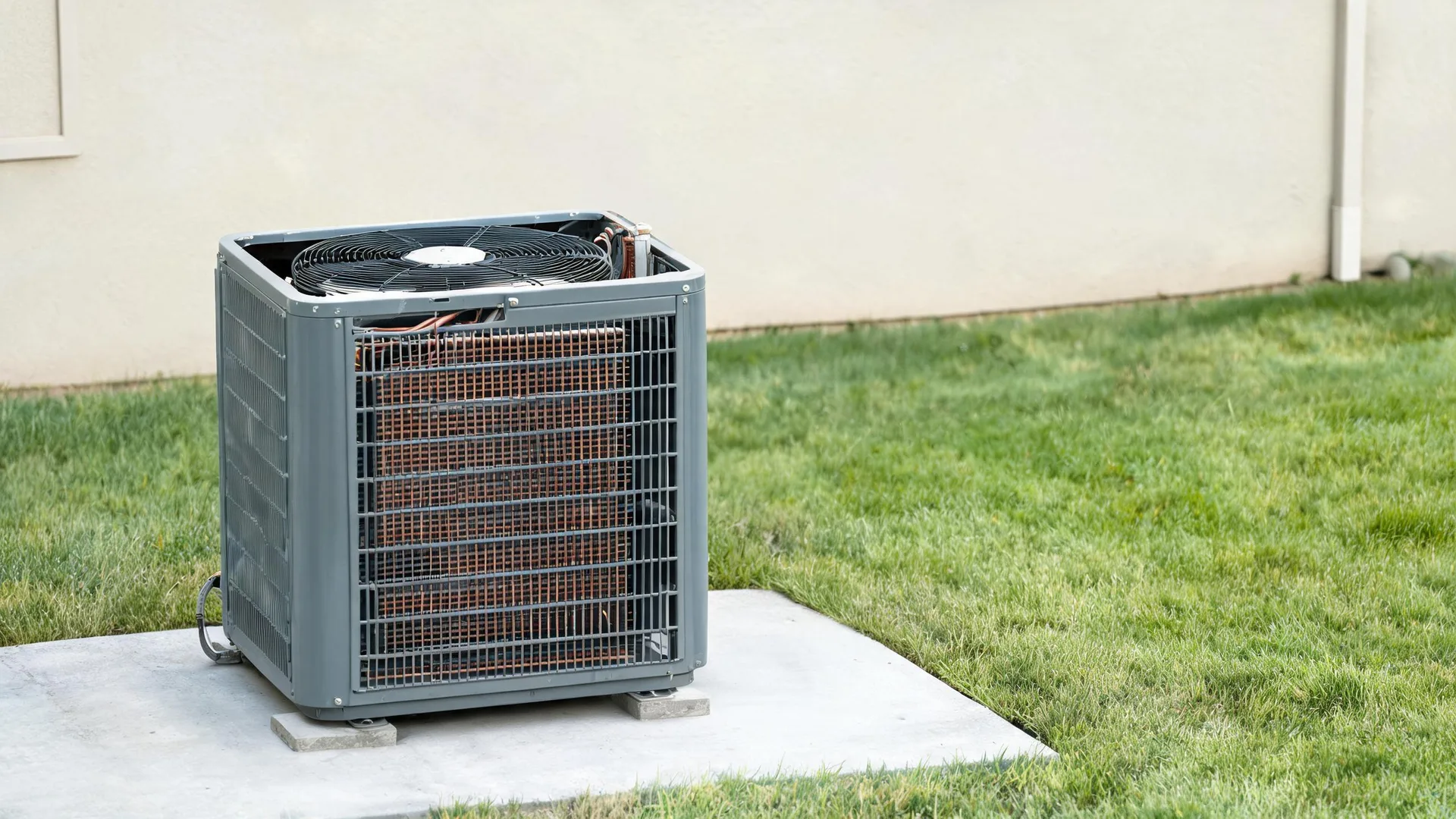
A gray residential air conditioner condenser unit mounted on a concrete pad in an open grass field.

Built recently, worth fixing

That math is why repair makes sense before replacement gets brought up. Most of what fails on a system that age is a single part, not the whole machine. A capacitor, a contactor, a fan motor, each one gets swapped out on its own and the system runs on for years after. Replacing the whole unit over a problem like that costs more than it needs to. Worth checking, if you know it, is whether your AC actually came with the house or got put in some other year. That's the date that matters most, and it's worth having on hand when someone comes to look at it.

A struggling system doesn't rest, it strains

A refrigerant leak, a weak capacitor, a dirty coil, none of these take the system offline right away. The compressor just works harder to make up for it, pulling more current and running hotter than it's built to. Left alone, that strain is what turns a cheap fix into a failed compressor.

The short cycle you ignore today costs the part tomorrow

A system that's struggling often starts shutting off and restarting more than it should, sometimes from a safety switch tripping, sometimes from the compressor overheating. Every one of those restarts is a jolt to the motor and the electrical parts around it. The longer that pattern runs, the more of those parts it takes down with it.

Overhead view of an air conditioning condenser unit on a concrete pad next to a house with asphalt shingle roofing and vinyl siding.

A new air conditioner would cut about $70 a year off cooling for a typical Ascension Parish home.

  • A new one at the federal minimum, 14.3 SEER2$470 a year
  • An older air conditioner$540 a year

Estimates for a typical Ascension Parish home, compared with an older unit built to the previous federal minimum, from EIA household energy data, Louisiana fuel prices and NOAA climate normals. Your home will differ.

Repair makes sense when a part like a capacitor or contactor has failed.

Replacement makes sense when the compressor has failed or the system uses R-22 refrigerant, which is no longer made.

A diagnostic visit starts outside at the condenser, checking the capacitor, the contactor and the refrigerant charge before anything gets taken apart. Low refrigerant means finding the leak, not just adding more, since it will just leak out again. Inside, the tech checks the evaporator coil for ice or dirt, the blower for weak airflow, and the drain line for a clog that could back up and shut the system down on its own. Electrical readings matter as much as anything visual. A motor pulling more current than it should is often the first sign something is about to fail, well before it stops running altogether. The goal is to find which part is actually at fault, not to replace parts until something works.