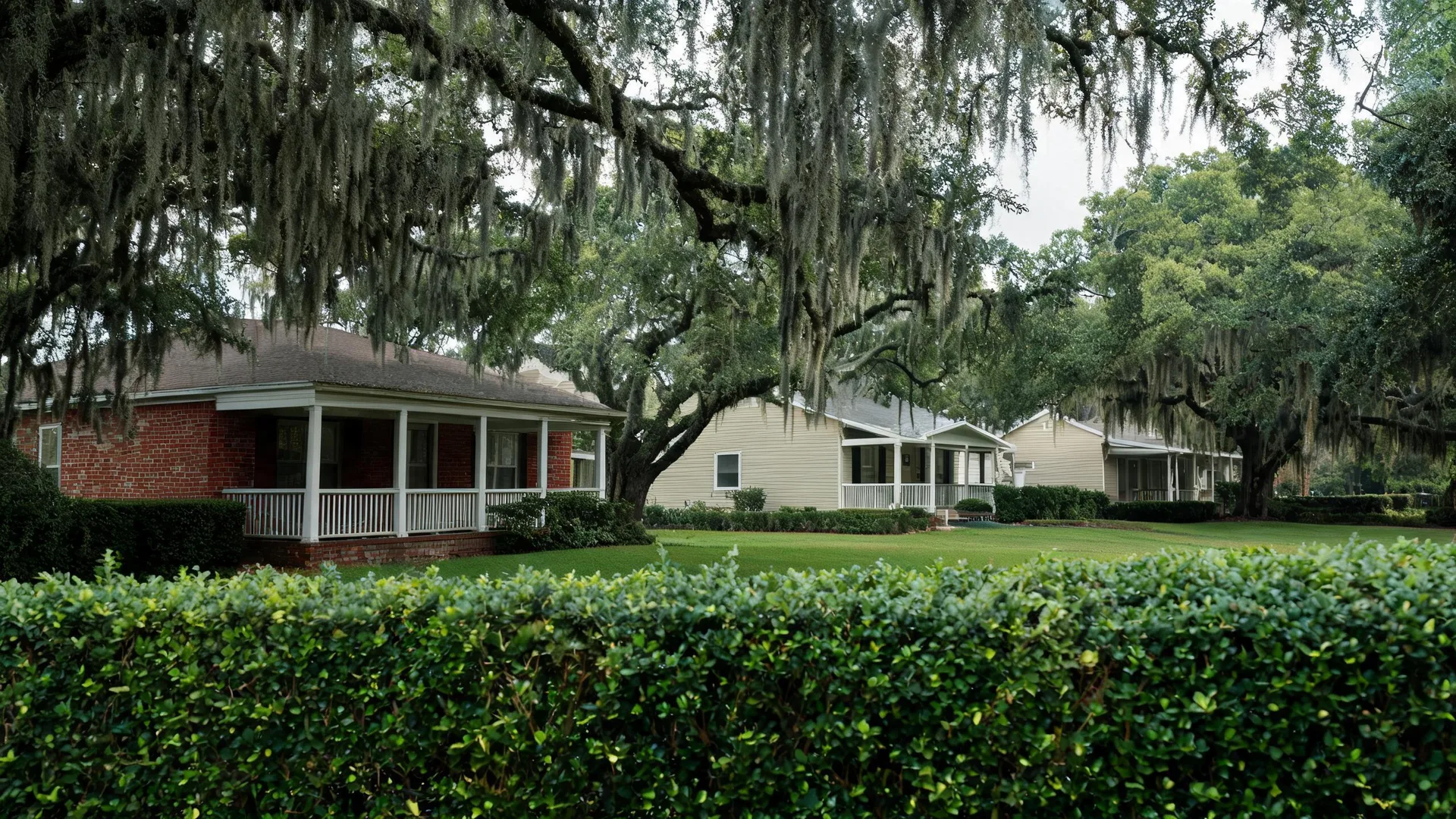






A red brick house with a white-columned porch and a row of pale clapboard cottages sit behind a trimmed hedge and lawn, under oak branches draped with Spanish moss.

AC Repair in Houma, LA

Tell us about the job

Takes about a minute. No obligation.

RepairCentral ACTerrebonne Parish, LA
Step 1 of 2

What ZIP code is the job in?

Terrebonne Parish counted 53 severe weather events between 2015 and 2024. Damaging wind was behind 28 of those, hail hit 10 times, and tropical storms or hurricanes came through 11 times. Three tornadoes touched down in that same stretch. An outdoor condenser unit sits outside through all of it, exposed to whatever the wind throws at it. Hail can dent the fins that let it shed heat, and flying debris can bend the cabinet or nick the coil, sometimes without stopping the unit from running. A system that still turns on after a storm isn't the same as one that came through fine.

7 months
April through October, your air conditioner is on duty
90°F
the average summer afternoon it cools against
10 hail events
in ten years, and hail bends the fins on outdoor coils
28 wind events
in ten years, and wind drives debris into outdoor units
Isometric 3D cutaway render of a house with dark siding showing interior rooms, ductwork and an air handler, connected by lines to an outdoor condenser unit on a white background.
Your air conditioner works hardest from May through September.

NOAA nClimDiv, 1991–2020 normals

Electricity here runs 11.67 cents a kilowatt-hour, cheaper than most of the country.

A struggling AC still burns power every hour it runs poorly, so a bad repair costs you all month long.

March is when to catch a weak AC before it has to run seven months straight

Cooling runs April through October
Climate zone 2A
Power here costs 11.67 cents per kilowatt-hour
A newer house usually means a newer ACHalf the homes in Terrebonne Parish were built in 1983 or later

Cooling runs April through October here, seven months. Three of those months sit at a 90 degree afternoon high with a dew point averaging 74°F, heavier air than most of the country deals with. That means long hours of run time, not just on the worst days but most of the season. A system working that hard shows its weak points early. A capacitor that was already weak finally gives out. A coil that was already dirty stops shedding heat fast enough. Refrigerant that was a little low stops being enough. Whatever sent you looking for repair right now likely traces back to that load, so it's worth having someone check the whole system rather than just the part that quit.

Ran through the storm isn't the same as came through it fine

If your outdoor unit came through a storm and still runs, that doesn't mean it came through clean. A dented fin or a nicked coil won't always stop it from turning on, but it will keep it from working the way it should. Worth having someone look at it before you decide it's fine.

Find a contractor
An outdoor air conditioning condenser unit mounted on a concrete pad surrounded by gravel, photographed against a partly cloudy blue sky.

Seven months of runtime doesn't leave a slow season to catch problems in

Seven months of cooling means this unit doesn't get much downtime to show you a problem before it becomes an emergency. It's running most of the day for most of the year, so wear doesn't wait for a slow season to show up. If something's failing, it's failing now, during the stretch when you need the system most. Have the repair done by someone who checks the rest of the system while they're in there, not just the part that stopped.

What you can check from the breaker box

Flip the breaker off, wait a few seconds, then flip it back on. If the outdoor unit still won't start, or it starts and trips the breaker again, stop there. That's not a reset you can push through. Check the air filter too. A filter packed with dirt chokes airflow across the indoor coil, and the system can ice up because of it. If you pull the filter and it's gray or matted, swap it before you call anyone.

What to leave alone

Don't pull the disconnect box next to the outdoor unit or open the panel on the condenser. The capacitor inside holds a charge even with the power off. If the coil outside looks bent or the fan blade is hitting the cage, that's a sign of damage worth describing when you call, not something to straighten yourself. Note what you see and hear, a smell, a hum with no fan movement, ice on the lines, and pass that along. It saves a diagnosis step.

Aerial view of a square outdoor air conditioning condenser unit on a concrete pad beside a house wall with a sliding glass door.

A new air conditioner would cut about $80 a year off cooling for a typical Terrebonne Parish home.

  • A new one at the federal minimum, 14.3 SEER2$520 a year
  • An older air conditioner$600 a year

Estimates for a typical Terrebonne Parish home, compared with an older unit built to the previous federal minimum, from EIA household energy data, Louisiana fuel prices and NOAA climate normals. Your home will differ.

Repair makes sense when a part like a capacitor or contactor has failed.

Replacement makes sense when the compressor has failed or the system uses R-22 refrigerant, which is no longer made.

A repair is worth doing when the failure is one part, not a pattern. A capacitor, a contactor, a fan motor, these wear out on their own schedule and swapping one doesn't say anything bad about the rest of the system. Replacement starts to make sense when the failures stack up, one thing fixed last year and another thing dying now, because that's usually the compressor or the coil telling you the whole system is wearing out at the same rate. Age matters too, but only alongside how the thing has been running. A unit that's been reliable and just lost a part is a different case from one that's needed a service call every season. If a contractor finds the compressor itself is failing, that's worth weighing hard, since that part alone is a large share of what a whole system costs. Ask what actually failed and why, not just what it'll take to get it running again.