







A lit antebellum-style two-story house with white columns and a wraparound porch at night, framed by live oak trees draped in Spanish moss.

AC Repair in Jennings, LA

Tell us about the job

Takes about a minute. No obligation.

RepairCentral ACJefferson Davis Parish, LA
Step 1 of 2

What ZIP code is the job in?

Your AC in Jennings runs about seven months a year, April through October. June, July and August push afternoon highs to 91°F, and the air carries a dew point around 74°F, heavier than most of the country deals with. That combination means the compressor and the fan motor work near their limit most of the summer, not just on the worst days. Parts that would last years in a drier or cooler climate wear down faster here. A system acting up in Jennings is usually just showing the strain of the season, not necessarily failing outright.

7 months
April through October, your air conditioner is on duty
91°F
the average summer afternoon it cools against
13 hail events
in ten years, and hail bends the fins on outdoor coils
19 wind events
in ten years, and wind drives debris into outdoor units
Isometric cutaway illustration of a single-story house showing interior rooms with furniture, attic ductwork connected to an indoor air handler, and an outdoor condenser unit on a pad linked by refrigerant lines.
Your air conditioner works hardest from May through September.

NOAA nClimDiv, 1991–2020 normals

Jefferson Davis Parish logged 41 severe weather events between 2015 and 2024, including 19 damaging wind events, 13 hail events, and 9 tornadoes.

An outdoor unit that took wind or hail can still run and still be hurt, so a strange noise or a dent in the cabinet is worth a look.

April asks the most of a system that sat all winter

Cooling runs April through October
Climate zone 2A
Power here costs 11.74 cents per kilowatt-hour
A struggling AC still runs up the billElectricity here runs 11.74 cents a kilowatt-hour, less than most of the country pays

If a storm came through recently, walk out and look at the unit before you decide it's fine. Hail dents the fins and bends them shut, and bent fins block airflow even when the fan still spins. A branch or debris can nick the coil or knock a fan blade out of balance, and that shows up later as a grinding or ticking sound rather than a dead system. None of that stops the unit from running right away. It just means it's running hurt, and Jennings sees enough wind and hail that this is worth ruling out rather than assuming.

Have it checked before a small problem becomes a bigger one

A system working this hard all summer doesn't fail all at once. It usually tells you first, with a noise it didn't used to make or a room that's not as cool as it should be. Getting it looked at when that starts is how a small fix stays small.

Find a contractor
A man in a cap, dark shirt and tan work pants carries a canvas tool bag up stone steps toward a green front door flanked by potted shrubs.
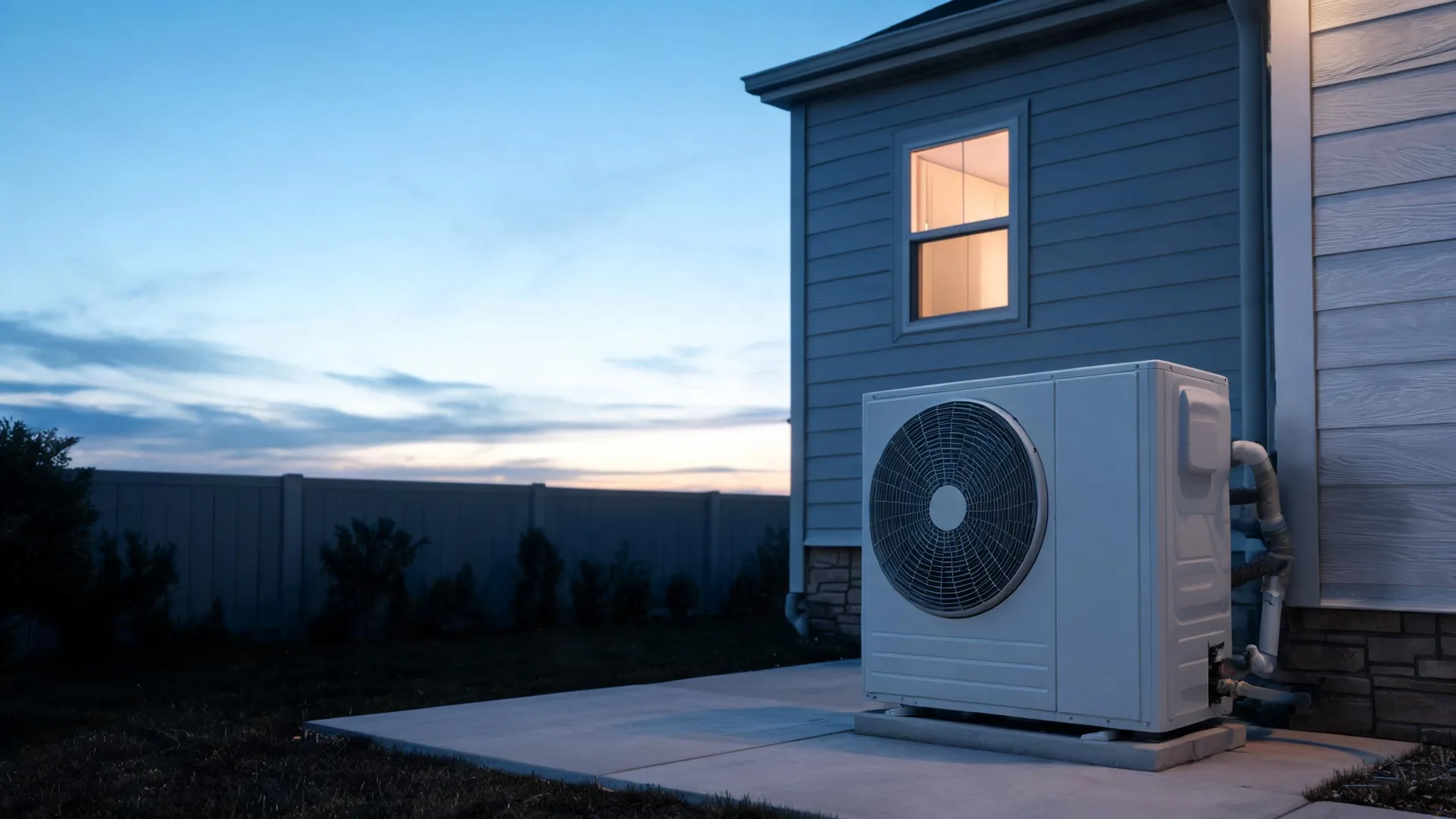
An outdoor residential air conditioning condenser unit mounted on a concrete pad, surrounded by gravel with a blue sky in the background.

What to check before anyone comes out

Before anyone comes out, check the thermostat first. Make sure it's set to cool and set below room temperature, and check the batteries if it has a screen that looks dim. Next, go to the breaker box and look for a tripped breaker, both the one for the outdoor unit and the one for the air handler or furnace. Outside, look at the unit itself. Leaves, grass clippings and dirt build up on the fins around the cabinet and choke off airflow, so clear anything packed against the sides. Inside, pull the air filter and hold it up to a light. If you can't see light through it, it's blocking airflow and should be replaced before anyone diagnoses anything else, since a clogged filter can look like a much bigger problem than it is. Check the vents in each room and make sure none are closed or blocked by furniture. If the indoor unit has a drain line with a shutoff switch, look for standing water in the drain pan, since a full pan can shut the whole system down on purpose to protect the house. None of this calls for opening the unit itself or touching electrical connections. If the system is still short cycling, blowing warm air or making noise after these checks, that points to something inside that needs a tech, not a homeowner.

Running hurt still means running hot

A failing part rarely shuts a system down right away. A weak capacitor still starts the compressor, just with more strain each time. A low refrigerant charge still makes cold air, just not as much. The unit keeps running because nothing has forced it to stop, and every hour it runs in that state puts more load on the parts that are still working to cover for the one that isn't.

The strain spreads to what's still healthy

A motor working to turn a bent or dragging fan blade draws more current than it should, and that heat has to go somewhere. A compressor fighting a low charge runs hotter and longer to hit the same temperature. Neither of those problems stays contained to the part that started it. Left alone, a cheap fix turns into a compressor or motor replacement because the good parts were never given the chance to work the way they were built to.

Aerial view of a gray outdoor air conditioning condenser unit mounted on a concrete pad next to a house with vinyl siding.

A new air conditioner would cut about $70 a year off cooling for a typical Jefferson Davis Parish home.

  • A new one at the federal minimum, 14.3 SEER2$480 a year
  • An older air conditioner$550 a year

Estimates for a typical Jefferson Davis Parish home, compared with an older unit built to the previous federal minimum, from EIA household energy data, Louisiana fuel prices and NOAA climate normals. Your home will differ.

Repair makes sense when a part like a capacitor or contactor has failed.

Replacement makes sense when the compressor has failed or the system uses R-22 refrigerant, which is no longer made.

A system that's running hurt doesn't use less power, it uses more. A weak capacitor or a low charge makes the compressor run longer to hit the same temperature, and every extra minute it runs shows up on the bill. Power here costs less than in most of the country, but a compressor straining through a Jennings summer still runs up a bigger number than one working the way it should. Waiting doesn't save anything if the unit is already compensating for a bad part. The bill tells you something's wrong before the unit ever quits outright, so a repair now is worth more than the same repair after a summer of running hurt.