Overhead view of an outdoor AC condenser unit on a concrete pad next to a house with a dark shingle roof.

AC Repair in Laplace, LA

Tell us about the job

Takes about a minute. No obligation.

RepairCentral ACSt. John the Baptist Parish, LA
Step 1 of 2

What ZIP code is the job in?

Seven months of runtime

The AC in a Laplace home runs from April through October. Afternoon highs average 91°F through June, July and August, and the unit doesn't get much of a break overnight either. That's a long stretch for a compressor and condenser fan to carry the load, year after year.


Humidity adds to the load

The dew point here averages 74°F in summer, higher than most of the country sees. Your system isn't just cooling the air, it's pulling that moisture out of it too. That extra work falls on the same parts that handle the heat, which is often why something gives out sooner than you'd expect.

7 months
April through October, your air conditioner is on duty
91°F
the average summer afternoon it cools against
1 hail events
in ten years, and hail bends the fins on outdoor coils
10 wind events
in ten years, and wind drives debris into outdoor units
Isometric cutaway illustration of a small house showing interior rooms, ductwork, an indoor air handler, and an outdoor condenser unit connected by lines, on a plain white background.
Your air conditioner works hardest from May through September.

NOAA nClimDiv, 1991–2020 normals

Electricity here runs 11.79 cents a kilowatt-hour, cheaper than most of the country.

That's still money every month if your AC is limping along instead of fixed.

Half the homes here were built in 1984 or later, so the house is often newer than the AC gives it credit for

Half the homes here were built by 1984
Climate zone 2A
Power here costs 11.79 cents per kilowatt-hour
April Is When Weak Parts FailCooling starts in April here, and that first stretch of real load is when a part that was already failing tends to go.

St. John the Baptist Parish saw 22 severe weather events between 2015 and 2024, among them 10 damaging wind events, 5 tornadoes, and 6 tropical storms or hurricanes. The outdoor unit sits through all of it, with nothing but a thin metal cabinet around the fan and coil. Wind-driven debris can bend the fins or crack a fan blade without leaving a mark you'd notice from the back door. Statewide, 49% of Louisiana households went at least 24 hours without power in 2024, and an AC that restarts after an outage doesn't always restart right. If your unit sat through a storm this year, even one that seemed to pass by, it's worth having someone check it before you assume it came through fine.

Get the Cause Fixed, Not Just the Symptom

A system that runs seven months a year against 91 degree afternoons doesn't get much downtime to show you it's struggling. Have the actual cause found and fixed, so the repair holds through the rest of the summer.

Find a contractor
A man in a dark long-sleeved shirt and brown work pants, seen from behind, carries a worn canvas duffel bag up porch steps toward a green front door of a house with horizontal siding and a potted shrub.
An outdoor air conditioning condenser unit mounted on a concrete pad surrounded by gravel, photographed against a partly cloudy blue sky.

Check the Year Before You Write It Off

If your AC came with the house, find out what year that was. A system installed around the time the house went up is often still well within its working life, even after a summer like this one. That's worth knowing before you decide whether to fix it or replace it. A compressor or condenser fan acting up in a system that age is usually a part worth fixing, not a sign the whole unit is done.

What Shows Up First

Warm air out of the vents, a hard time keeping the house down to the set temperature, or the unit cycling on and off in short bursts. Sometimes it's a sound: a hum from the outdoor unit that wasn't there before, or a fan that struggles to turn. These are usually a failing capacitor, a weak contactor, or a condenser fan motor on its way out, not the compressor itself.

Why Waiting Costs You the Compressor

A capacitor or contactor is a small part, and it's a cheap fix compared to what it protects. When it fails, the compressor still tries to start against the load, straining every time it kicks on. Keep running it that way and the compressor is what eventually gives out, and that's the one part in the system you don't want to replace.

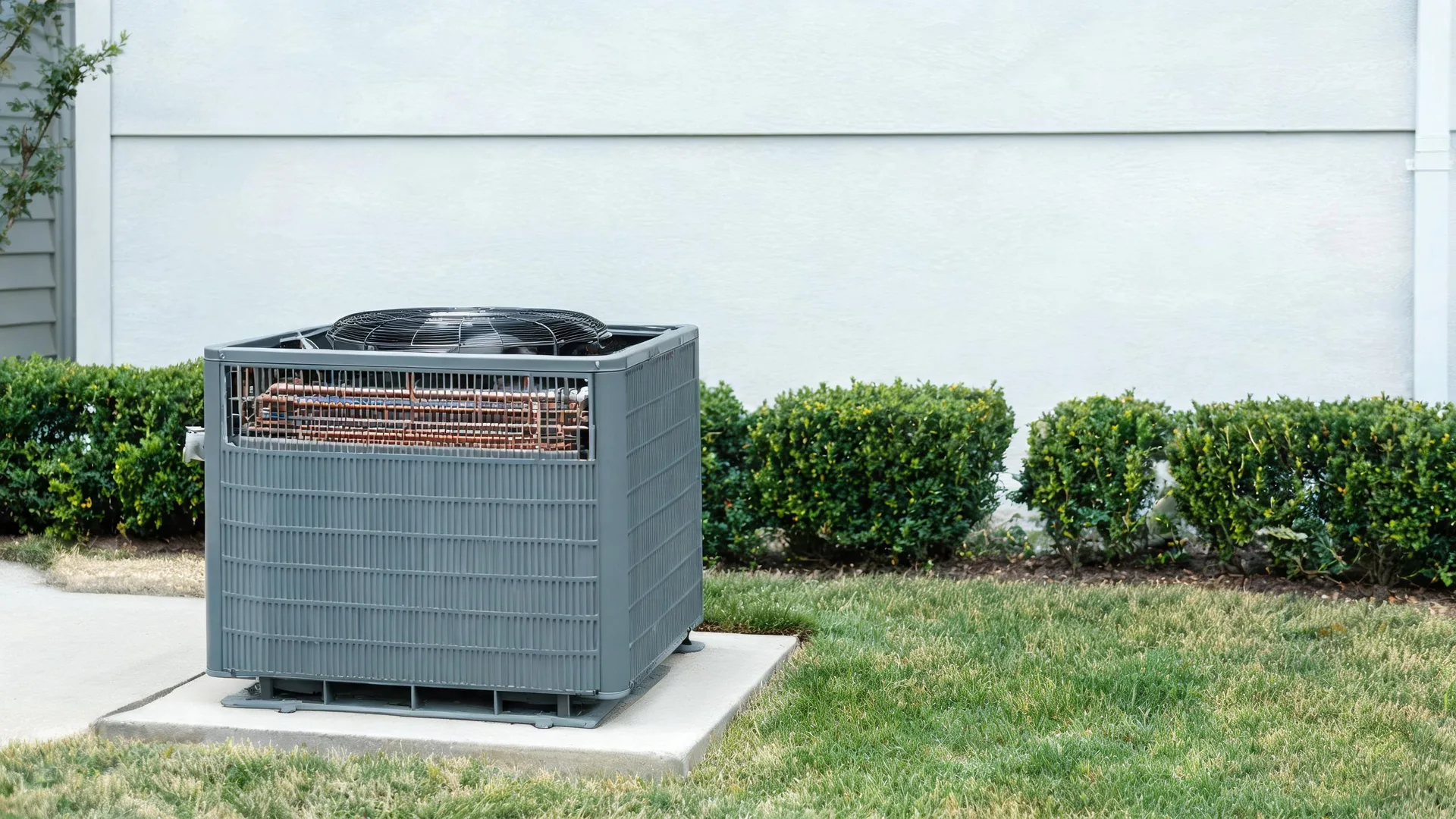
Aerial view of a gray central air conditioning condenser unit on a concrete pad next to a house with vinyl siding.

A new air conditioner would cut about $70 a year off cooling for a typical St. John the Baptist Parish home.

  • A new one at the federal minimum, 14.3 SEER2$490 a year
  • An older air conditioner$560 a year

Estimates for a typical St. John the Baptist Parish home, compared with an older unit built to the previous federal minimum, from EIA household energy data, Louisiana fuel prices and NOAA climate normals. Your home will differ.

Repair makes sense when a part like a capacitor or contactor has failed.

Replacement makes sense when the compressor has failed or the system uses R-22 refrigerant, which is no longer made.

A repair is worth it when the part that failed is small next to what it protects. A capacitor, a contactor, a fan motor, even a coil, those get replaced on their own without touching the rest of the system. Replacement makes sense when the compressor itself is the problem, since that part alone costs a large share of what a whole new system runs, and putting money into it rarely makes sense. Age matters too, but not on its own. A system nearing the end of its working life that now needs a second or third repair in close succession is telling you something a single repair bill won't fix. One failure is a repair. A pattern of them, in a system that's already old, is usually the system telling you it's done.