







Aerial view of a square outdoor air conditioning condenser unit on a concrete pad beside a house wall with a sliding glass door.

AC Repair in Leesville, LA

Tell us about the job

Takes about a minute. No obligation.

RepairCentral ACVernon Parish, LA
Step 1 of 2

What ZIP code is the job in?

Your air conditioner runs about six months here, May through October. June through August, the afternoon high averages 92°F, and the air holds a lot of moisture on top of that, with dew points around 72°F. That combination makes the unit work harder than it would in a drier place, because it has to pull more moisture out of the air, not just drop the temperature. Six months of that kind of load adds up faster than most homeowners expect. Whatever's going on with yours, a capacitor, a contactor, a coil, it's often a part that's simply done more work than it was built to handle for this long.

6 months
May through October, your air conditioner is on duty
92°F
the average summer afternoon it cools against
25 hail events
in ten years, and hail bends the fins on outdoor coils
39 wind events
in ten years, and wind drives debris into outdoor units
Isometric grayscale illustration of a cutaway house showing interior rooms, ceiling ductwork connected to an indoor air handler, and an outdoor condenser unit linked by lines along the exterior wall.
Your air conditioner works hardest from May through September.

NOAA nClimDiv, 1991–2020 normals

Vernon Parish logged 83 severe weather events between 2015 and 2024, including 39 with damaging wind and 25 with hail.

An outdoor unit that took hail or wind-blown debris can keep running for a while before the damage shows up as a real problem.

At 13.84 cents a kilowatt-hour, a struggling unit runs up your bill every month it runs

Power here costs 13.84 cents per kilowatt-hour
Climate zone 3A
Cooling runs May through October
The First Weeks of May Are When It ShowsHomes here start running AC in May, and a part that was already weak meets its first real load of the year.

If your outdoor unit has been through a hailstorm or a bad windstorm in the last few years, a repair call is a good time to have the coil and fins looked over. Bent fins slow the airflow across the coil, and the unit has to run longer to do the same job. A cracked fan blade or a dented cabinet can throw the fan out of balance, and that wears the motor bearings faster than normal use would. None of this always shows up right away. A unit can run fine for a year or two after a storm before the strain catches up with it, so it's worth mentioning to whoever comes out even if the current problem seems unrelated.

Get the Wear Checked Before It Spreads

A part that's been working this hard for six months straight doesn't fail clean. It usually gives a warning first, a short cycle, a weak start, a sound it didn't used to make. Getting it looked at now means whoever comes out can catch what's wearing thin before it takes something else with it.

Find a contractor
A man in a dark long-sleeved shirt and tan work pants, seen from behind, carries a canvas tool bag up wooden porch steps toward a green front door flanked by shrubs and a potted plant.
A gray cylindrical air conditioning condenser unit mounted on a concrete pad next to a light-colored vinyl-sided house exterior.

What You Can Check Before the Truck Shows Up

Before anyone comes out, check the filter. A clogged filter starves the coil of airflow, and a lot of what looks like a failing unit is really just that. Next, go outside and see if the fan is turning. If the outdoor fan isn't spinning but you can hear the unit humming, that's worth telling whoever comes out, since it points to the capacitor or the motor rather than something electrical further back. Check the thermostat batteries if it runs on them, and make sure nothing is blocking the vents or the return inside. Look at the outdoor unit itself. Leaves, grass clippings or a fallen branch packed against the coil will choke it the same way a dirty filter does. If you see ice on the indoor coil or the refrigerant lines, shut the system off and let it thaw before anyone touches it, running it iced up can damage the compressor. None of this tells you exactly what's wrong, but it tells the tech more than 'it's not cooling' does, and it rules out the things that aren't worth a service call on their own.

What a Failing AC Sounds Like Before It Quits

A unit heading for trouble usually tells you first. A grinding or squealing noise points to a motor bearing giving out. A hard metallic clatter can mean a fan blade hitting something or coming loose. Clicking that repeats without the system starting is often a relay or capacitor that can't quite get the compressor going. Warm air from the vents with the fan still running usually means the compressor itself has stopped doing its job, even though the blower hasn't.

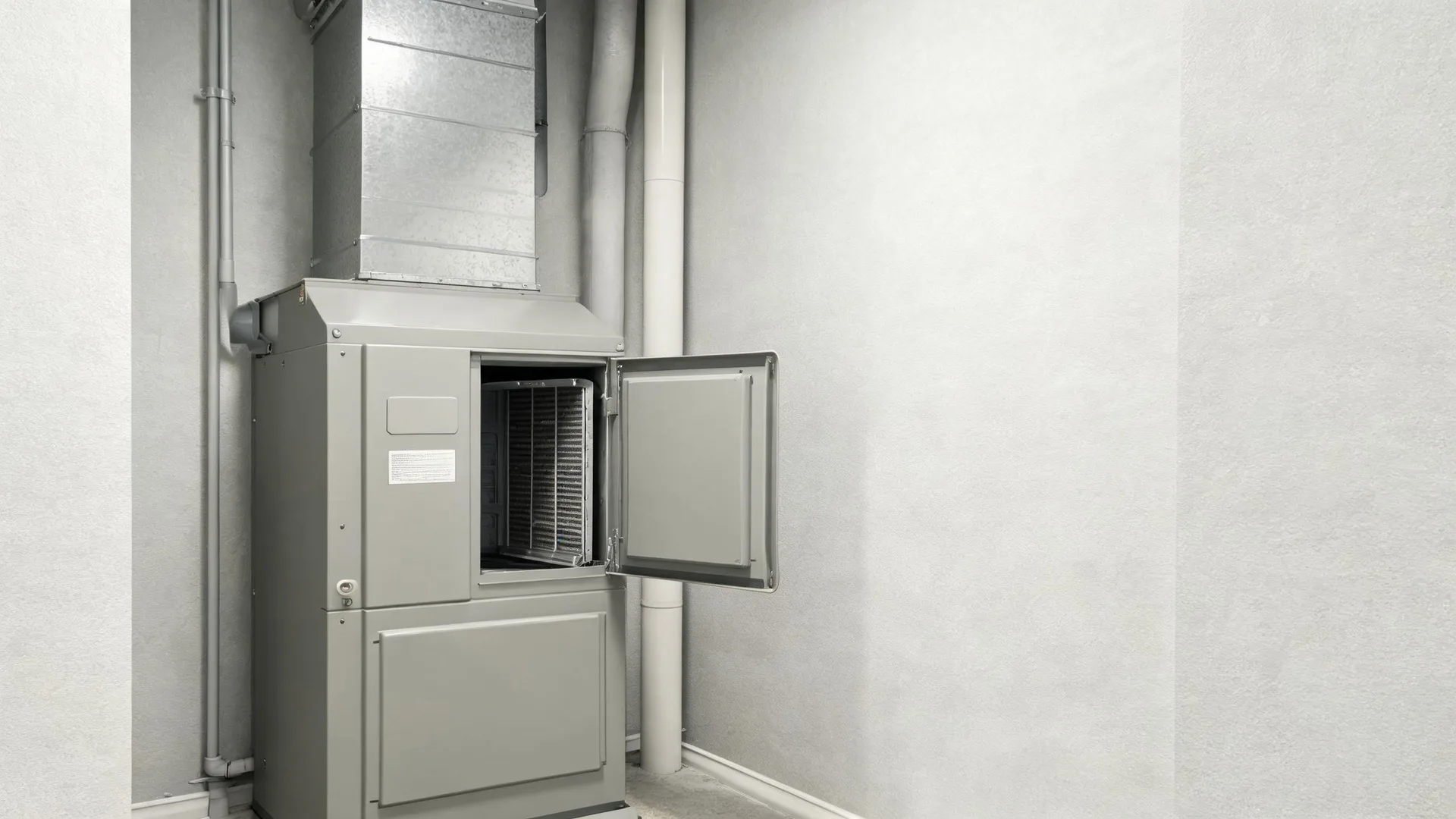
Why Waiting Costs More Than the Repair

A system that short cycles, turning on and off in quick bursts, is already straining the compressor every time it restarts. Ice on the coil or the lines means airflow or refrigerant is low, and running it that way stresses the compressor further. Small electrical faults, a failing capacitor or a worn contactor, tend to take other parts down with them if they're left alone. The part that's struggling now is almost always cheaper to replace than the parts it drags down later.

Overhead view of a gray residential air conditioning condenser unit mounted on a concrete pad beside a house with asphalt shingle roofing.

A new air conditioner would cut about $70 a year off cooling for a typical Vernon Parish home.

  • A new one at the federal minimum, 14.3 SEER2$420 a year
  • An older air conditioner$490 a year

Estimates for a typical Vernon Parish home, compared with an older unit built to the previous federal minimum, from EIA household energy data, Louisiana fuel prices and NOAA climate normals. Your home will differ.

Repair makes sense when a part like a capacitor or contactor has failed.

Replacement makes sense when the compressor has failed or the system uses R-22 refrigerant, which is no longer made.

A unit that's struggling still runs, and it still pulls power the whole time it does. A weak capacitor or a compressor that's short cycling doesn't use less power limping along, it uses more, since it's working against itself instead of just doing the job. That cost lands on next month's bill whether or not the repair happens. Waiting doesn't save you the call, it just adds another month of paying for a system fighting itself. Getting it looked at now is the cheaper month.