A row of single-story houses, one of red brick and others with pale siding, behind a mowed lawn and a tall trimmed hedge, framed by large oak branches draped with Spanish moss.

AC Repair in Luling, LA

Tell us about the job

Takes about a minute. No obligation.

RepairCentral ACSt. Charles Parish, LA
Step 1 of 2

What ZIP code is the job in?

Seven months of cooling

Air conditioners in Luling run from April through October. That's most of the year asking the compressor and fan to cycle, with afternoon highs averaging 91°F through June, July and August. A system built for occasional use somewhere else would struggle here. Yours runs more hours per year than units in milder climates, and every one of those hours adds wear.


What that means for the repair

When a part fails here, long hours and heavy humidity are usually part of the reason. The dew point averages 74°F in summer, which is higher than most of the country sees, and that heavier air makes the system work harder to cool and dry it. A proper diagnosis looks at what actually gave out and why, not just the symptom you noticed first.

7 months
April through October, your air conditioner is on duty
91°F
the average summer afternoon it cools against
5 hail events
in ten years, and hail bends the fins on outdoor coils
26 wind events
in ten years, and wind drives debris into outdoor units
Isometric grey illustration of a cutaway single-story house showing interior rooms, ceiling ductwork connected to an indoor air handler, and an outdoor condenser unit linked by lines outside the wall.
Your air conditioner works hardest from May through September.

NOAA nClimDiv, 1991–2020 normals

Half the houses in St. Charles Parish were built in 1986 or later.

A system that came with a newer house in Luling has likely been running for years, not decades.

Cooling starts in April. A part that was already weak doesn't get a slow start to prove itself.

Cooling runs April through October
Summer afternoons average 91°F
Power here costs 11.91 cents per kilowatt-hour

Electricity here runs 11.91 cents per kilowatt-hour, lower than most of the country pays. That's one thing working in your favor. But a system that runs weak doesn't know the rate is low, it just runs longer to do the same job. A failing capacitor, a low charge, a blower working harder than it should, any of that shows up on the bill before it shows up as a breakdown. The cheaper the power, the easier it is to not notice what a struggling AC is costing you every month until the month it quits.

This system has been working harder than most. Have it looked at properly.

Your system has been running hard since April and has months left to go. When a part is already worn, that kind of use is what pushes it to actually fail. Getting it diagnosed now means finding the part that gave out and the reason behind it, not just a quick patch on the symptom.

Find a contractor
A man in a cap, dark long-sleeved shirt and worn brown work pants walks up porch steps toward a green front door, carrying a canvas tool bag in his right hand, with a potted plant beside the door.
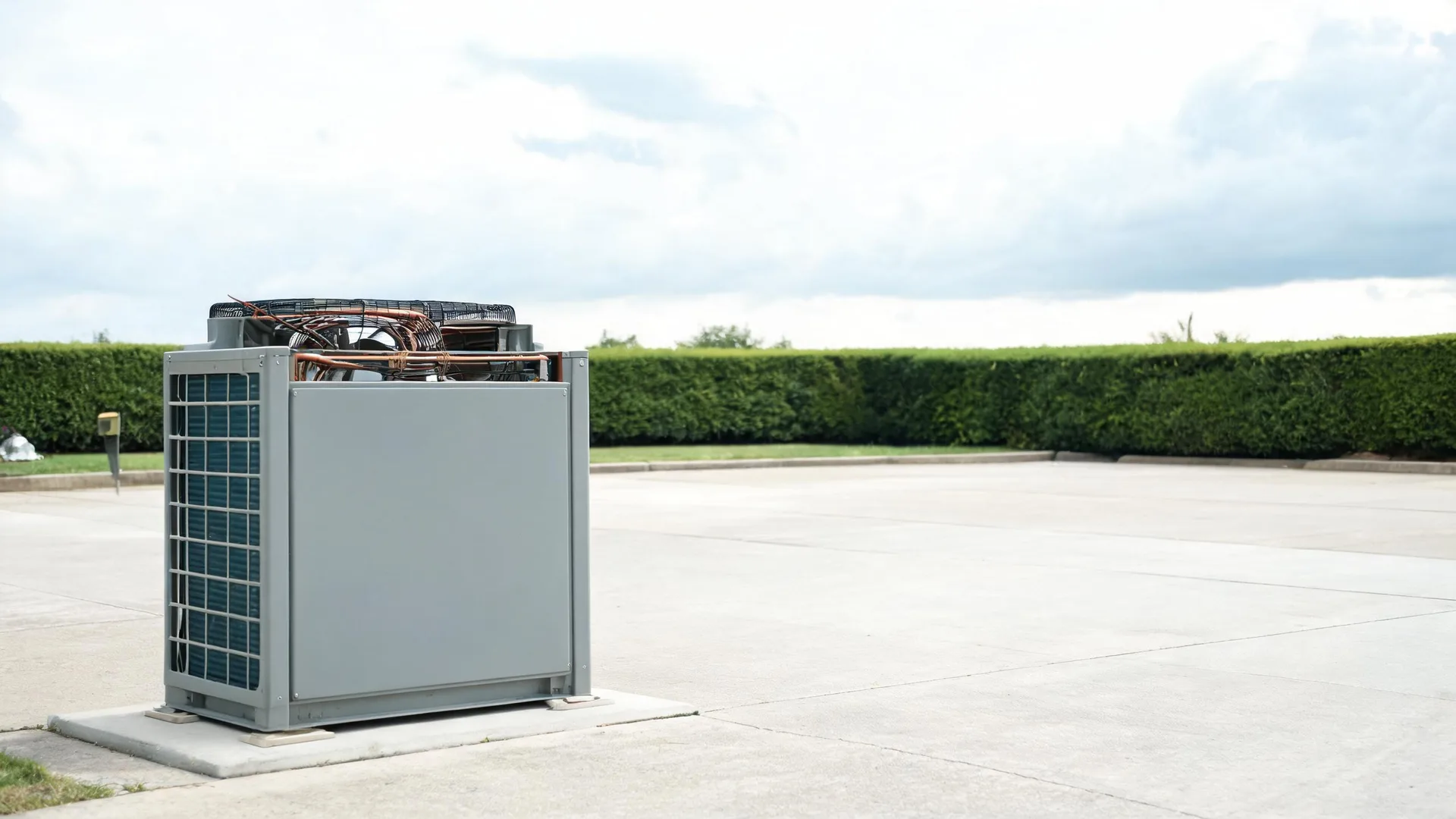
A gray residential air conditioning condenser unit mounted on a concrete pad outdoors, surrounded by green grass under a partly cloudy blue sky.

A newer system still has life left to run

If your house is on the newer half of the parish, built in 1986 or later, the system that came with it hasn't had to survive decades of this yet. That changes what's worth doing when a part fails. One worn part on a system that still has years ahead of it is a repair, not a sign the whole unit is on its way out. Worth having someone diagnose the actual part before anyone talks replacement.

What you'll notice first

The air coming from the vents feels wrong before anything shuts down. It blows but doesn't feel cold, or it cools one room and not the rest of the house. Short cycling is another early sign, where the system kicks on, runs a few minutes, and shuts off before the house cools. A hissing or bubbling sound near the indoor coil points to a refrigerant leak. A hard clunk or a loud rattle when the compressor starts points to a failing capacitor. Water pooling near the indoor unit usually means the condensate drain is clogged, not that the system itself is failing.

What's worth a call now versus a watch

A system that's lost airflow, won't turn on at all, or is tripping the breaker repeatedly needs a technician before it runs again. Ice on the refrigerant lines means something is already wrong inside, and running it longer in that state usually turns a repair into a bigger one. A warm house on a system that still turns on and blows air is worth watching for a day, but if the warm air continues or the unit starts cycling fast, that's the point to stop waiting. Catching a weak part while it's still just weak is almost always the cheaper, simpler job.

An outdoor air conditioning condenser unit positioned on a concrete pad next to a blue-sided house, surrounded by green shrubs and flowering hydrangeas at sunset.

A new air conditioner would cut about $80 a year off cooling for a typical St. Charles Parish home.

  • A new one at the federal minimum, 14.3 SEER2$500 a year
  • An older air conditioner$580 a year

Estimates for a typical St. Charles Parish home, compared with an older unit built to the previous federal minimum, from EIA household energy data, Louisiana fuel prices and NOAA climate normals. Your home will differ.

Repair makes sense when a part like a capacitor or contactor has failed.

Replacement makes sense when the compressor has failed or the system uses R-22 refrigerant, which is no longer made.

A diagnostic visit starts before any panel comes off. The technician asks what the system is doing, when it started, and whether it happens all the time or just in the afternoon heat. Then they check pressures and temperatures: what's happening at the compressor, what's coming off the coil, what the air looks like at the vent compared to the air going in. Electrical readings come next, since a capacitor or contactor can test weak even when it still runs. Airflow gets checked too, because a coil or filter restricting air can look like a refrigerant problem when it isn't one. The goal is to find the part that's actually failing, not just the symptom it's causing, since treating the symptom usually means another call in a few weeks for the same problem.