Aerial view of a residential air conditioning condenser unit mounted on a concrete pad next to a house with vinyl siding and a sliding glass door.

AC Repair in Napoleonville, LA

Tell us about the job

Takes about a minute. No obligation.

RepairCentral ACAssumption Parish, LA
Step 1 of 2

What ZIP code is the job in?

Seven months of real work

Your AC runs April through October here, and June through August it's fighting a 91 degree afternoon with a 74 degree dew point. That's heavier air than most of the country ever sees. The compressor and fan motor don't get much of a break in that stretch.

What that means for the fix

A system that runs this hard shows its weak points sooner. A capacitor or a contactor that might last years somewhere milder can give out early here. Whatever's going wrong with your unit, it's worth finding the actual cause instead of guessing, so the repair holds.

7 months
April through October, your air conditioner is on duty
91°F
the average summer afternoon it cools against
7 hail events
in ten years, and hail bends the fins on outdoor coils
4 wind events
in ten years, and wind drives debris into outdoor units
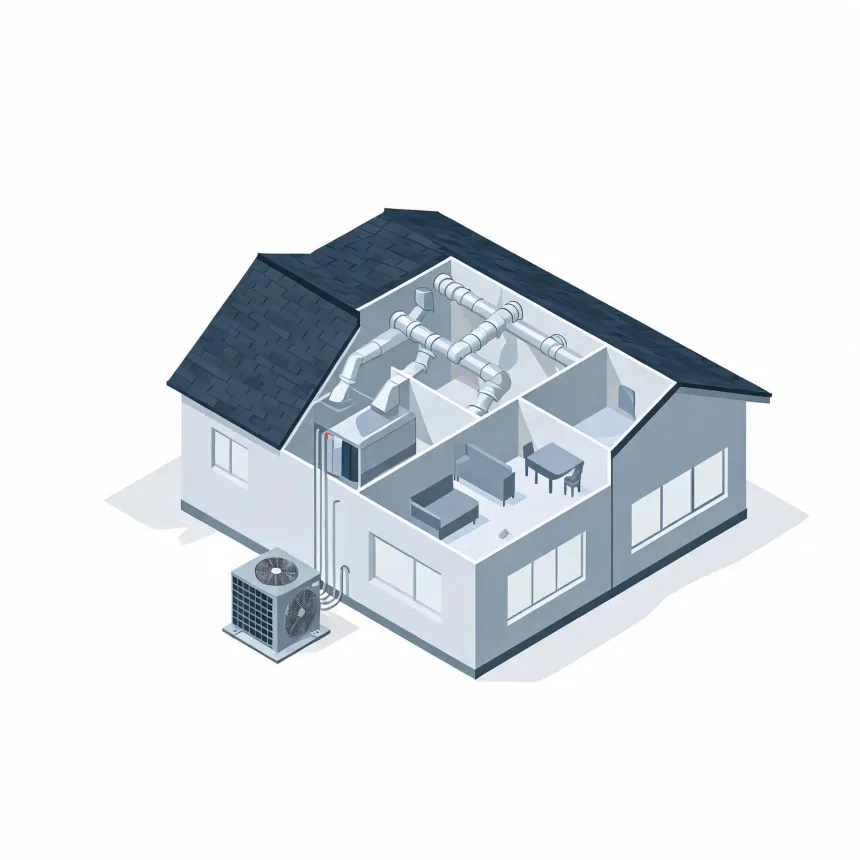
Isometric illustration of a cutaway single-story house showing attic ductwork, an indoor air handler, interior rooms with furniture, and an outdoor condenser unit connected by lines, on a white background.
Your air conditioner works hardest from May through September.

NOAA nClimDiv, 1991–2020 normals

Assumption Parish saw 22 severe weather events between 2015 and 2024, including hail, high wind and tornadoes.

If your outdoor unit took a hit and still runs, get it checked anyway, because bent fins and a cracked housing don't always show up as a problem right away.

Seven months of load, starting in April

Cooling runs April through October
Climate zone 2A
Power here costs 12.16 cents per kilowatt-hour

Electricity here runs 12.16 cents a kilowatt-hour, lower than most of the country pays. That helps, but it doesn't cancel out what a struggling system costs you. A unit that's low on charge or running on a weak capacitor pulls more power to do the same job, and it keeps doing that job all summer long here. Cheap power on a machine running badly still adds up every month it goes unfixed. The lower rate buys you less room to ignore a problem than you'd think.

Get it looked at before the rest of summer leans on it

Whatever's causing the trouble, this is the season that finds it. Get the actual cause diagnosed now, so the fix holds through the rest of it.

Find a contractor
A man in a dark cap, navy long-sleeve shirt and tan work pants walks up porch steps toward a green front door, carrying a worn canvas tool bag in his right hand.
A gray residential air conditioning condenser unit mounted on a concrete pad outdoors, surrounded by green grass under a partly cloudy blue sky.

An older house usually means an older system

Half the homes in this parish were built in 1983 or earlier. If your system came with a house that age, it's not the original unit, but it may well be on its second or third one, and nobody can tell you its real age without looking at it. Older homes also mean older ductwork and electrical in a lot of cases, and that affects how a new or repaired system performs, not just whether it turns on. Before you pay for a major repair, it's worth asking the contractor straight: how many more summers is this unit good for. That answer should decide whether you fix it or replace it, not the other way around.

What actually wears out

The capacitor is usually first. It gives the compressor and fan motor the jolt they need to start, and that part just weakens over years of starting and stopping. The contactor is next, with pitted contacts from constant cycling. Refrigerant doesn't get used up, so a low charge almost always means a slow leak at a coil or a fitting. Drain lines clog with algae and shut the system down on purpose, so it doesn't overflow into the house.

What that means for your unit

A failing capacitor often gives warning. The fan might stutter on startup, or the compressor hums without catching. Catch it there and it's a small fix. Ignore it and the compressor can take the damage instead, which costs a lot more to put right. A refrigerant leak behaves the same way: small at first, worse every month it runs low. Whatever part is at fault, finding the actual cause before it drags another part down with it is what keeps the repair cheap.

An outdoor air conditioning condenser unit installed beside the exterior wall of a blue vinyl-sided house at sunset.

A new air conditioner would cut about $70 a year off cooling for a typical Assumption Parish home.

  • A new one at the federal minimum, 14.3 SEER2$490 a year
  • An older air conditioner$560 a year

Estimates for a typical Assumption Parish home, compared with an older unit built to the previous federal minimum, from EIA household energy data, Louisiana fuel prices and NOAA climate normals. Your home will differ.

Repair makes sense when a part like a capacitor or contactor has failed.

Replacement makes sense when the compressor has failed or the system uses R-22 refrigerant, which is no longer made.

Age matters less than what's failed and what it's about to take down with it. A capacitor or contactor is a small, contained repair. Those parts fail on their own and don't damage much else when they go. A compressor is a different question. If the compressor is cracked or seized, you're not repairing the system, you're replacing it, because the compressor is most of what the system is worth. The question to ask isn't just what this fix costs, it's what failed, and whether that part failing put stress on the parts around it. A unit that's needed two or three different repairs in as many years is telling you something a single bad capacitor never would.