Aerial view of a square outdoor air conditioning condenser unit on a concrete pad beside a house wall with a sliding glass door.

AC Repair in Ruston, LA

Tell us about the job

Takes about a minute. No obligation.

RepairCentral ACLincoln Parish, LA
Step 1 of 2

What ZIP code is the job in?

Lincoln Parish sees real storm damage

Lincoln Parish recorded 80 severe weather events between 2015 and 2024, including 51 with damaging wind and 16 with hail. Six tornadoes touched down in that same stretch. An outdoor condenser sits outside through all of it, with nothing but a thin metal cabinet around the coil and fan.


A unit that still runs can still be hurt

Hail dents fins and bends them shut, and wind-blown branches and debris nick the coil or jam the fan blade. None of that always stops the unit from turning on. It can run weaker, pull more power, or wear out something that a direct hit already weakened. After a bad storm, it is worth having the outdoor unit looked at, not just listened to.

5 months
May through September, your air conditioner is on duty
92°F
the average summer afternoon it cools against
16 hail events
in ten years, and hail bends the fins on outdoor coils
51 wind events
in ten years, and wind drives debris into outdoor units
Isometric cutaway illustration of a single-story house showing interior ductwork and an air handler connected by lines to an outdoor condenser unit on a pad beside the building.
Your air conditioner works hardest from June through September.

NOAA nClimDiv, 1991–2020 normals

Five months of 92 degree afternoons and heavy, 70 degree dew points ask a lot of a condenser.

When a repair call comes in here, the hard summer running is usually part of the reason.

Half the homes here are newer than that, so the parts behind the wall are usually newer too

Half the homes here were built by 1984
Climate zone 3A
Power here costs 9.14 cents per kilowatt-hour

Cooling starts in May here, and April is when a weak part finally gets found out. A capacitor or contactor that limped through last September sits idle all winter, then gets asked to start the system back up on the first warm day. That first real load is often what finishes it off. Homes in Lincoln Parish run the AC about five months a year, May through September, so the unit spends most of the year sitting and a short stretch working hard. A system that acts up in the first weeks of the season isn't unlucky. It's usually finishing a failure that started the year before.

After the storm passes, have the unit checked, not just listened to

If the outdoor unit took a hard hit this year, from hail, wind or a falling branch, get it checked before the next storm catches it already weakened. A unit that still runs can still be running on a damaged coil or a bent fan blade.

Find a contractor
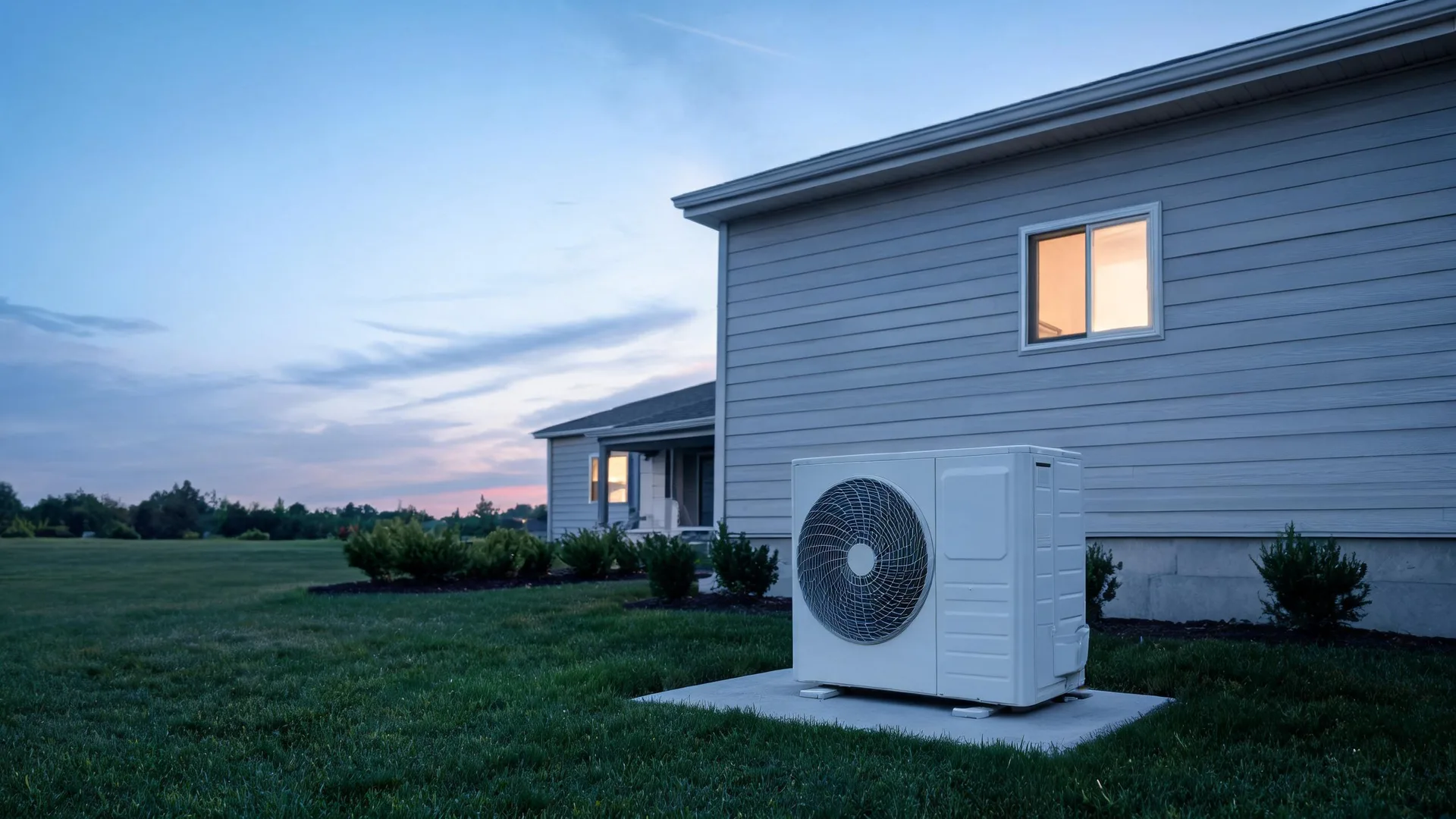
A gray residential air conditioner condenser unit mounted on a concrete pad in an open grass field.

A newer system is usually worth fixing

A system that's only a few years into a normal working life is worth repairing almost every time. The cost of parts and labor is small next to the cost of replacing the whole unit early. If the house came with a newer build here, the compressor and coil behind that wall are probably still well short of worn out. Get the part fixed and let the rest of the system keep running.

Check the thermostat and the breaker first

Make sure the thermostat is set to cool and set below room temperature, and check that the batteries aren't dead if it has any. Then look at the breaker panel. A tripped breaker or a breaker for the outdoor unit that's been switched off will stop the system cold without anything being broken. Reset it once. If it trips again right away, stop and leave that to a tech, since a breaker that won't hold means something downstream is drawing too much power.

Look at the air filter and the outdoor unit

Pull the air filter and hold it up to a light. If you can't see light through it, it's choking off airflow and making the whole system work harder than it should. Outside, check that the condenser isn't buried in leaves, grass clippings or branches, and that nothing is sitting against the cabinet blocking airflow. Clear debris away by hand. Don't hose down the coil or pull the cabinet apart, since bent fins or a loose wire are a tech's job, not yours.

Overhead view of an outdoor AC condenser unit on a concrete pad next to a house with a dark shingle roof.

A new air conditioner would cut about $60 a year off cooling for a typical Lincoln Parish home.

  • A new one at the federal minimum, 14.3 SEER2$380 a year
  • An older air conditioner$440 a year

Estimates for a typical Lincoln Parish home, compared with an older unit built to the previous federal minimum, from EIA household energy data, Louisiana fuel prices and NOAA climate normals. Your home will differ.

Repair makes sense when a part like a capacitor or contactor has failed.

Replacement makes sense when the compressor has failed or the system uses R-22 refrigerant, which is no longer made.

A diagnostic visit starts outside at the condenser, not inside at the thermostat. A tech checks the capacitor and contactor first, since those fail more than anything else in that cabinet, then moves to the refrigerant charge with gauges to see if the system is low or has a leak somewhere in the line. The compressor gets tested under load, because a compressor can hum and draw power without actually pumping refrigerant. Inside, the coil and the blower get checked too, since a dirty evaporator coil or a failing blower motor can mimic the same warm-air complaint as a bad capacitor outside. A tech also checks the wiring and connections at the disconnect box, since a loose or corroded connection can cause the exact intermittent failure that brought the call in. By the end, the point isn't just finding what's broken. It's ruling out everything else, so the part that gets replaced is actually the part that failed.