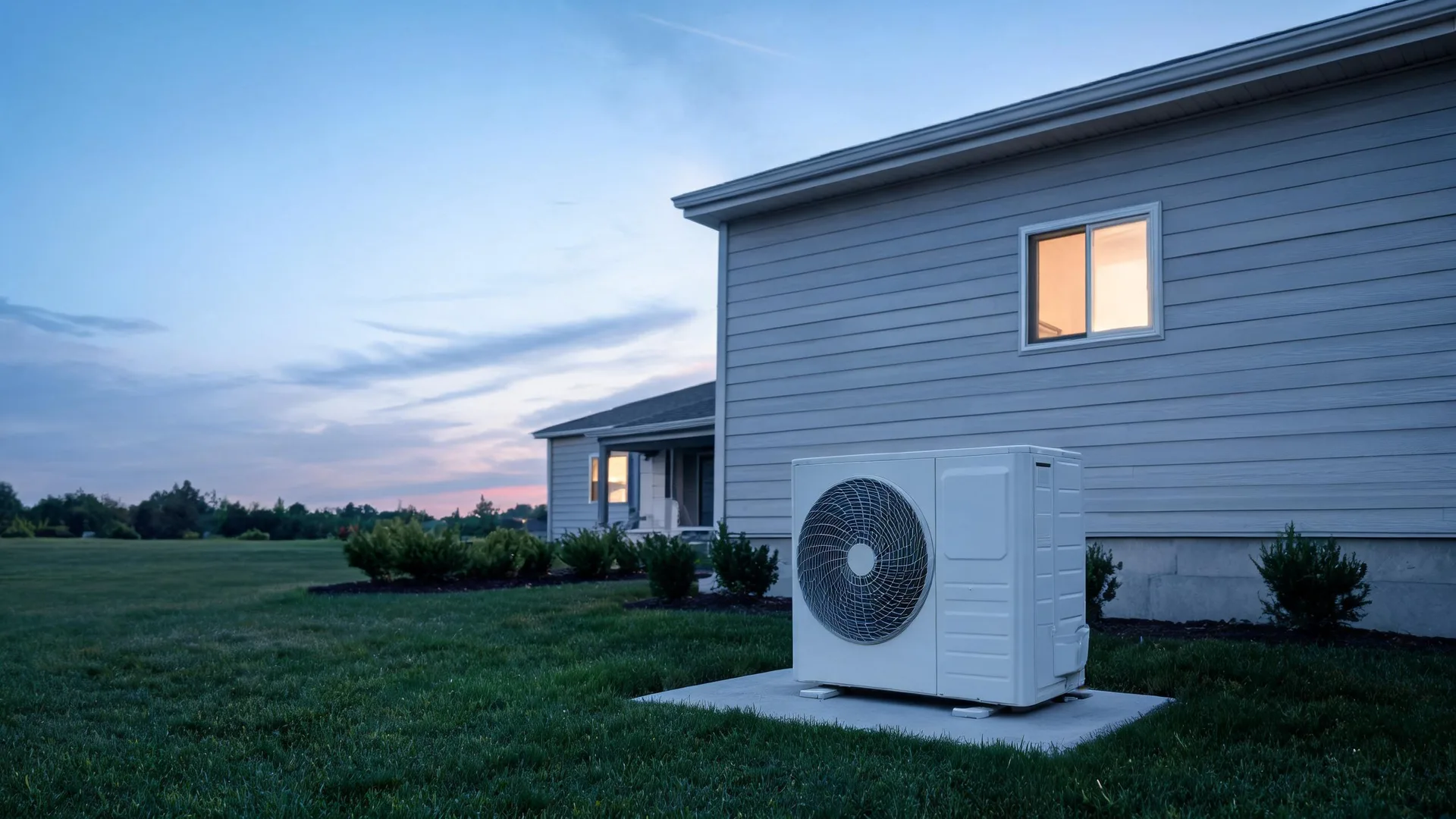
Seven months of cooling
An air conditioner in Evangeline Parish runs from April through October. That's most of the year asking the compressor and fan to cycle, with barely a few months of rest in between.
Takes about a minute. No obligation.
An air conditioner in Evangeline Parish runs from April through October. That's most of the year asking the compressor and fan to cycle, with barely a few months of rest in between.
Afternoon highs average 92°F in June, July and August, and the dew point averages 73°F, higher than most of the country sees. Your system has to pull more moisture out of the air just to keep the house comfortable, and that extra load is often what pushes a worn part to fail.

NOAA nClimDiv, 1991–2020 normals
Electricity here runs 13.25 cents a kilowatt-hour, cheaper than most of the country.
A struggling air conditioner still runs up a bigger number every month than it should, even at that rate.

A unit that's low on refrigerant or struggling with a bad capacitor doesn't just run poorly, it runs long. It cycles on more often and stays on longer each time, trying to reach a thermostat setting it can't hold. That shows up on next month's bill whether the rate is low or not. Waiting usually doesn't save money, it just spreads the cost of a repair across a few more weeks of a system working too hard to do its job. A unit that's starting to struggle in Ville Platte is worth having looked at before the next stretch of hot afternoons puts more strain on it.
Seven months of cooling a year doesn't leave this system much time to rest, and a part that's starting to wear won't wait for a slow month to fail. Have it looked at and diagnosed properly, so whatever's repaired actually holds up to the next run of hot afternoons.
Find a contractorA refrigerant leak stays a small job for a while. The system runs low, the compressor works harder to move what's left, and it still cools the house, just not as well. Keep running it in that state and the compressor is pulling liquid refrigerant mixed with too much heat, and that's what burns it out. A failing capacitor follows the same pattern. It still kicks the compressor and fan on, but with a weak jolt instead of a clean one, and that hard start heats the windings a little more each cycle. A dirty condenser coil makes the whole system push against itself, so heat that should leave the house just backs up in the lines. None of these show up as a dead system on day one. They show up as a system that still runs, still blows cold-ish air, and quietly wears out the parts around the failure until one of them gives out for good.
Air that used to feel cold now feels cool, or barely there. The thermostat says it reached the set temperature, but the house doesn't agree. You might hear the outdoor unit cycling more than it used to, shutting off and kicking back on within a few minutes. Some homeowners notice a smell when the system runs, musty or burnt, or a hissing near the indoor coil. Water pooling near the indoor unit means the condensate drain is clogged or the pan has rusted through. Any of these is the system telling you something inside it isn't working the way it should.
A healthy air conditioner runs quiet enough that you forget it's on. A grinding or squealing sound usually points to a motor bearing wearing out. A hard clunk when the compressor kicks on can mean a failing capacitor isn't giving it the smooth start it needs. Rattling from the outdoor unit might just be a loose panel, or it might be a fan blade hitting something it shouldn't. None of these fix themselves, and most get louder and more expensive the longer they run. The sound is the easiest clue you'll get, so it's worth paying attention to.
Estimates for a typical Evangeline Parish home, compared with an older unit built to the previous federal minimum, from EIA household energy data, Louisiana fuel prices and NOAA climate normals. Your home will differ.
Repair makes sense when a part like a capacitor or contactor has failed.
Replacement makes sense when the compressor has failed or the system uses R-22 refrigerant, which is no longer made.
Evangeline Parish logged 37 severe weather events between 2015 and 2024, with damaging wind hitting 18 times and tornadoes touching down 11 times in that span. The outdoor unit sits through all of it, with nothing but a thin coil and a fan blade facing whatever comes through. Hail struck the parish twice in that same stretch, and even a glancing hit can bend fins or crack a blade without stopping the unit from running. A system that took a hit like that can keep cooling for weeks before it fails outright. If a storm has come through recently, it's worth having the outdoor unit checked even if the air still feels fine.