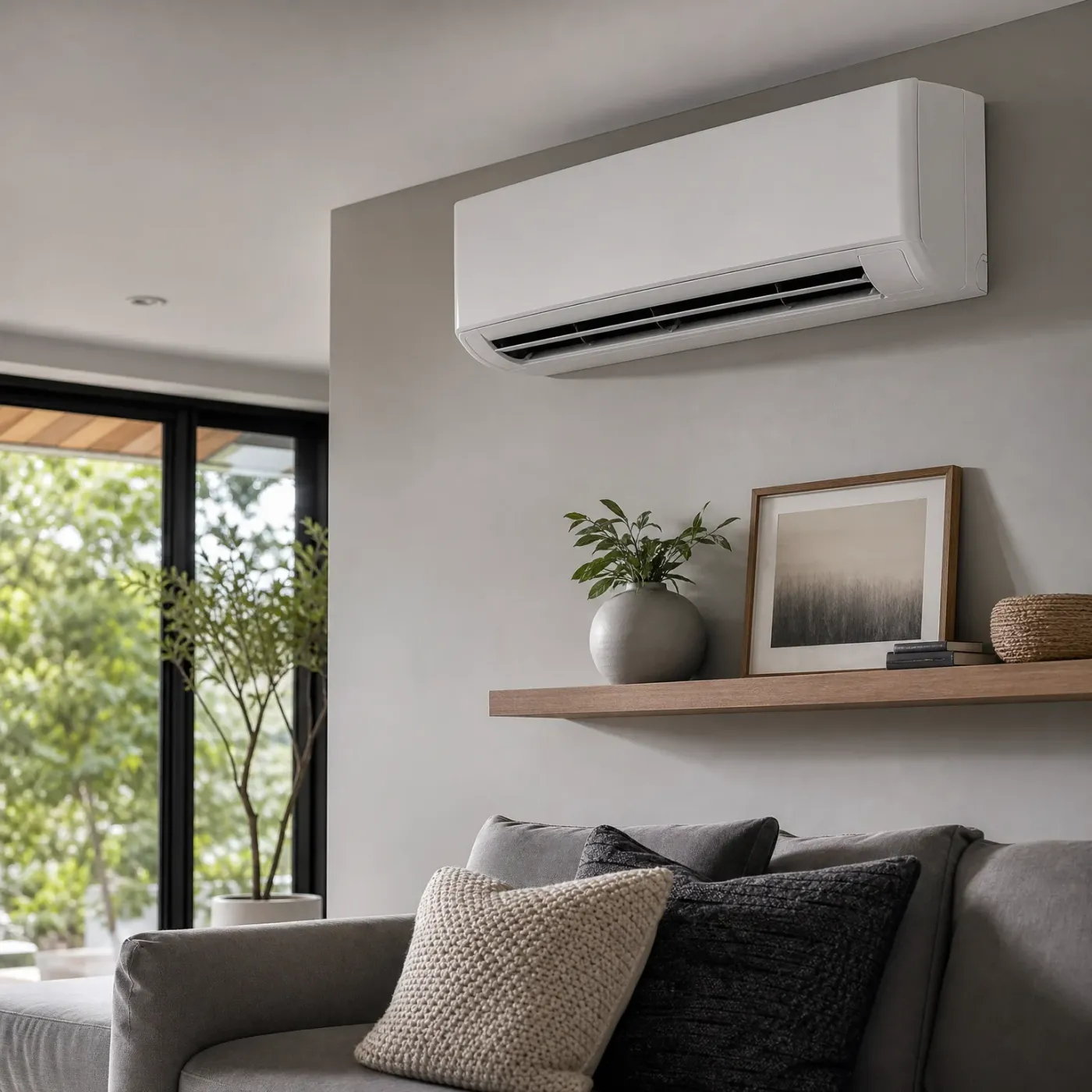
Sized and set up for the space
A mini split that matches the room it serves keeps up without strain. The panel stays clean, the grille runs clear, and the unit cycles the way it should even when the Hammond heat sits on the house all afternoon.
A single mini split can handle a room, maybe two if they're open to each other. Whether one can cover your whole house depends on the square footage, the layout, and how many zones you'd need, especially with a Hammond summer pushing hard on the system for months at a stretch. That's a sizing question worth getting right before any equipment goes in, not after. A contractor who installs these year-round in Tangipahoa Parish can walk your place, look at where the heat loads sit, and tell you whether one unit does the job or whether you need a multi-zone setup instead. Send the form and that search is off your plate. You're matched with one licensed local contractor, not a handful of companies competing for your callback, and the one you get is someone who sizes and installs mini splits in homes like yours all summer long. No guessing, no running the numbers yourself.
A single mini split unit, on its own, usually cannot cool a whole house. One indoor head is built to handle the room it sits in, or maybe an open area next to it, not a home with separate bedrooms and closed doors down a hallway. Covering a whole house takes a multi-zone system, with one outdoor condenser running several indoor heads, one per room or area, each set to its own thermostat. That matters more in Hammond than in a mild climate, because summer heat here runs long and the air stays heavy with humidity for months, and a single unit trying to push cooled air through doorways and hallways will lose the fight by July. The right question is not whether one unit can do it, but how many zones your house needs and where each head should go. That depends on your square footage and layout, something worth having a local contractor walk through with you.
Cooling runs April through October
Cooling runs April through October here, so a mini split sized wrong for your house spends most of the year struggling, not just a few weeks of it.
Heat runs November through March
Heat runs November through March here, shorter than cooling but still real, and a whole house system has to handle both without a backup furnace to lean on.
Power here costs 11.91 cents per kilowatt-hour
Power here runs 11.91 cents per kilowatt-hour, which keeps a correctly sized multi-zone system affordable to run even through a long cooling stretch.
NOAA nClimDiv 1991-2020 · EIA-861 2025
A single indoor head keeps the room it's in comfortable and does little for the rest of the house. Close the bedroom doors on a July afternoon and the back of the house holds heat while the living room stays cool. Air does not travel well through a house on its own, especially past closed doors and down a hallway. This works fine if you're only trying to cool the space where people actually spend their time, like a converted garage or a room that gets used every day. It does not work if the goal is to keep every room in the house at the same temperature through a Hammond summer.
A multi-zone setup runs several indoor heads off one outdoor unit, with each head sized and placed for the room it serves. The bedrooms get their own heads, the living areas get theirs, and each zone can be set independently so a room that stays shut most of the day isn't cooled the same as one in constant use. This is what it takes to cover a whole house rather than a room or two. It costs more upfront than a single zone and takes planning around where each head goes, but it's the version of a mini split that can actually keep a Hammond house livable from one end to the other.




A licensed installer who works in Tangipahoa Parish gets your project.
One request ends the search for a mini split installer.
You're not committing to anything by asking.
Walk through your own house on a July afternoon and you'll feel it fast. The room with the indoor head is cold, maybe too cold. Go three doors down and the air sits heavy, the way it does outside before the sun's even high. If you've got a window unit or a second mini split patched in somewhere to make up the difference, that's the house telling you one zone isn't doing the job. Left alone, it's not just discomfort. The system you do have runs longer trying to pull the whole house down to temperature through one head, and a unit working past what it's sized for wears out faster than one sized right from the start.

A mini split that matches the room it serves keeps up without strain. The panel stays clean, the grille runs clear, and the unit cycles the way it should even when the Hammond heat sits on the house all afternoon.

This casing shows what years of running flat out looks like. A head pushed to cool rooms it was never sized for works harder and longer, and the wear shows on the outside before the house ever feels the difference.
How does a multi-zone mini split actually cool different rooms at once?
A multi-zone system runs one outdoor condenser connected by refrigerant lines to several indoor heads, one in each room or zone you want covered. Each indoor head has its own thermostat and its own blower, so the bedroom can run colder than the living room, or shut off while the rest of the house keeps going. The outdoor unit adjusts its output to match what the heads are asking for at that moment, which is why a system sized for your house can run three rooms hard on a muggy afternoon and barely work at all once the sun drops and the load comes down. Each head only moves air through the room it's mounted in, so the layout of your house decides how many you need and where.


A single mini split head can cool a whole house only if the house is small enough and open enough for one unit to reach every corner of it, and few houses in Hammond are built that way. Most have bedrooms down a hall, doors that close, maybe a second floor. One indoor head handles the space in front of it and leaves the rest to fend for itself, which is why a back bedroom stays warm while the living room runs cold. The fix isn't a bigger single unit. It's matching the setup, whether that's one head or several tied to one outdoor condenser, to the square footage and the layout of your house. A multi-zone system lets each room run on its own, so the room where someone naps in the afternoon can sit cooler than the kitchen without fighting the rest of the house for it. Get the sizing wrong, in either direction, and a Hammond summer will find it. April through October is a long stretch to run equipment that's straining, and a system that's undersized for the space spends most of that stretch working harder than it should. A system sized for your house, zone by zone, doesn't have that problem. It runs the way it's supposed to, in the room it's supposed to, for as long as the season asks it to.


Finding a pro stops being your job
A licensed pro who works in Tangipahoa Parish gets your request.
