A nighttime street scene featuring a row of lit white colonial-style houses with wrap-around porches, flanked by oak trees draped in Spanish moss.

Heat Pump Repair in Baton Rouge, LA

Tell us about the job

Takes about a minute. No obligation.

RepairHeat PumpEast Baton Rouge Parish, LA
Step 1 of 2

What ZIP code is the job in?

Age and the compressor decide it

A heat pump with a failing compressor is usually not worth repairing, especially once it's been running many years. Everything else on the unit, the reversing valve, the capacitor, the fan motor, the board, can be replaced on its own without touching the rest of the system.

What a repair tells you

If the same problem keeps coming back after it's been fixed, that's the system telling you it's wearing out rather than having bad luck. One repair on an older unit is reasonable. A pattern of them is a sign to start pricing a new system instead.

5 months
November through March, your system heats
7 months
April through October, it cools
42°F
the average winter night it heats against
91°F
the average summer afternoon it cools against
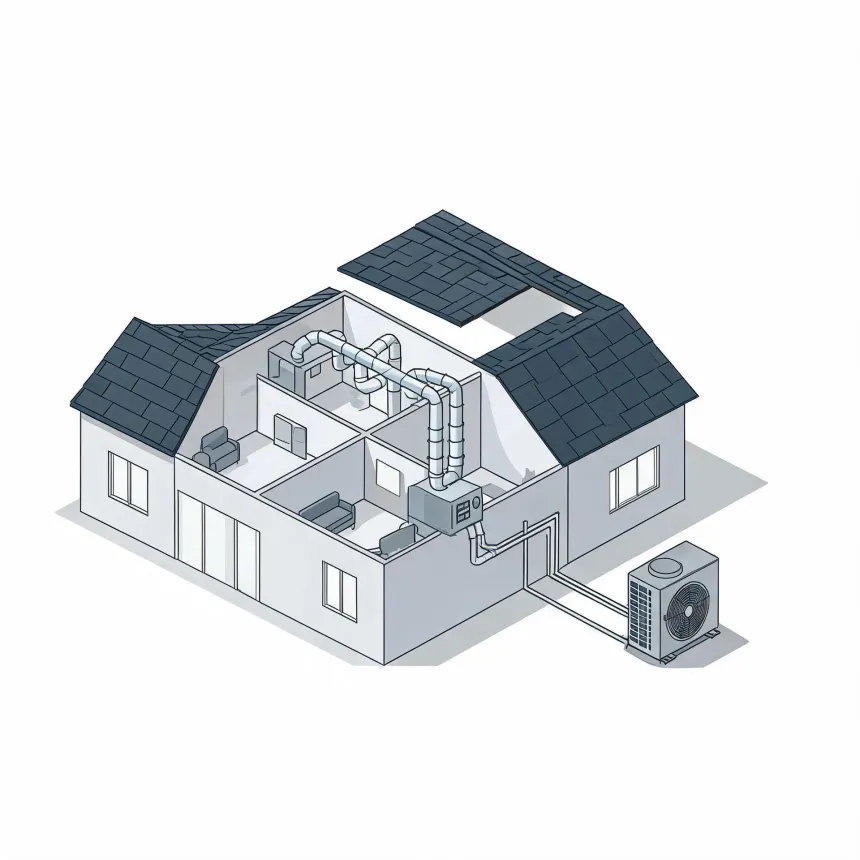
Isometric line illustration of a cutaway single-story house showing interior rooms, ceiling ductwork connected to an indoor air handler, and refrigerant lines running to an outdoor condenser unit on a pad.
Your system heats November through March and cools April through October.

NOAA nClimDiv, 1991–2020 normals

Half the homes in East Baton Rouge Parish were built in 1984 or later.

A heat pump in a house that age still has years of work left in it, and that makes repair the right first call.

A heat pump breaks in April or November, not in the quiet months between

Cooling runs April through October
Heat runs November through March
Power costs 11.73 cents a kWh statewide

East Baton Rouge Parish saw 100 damaging wind events between 2015 and 2024, and the outdoor unit sits right in the path of them. Hail dents the fins on the outside coil, and bent fins choke off airflow even when the heat pump still turns on. Wind-driven debris does the same thing if it gets into the fan. None of that always shows up right away. If a storm has come through and the unit seems fine, it's still worth having someone look at the coil and fan before the next one hits, especially with a long outage close behind it.

Find out what's wrong before you rule out repair

If your heat pump came with the house, there's a good chance it still has years left in it. Start with a diagnosis and find out what's actually wrong before you consider anything more.

Find a contractor
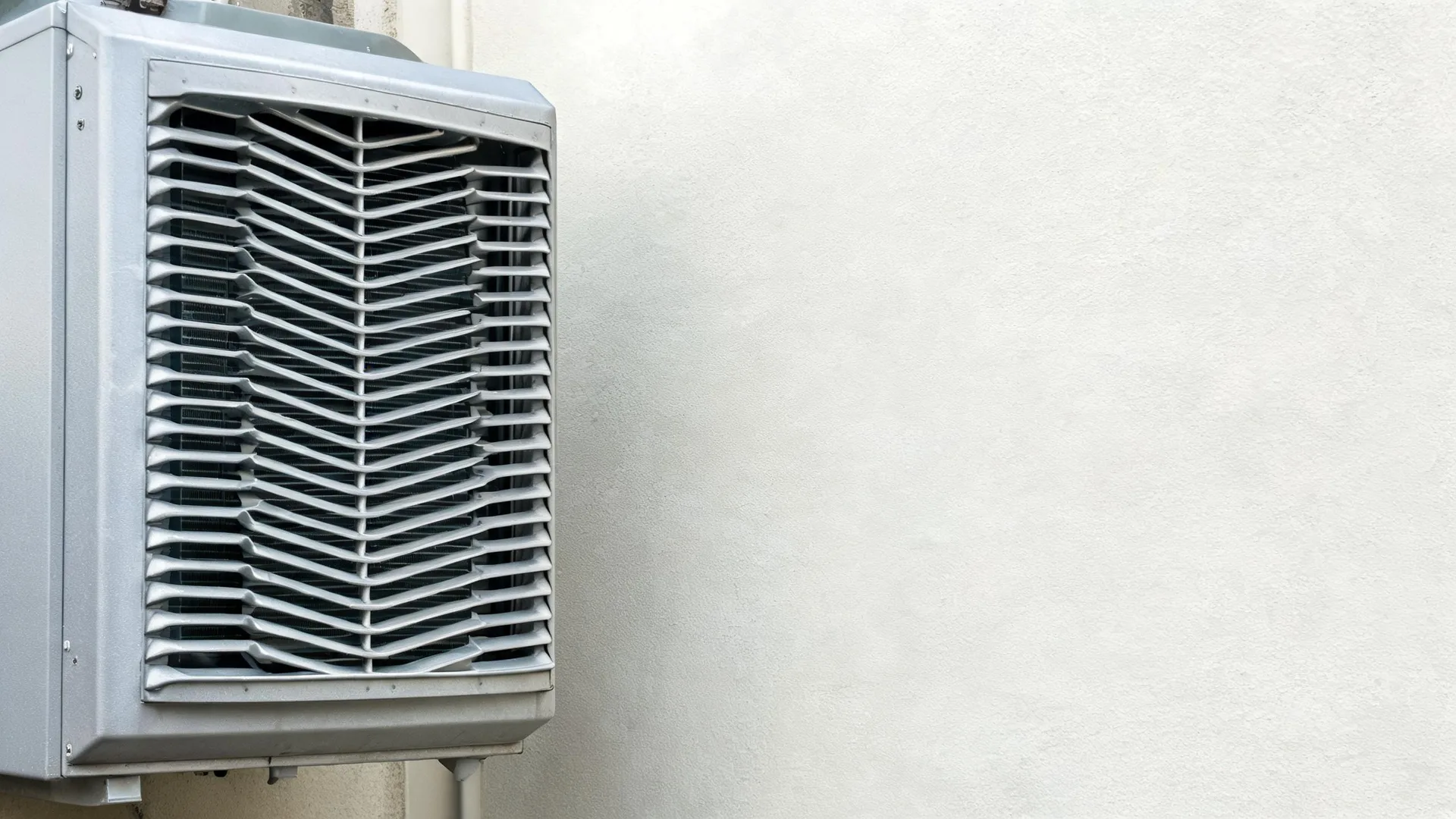
A residential heat pump outdoor unit mounted on a concrete pad next to a house with gray vinyl siding.

Left alone, a small problem runs the compressor into a big one

A heat pump that's struggling doesn't fail cleanly. It fails a little more every hour it keeps running. A low refrigerant charge makes the compressor work harder to move heat, and that extra strain shows up as heat, which the compressor isn't built to shed for long. A weak capacitor makes the fan motor or compressor start hard every cycle, and every hard start wears the windings a bit more until one start doesn't take. A dirty outdoor coil makes the whole system run longer to do the same job, and that longer runtime is exactly what pushes a marginal part past the point where it can recover. None of this fixes itself by waiting. The unit running on is the problem getting worse, not the problem holding steady.

What you'll actually notice first

A heat pump in trouble usually tells on itself before it quits. It blows air that isn't warm enough in winter or cool enough in summer. It runs long stretches without shutting off, or it short cycles, kicking on and off every few minutes. Ice builds up on the outdoor coil and stays there instead of clearing in the defrost cycle. You hear a clicking at startup that doesn't resolve into the usual hum, or a grinding or squealing from the outdoor unit that wasn't there before.

What the noise or smell is pointing to

Each symptom lines up with a different part. Warm air in cooling mode or cold air in heating mode often means the reversing valve isn't switching all the way. Ice that won't clear points to a defrost control problem or a fan that's not moving enough air across the coil. A burning or electrical smell means a wiring or board issue and the unit should be shut off until someone looks at it. A hard clunk at startup is often a failing capacitor, not the compressor itself.

Most heat pump failures trace back to a handful of parts, and the compressor usually isn't the first to go. The capacitor gives out from ordinary age, and once it's weak, the fan motor or compressor has to force a hard start every cycle until one start fails. The reversing valve sticks from corrosion or a coil that's burned out, and that's what leaves you with warm air in summer or cold air in winter. The defrost control can fail stuck in one mode, so the outdoor coil either never defrosts or never stops defrosting. A refrigerant leak is different from the rest. It doesn't come from age or use, it comes from a rubbed line or a bad fitting, and it won't refill itself. Any of these can happen on a unit that's otherwise sound.

A diagnostic starts outside at the unit. The tech reads pressures on both the high and low side and watches how the compressor responds under a call for heat and a call for cooling. The capacitor gets tested under load, not just looked at, because a weak one can still look fine sitting still. The reversing valve gets checked by watching whether it actually switches when it's told to, not just whether it hums. Airflow across both coils gets checked too. A blocked coil or a fan that's not moving enough air can look exactly like a refrigerant problem that isn't really there. By the end there should be a straight answer. Which part is failing, why it failed, and whether it's worth replacing or a sign the system is done.