

How long a central air conditioner lasts in Louisiana

Skip collecting and comparing quotes for the new air conditioner.

Answer a few questions

How long does a central air conditioner last in Louisiana?

Your air conditioner has been running hard for years and you're wondering if it's getting close to the end, or if a repair is still worth paying for. Louisiana summers put real strain on a unit, and that changes how long you can expect yours to hold up compared to what the box or the brochure might promise.

About 10 to 12 years, often less here

A central air conditioner is built to run 15 to 20 years in a mild climate. In Louisiana, the unit outside runs far more months out of the year than it would up north, since cooling season here stretches from spring well into fall. That extra runtime wears on the compressor and the coil faster, which is why 10 to 12 years is a more realistic number for a system here, even one that's been maintained well. Heavy humidity adds to the strain too, since the system is pulling moisture out of the air on top of cooling it. If your unit is past 10 years and needs a repair, it's worth asking whether that money is better spent on a new install.

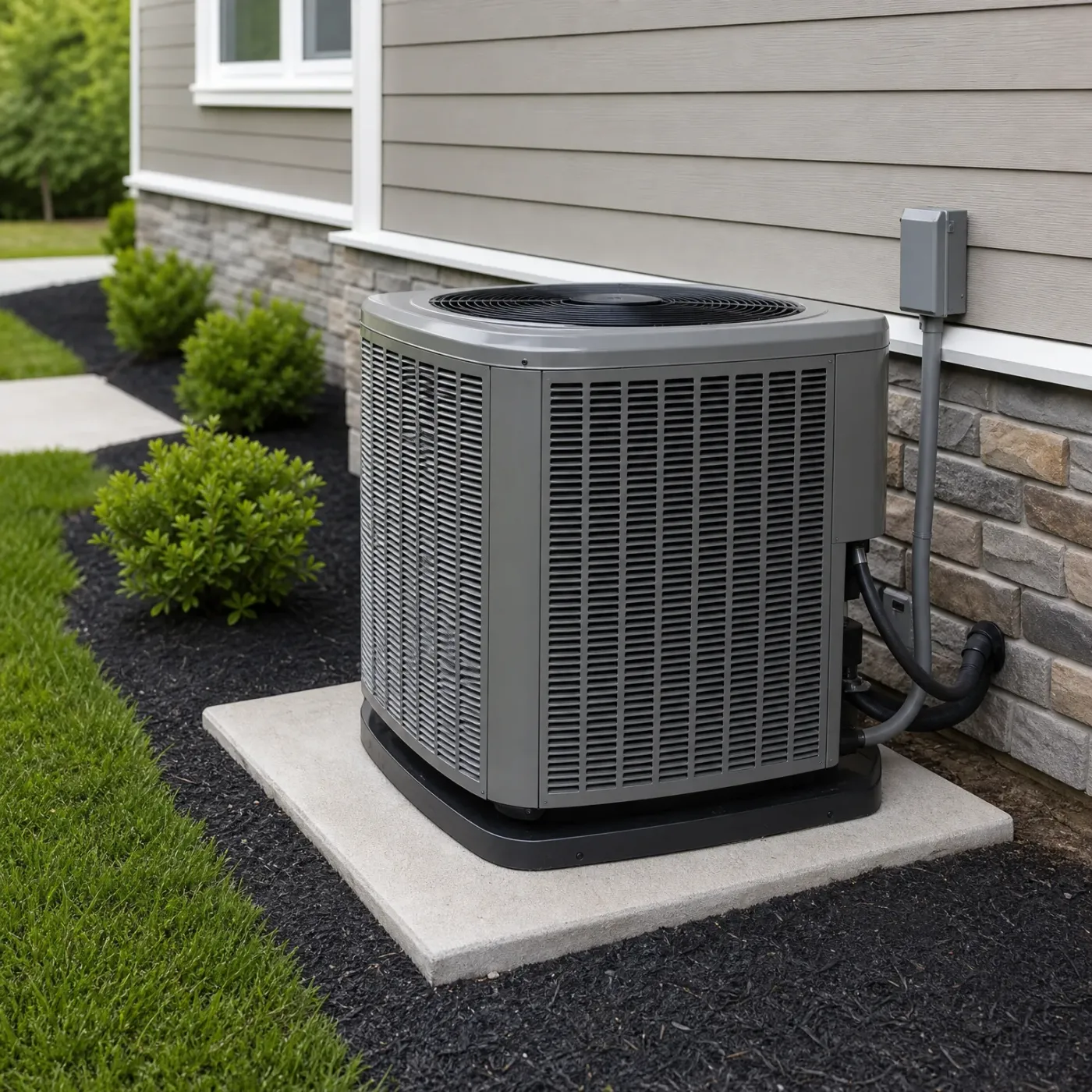
An outdoor air conditioner condenser unit on a concrete pad beside a house with beige horizontal siding and a stone-veneer base, with refrigerant lines running to a gray wall-mounted electrical box, surrounded by dark mulch, a flowering shrub and an evergreen on the left.

Running the way it should

The unit cycles on, cools the house, and shuts off. No strange noise, no ice on the lines, no water pooling near the pad. The fan spins freely and the air coming through the vents feels cold. This is what a unit built for Louisiana's humidity looks like when it's keeping up.


An outdoor air conditioning condenser unit on a concrete pad beside a house with light vinyl siding, an electrical disconnect box and conduit on the wall, bare shrubs and mulch to the right, and a concrete walkway in the foreground.

Signs it's losing the fight

The unit runs longer than it used to and the house still feels warm by afternoon. You hear a hum but the fan isn't turning, or the compressor clicks and quits. Ice forms on the copper line even though it's ninety degrees out. A unit working this hard in a Louisiana summer is telling you something.

A gray-haired man in a dark knit sweater sits on a light gray sofa in a living room, looking toward a sunlit window, with houseplants, a lamp, and framed art in the background.
A bearded man with graying hair in a dark green sweater sits on a sofa in a living room, looking off to the side, with a sliding glass door and a dim kitchen doorway behind him.
A gray-haired man in a dark green sweatshirt sits on a sofa in a living room, looking toward a bright window, with a houseplant, lamp, fireplace and framed art behind him.
A gray-haired man in a dark long-sleeve shirt sits on a gray sofa in a living room, looking toward a sunlit window with sheer curtains.

Why the heat shortens the run

A central air conditioner in Louisiana works more hours per year than the same unit in a milder state, because the outdoor temperature sits near or above the indoor setpoint for months at a stretch. The compressor and the fan motor accumulate run hours faster here than the national averages you'll find quoted for the equipment. Those averages come from a mix of climates, many of them far milder. A unit running this many hours a year reaches the same wear at a younger age than one running fewer.

What actually ends the unit's life

Age alone rarely kills a central air conditioner. What usually ends it is the compressor seizing, the coil corroding through and leaking refrigerant, or a repair bill that costs more than replacing the unit outright. Salt air near the coast and the humidity statewide both speed up corrosion on the coil and the cabinet. A unit that gets its coil cleaned and its refrigerant charge checked on schedule holds off that failure longer than one that doesn't, regardless of how many summers it has already seen.

A woman with shoulder-length brown hair in a cream cardigan and top sits in an armchair indoors, looking toward a sunlit window with trees outside.
A woman with hair in a bun sits on a couch holding a sleeping child, both wrapped in a chunky knit blanket, in a dimly lit room with a lamp and bookshelves behind.
A gray outdoor air conditioner condenser unit on a concrete pad beside a house with horizontal siding and a stone veneer base, with a wall-mounted disconnect box, conduit and refrigerant lines, surrounded by black mulch, shrubs and lawn.

Skip the calls to every shop

One installer gets your project, so there's no bidding war over it.

Skip searching for an air conditioner pro and answer a few questions instead.

Get one local pro

Asking costs nothing, and the choice to hire stays yours.

A closed dark gray laptop and a ceramic mug on a wooden table in a kitchen, with a window, potted plant, bowl on a counter, and cutting boards near white cabinets in the background.

What an aging unit means for your house

A unit past 12 or 15 years doesn't fail all at once. It shows up as a bedroom that stays warm no matter where you set the thermostat, a compressor that strains to start on the hottest afternoons, or a power bill that climbs even though you haven't changed how you run it. In a Louisiana summer, those signs tend to show up fast, because the unit has little room to coast.

If yours is getting old, you're probably weighing a repair against paying for a new system. That's not a decision you have to figure out alone by calling around to a handful of companies, explaining your unit's age and symptoms to each one, then sorting through quotes that don't quite compare. You can get matched with one licensed contractor near you in Louisiana, someone who sees this exact strain on equipment every summer and can tell you straight whether your unit is worth repairing or replacing.

A gray upholstered sofa with a beige cushion and knit blanket beside a curtained window, with a white mug and a book on a dark wooden table in the foreground and a lit lamp in the background.
An outdoor air conditioning condenser unit on a concrete pad beside a house with white horizontal lap siding, with an electrical disconnect box and insulated refrigerant line on the wall and a shrub over mulch to the right.

Still running well

The condenser sits on its pad and cycles the way it's supposed to, cooling the house and shutting off. The disconnect box and refrigerant lines look intact, nothing is leaking at the foundation, and the cabinet isn't rusted through. A unit in this shape is worth repairing when something goes wrong.

An outdoor air conditioner condenser unit on a concrete pad beside a house with light horizontal lap siding, with an electrical disconnect box and conduit on the wall behind it.

Worn out and weathering

The cabinet shows rust and pitting, and the metal around the refrigerant lines has started to corrode where it runs along the foundation. A unit that looks like this has likely logged a lot of hours in Louisiana heat already. Once the outside of the unit wears like this, the parts inside are usually not far behind.

An outdoor air conditioning condenser unit on a concrete pad beside a house with white horizontal vinyl siding, with a gray electrical disconnect box and refrigerant lines on the wall behind it.
Before you get your air conditioner installation
A gray outdoor air conditioner condenser unit on a concrete pad beside a house with white horizontal siding and a brick foundation, with a wall-mounted disconnect box and conduit, and a green shrub with mulch at left.
After you get your air conditioner installation

Repair it again

You keep the unit another season, but you're still the one calling around when the next part fails, explaining the same history to a new contractor each time.

Describe it once

Replace it now

One licensed installer local to your area handles the sizing, the install and what comes after, so you're not sorting quotes from companies that don't know your house.

Describe it once

Power costs 12.52 cents per kilowatt-hour statewide

At 12.52 cents a kilowatt-hour, an old compressor that struggles to start or a unit sized wrong for your house keeps drawing power all summer without cooling the way it should. A new system matched to your home runs fewer hours to hit the same setpoint, and that shows up on the bill every month, not just in July.

EIA-861 2025 statewide residential average

  1. A licensed installer calculates the cooling load for your house

  2. The old condenser, coil and refrigerant lines come out

  3. New line set gets run and connected to the indoor coil

  4. The condenser is set on the pad and leveled outside

A central air conditioner in Louisiana runs about 12 to 15 years before the heat and the long cooling season catch up with it. Past that point you're paying to keep an old compressor limping through August rather than paying for a system that actually holds your setpoint. When you decide it's time, a licensed installer local to your area handles the sizing, the line set, and the charge, the same work a crew here does on this equipment all summer, every summer. You deal with one contractor who already knows what fails first in a Louisiana attic and what doesn't, not a handful of companies asking you to describe the problem again from scratch. That's the difference between replacing a unit and just reacting to the next breakdown.

An outdoor air conditioning condenser unit sits on a concrete pad beside a gray horizontal lap-sided house wall, with a small electrical box and conduit above and shrubs in a mulch bed to the left.

Describe it once

Your request goes to one pro, not a list of companies.

New system or replacementCentral ACLouisiana
Step 1 of 2

What ZIP code is the job in?