
AC drain line clogging in muggy Louisiana summers
Fill out one form instead of calling around for an air conditioner tune-up.
Why does my AC drain line keep clogging in Louisiana?
Water keeps backing up or you have had the pan switch trip your AC off, and it is happening again even though it feels like you just dealt with this. In a Louisiana summer, the air conditioner runs long hours pulling moisture out of the air, and all that water has to go somewhere. When the line it drains through backs up, the system notices before you do.
Algae and mold growing in the drain line are what clog it
The drain line carries off the condensation your air conditioner pulls out of the air, and that line stays wet and dark almost the entire time the system runs. Algae and mold grow in exactly those conditions, and the buildup narrows the line until water backs up instead of draining. Louisiana summers run long and humid, so the AC here is removing moisture for months at a stretch, giving algae far more time to take hold than it would where summers are shorter or drier. The more the unit runs, the more buildup forms. Left alone, the line clogs fully, the pan fills, and the float switch shuts the system down to keep water from overflowing into the house.
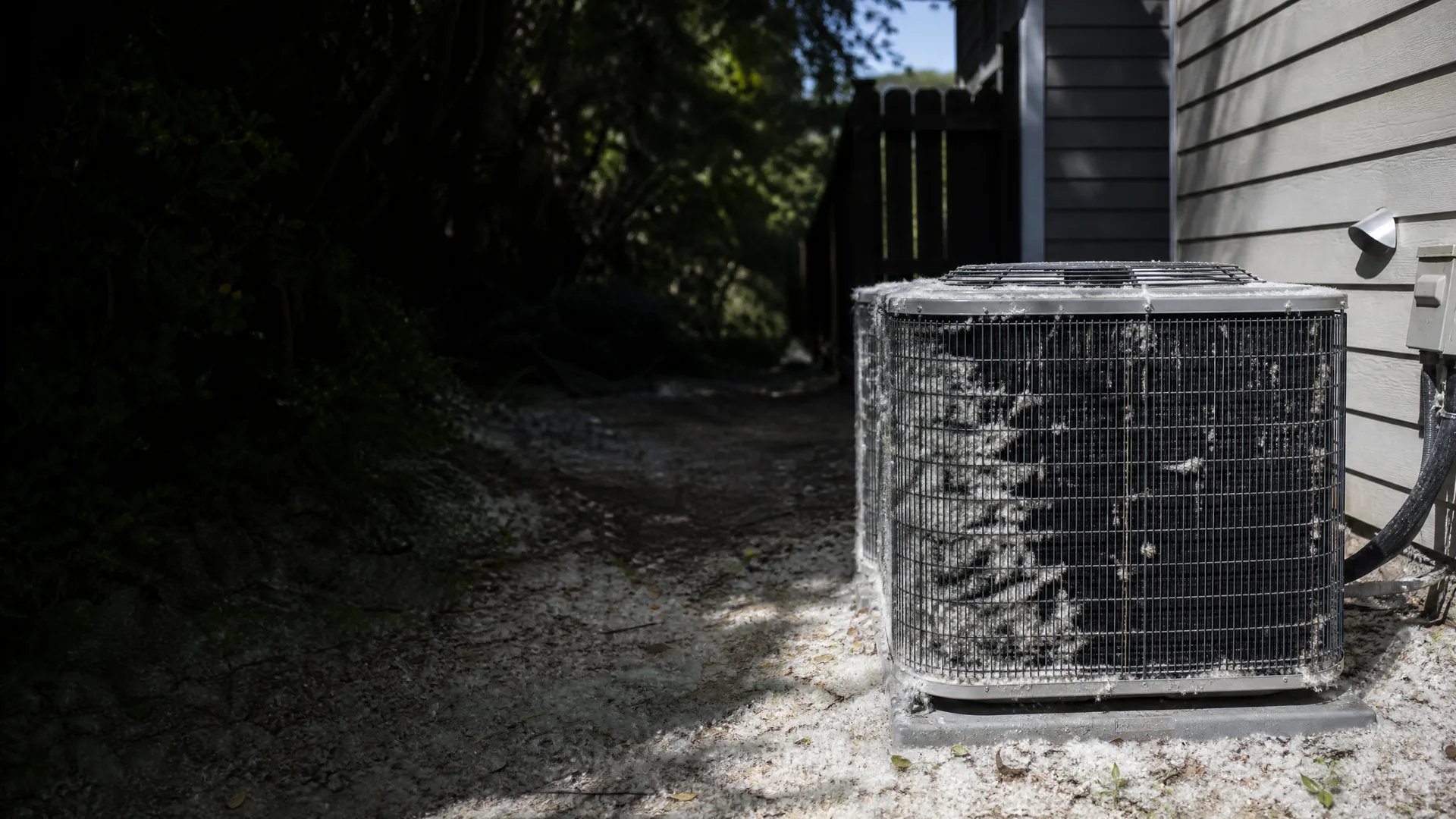
You're out pulling weeds along the side of the house in late May, the kind of day that's already muggy by nine in the morning. Walking past the condenser, you notice the fins look almost frosted white, but it isn't frost. The cottonwood trees have been shedding for weeks, and the fluff has packed itself into the coil, thick as felt. You brush a handful off with your glove and more sits behind it. The unit is running, you can hear it, but it sounds like it's working harder than it should. You make a note to ask about it, then go back to the weeds.
Leave the Clog or Stay Ahead of It
Ignore it
- The clog keeps the condensate from draining, so the pan under the coil fills up and the float switch cuts the AC off until someone clears the line.
- In July and August, with the system running most of the day, that switch can trip more than once, and each time the house sits without cooling until the line is cleared.
- Standing water in the pan and line gives algae more time to build back up, so the same clog tends to come back within weeks instead of months.
- Water that overflows the pan instead of tripping the switch can reach the ceiling below the air handler if it sits in the attic, or the floor around a closet unit.
- A clogged line hides inside the wall or soffit, so there is no way to check it yourself without pulling access panels or calling someone out.
Keep it clear
- A contractor who services AC systems through Louisiana summers checks the drain line and pan as part of a regular visit, before algae has built up enough to block it.
- Clearing the line before it clogs means the float switch stays untouched and the AC keeps running through the hottest stretch of the day instead of shutting off.
- One local contractor handling the visit means one person looking at your system, not several companies calling to schedule or quote the same job.
- Finding someone who does this work, checking they're licensed, and getting quotes from more than one company is the part that takes evenings you'd rather spend elsewhere.
- A technician who works on this equipment all summer knows how fast these lines clog here and checks it on a schedule that matches that, not a generic one.




Describe it once

A licensed local pro takes the request for your air conditioner tune-up.
There's no charge for the request.
How the Drain Line Clogs
- Condensation forms on the evaporator coil and drips into a pan, then down a PVC line to a drain outside or into a sink.
- That line is narrow, often three quarters of an inch, and runs with a slight pitch so gravity does the work.
- Algae and mold grow in the steady moisture inside the pipe and build up into a soft sludge along the walls.
- The P-trap built into most drain lines holds standing water, and that standing water is where the growth usually starts.
- A wet-dry vacuum pulled against the outside end of the line can often pull the clog out without opening any pipe.
- Pouring a cup of vinegar down the line every month keeps the algae from building back up between visits.
The water your AC pulls out of the air has to go somewhere. It collects in a pan under the evaporator coil, then runs down a PVC line, usually three quarters of an inch wide, pitched just enough for gravity to carry it out to a drain or a stub outside the house. That pitch is slight, so the line depends on staying clear to keep up. Most of these lines have a P-trap built in, the same idea as the trap under a sink, meant to stop air or bugs from coming back up the pipe. The trap holds a little standing water at all times, and in a Louisiana summer that water never has a chance to dry out between cycles. Algae and mold take hold right there, in the trap and along the walls of the pipe past it, and what starts as a thin film turns into a sludge that narrows the line until it stops draining altogether. None of this needs a leak or a cracked pipe to happen. It is just moisture sitting still long enough for something to grow in it. A contractor clearing one of these often doesn't need to cut into the pipe at all. A wet-dry vacuum fitted to the outside end can pull the clog back out the way it would have drained, and a cup of vinegar down the line once a month keeps new growth from building up enough to block it again.


When that line clogs in August, you will not get a warning first. You will get a hot house. The float switch cuts the system off to keep the pan from overflowing onto your floor or ceiling, and it does that in the afternoon, with the house already warm and the humidity already heavy, and it stays off until someone pulls the clog and resets it. If the switch fails to trip, the water finds the ceiling under the air handler instead, or the floor around it, and that is drywall and flooring, not just a utility bill. Either way you are checking the attic or the closet where the unit sits more than once a summer, because the algae that clogs the line grows back as long as the coil keeps sweating, and here that is April through October. A system that gets looked at before the heat sets in tends to run the summer without that surprise.


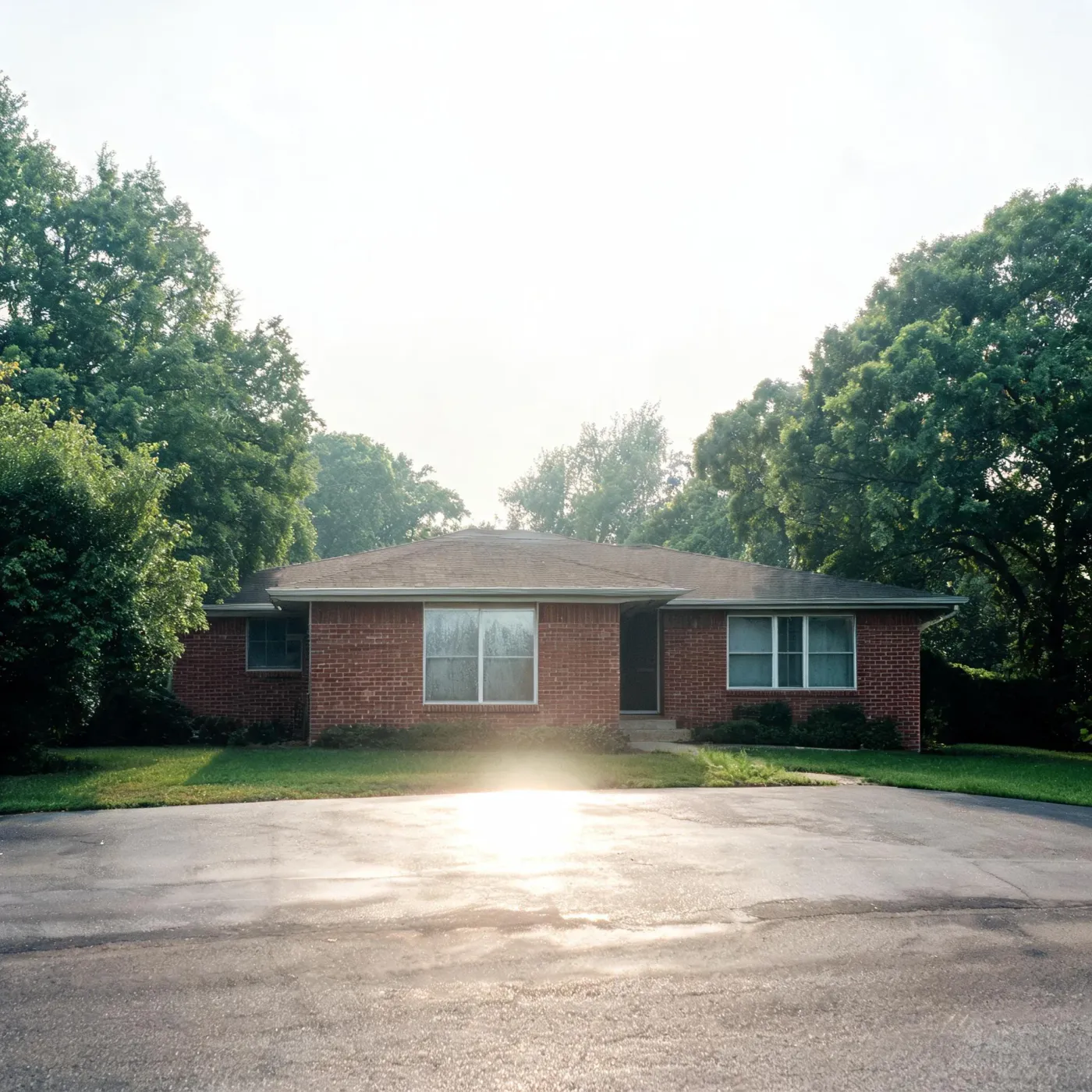
A dew point of 73°F is what your skin already knows by June. That's the average across June, July and August, measured over where Louisiana homes sit, and it's high enough that the air stays heavy from morning to night. For your air conditioner, that means the evaporator coil is pulling more moisture out of the air to get the same cooling done, and more moisture means more water running down that drain line every single day. The algae and mold that clog the line feed on exactly this, a steady drip that barely lets up even at night. That's why the clog comes back faster here than it would somewhere drier, and why a line that ran clear in April can back up by July.
NASA POWER T2MDEW county cells weighted by homes

The line clogs because the air stays wet, and your AC never gets a break
Your drain line clogs because algae grows in standing moisture, and standing moisture is what a Louisiana summer gives it, day after day, for months. The fix is the same one every time: clear the line and keep it from building back up before the pan fills and the float switch trips again. That part does not change whether you catch it in May or wait until August.
What changes is how you get there. Instead of searching through contractors, calling a few, explaining the same drain line problem on each call, and sorting through quotes that are hard to compare, you get matched with one licensed contractor local to you, someone who clears these lines all summer and knows which part of the system usually causes it. One call, one visit, and you know where you stand before the next hot afternoon.






No phone calls to make
Your request stays with one local pro.
You only hire the pro if you want to.