





An overhead view of a residential air conditioning condenser unit mounted on a concrete pad next to a house with vinyl siding.

AC Maintenance in Breaux Bridge, LA

Tell us about the job

Takes about a minute. No obligation.

Tune-up, service, or cleaningCentral ACSt. Martin Parish, LA
Step 1 of 2

What ZIP code is the job in?

Electricity in St. Martin Parish runs about 12.28 cents a kilowatt-hour, cheaper than most of the country. That sounds like good news, and it is, but it also means the cost of running an AC here comes down to how hard that AC has to work. A unit with a dirty coil or a low charge pulls more power to do the same job, every hour it runs. A neglected system does not just risk breaking down. It runs up the bill quietly, month after month, without ever telling you why.

7 months
April through October, your air conditioner is on duty
91°F
the average summer afternoon it cools against
14 hail events
in ten years, and hail bends the fins on outdoor coils
24 wind events
in ten years, and wind drives debris into outdoor units
Isometric line illustration of a cutaway house showing an indoor air handler with branching ducts in the attic space, connected by a line set to an outdoor condenser unit beside the building, with simple furniture in two rooms.
Your air conditioner works hardest from May through September.

NOAA nClimDiv, 1991–2020 normals

St. Martin Parish logged 55 severe weather events between 2015 and 2024, counting wind, hail, tornadoes and tropical storms.

The outdoor unit sits outside through all of it, so it needs a check for hail dents, bent fins and storm debris before it has to carry the summer.

Seven months of 91 degree afternoons is a lot to ask of one machine

Cooling runs April through October
Summer afternoons average 91°F
Climate zone 2A

Cooling runs April through October here, about seven months. March is the month before that starts, while the system is still sitting idle. A technician can check the capacitor, the coil and the refrigerant charge while nothing is under load yet. Once April hits, this unit goes from off to running most of the day, and anything already weak in it has to work through that right away. Catching it in March means catching it before it has to carry the season.

Fix what's wasting power before summer puts it to work

A coil or charge that is already a little off does not fix itself once summer gets here. It just runs that way, pulling more power for the same cooling, hour after hour, all season long. A tune-up now catches that while the unit is easy to check and before it has to carry the heat.

Find a contractor
An outdoor air conditioning condenser unit mounted on a concrete pad beside a house, with electrical conduit running to a wall-mounted disconnect box.

Seven months of running time, start to finish

April through October, this unit runs most of the day, not just on the hottest afternoons. That is seven months of one machine carrying the load, with no break built in. A capacitor or a coil that is already weak does not get easier once the season starts, it runs weak through all seven months. Getting it looked at before April means catching that wear while the unit is still sitting idle, instead of finding out in the middle of summer.

Airflow starts at the filter

A dirty filter chokes the air moving across the indoor coil. The system still runs, but it has to pull harder to push the same air through, and the coil behind that filter can ice over when airflow drops too low. Swapping or washing the filter is the one part of this job a homeowner can do between visits, and it is also the part most often ignored.

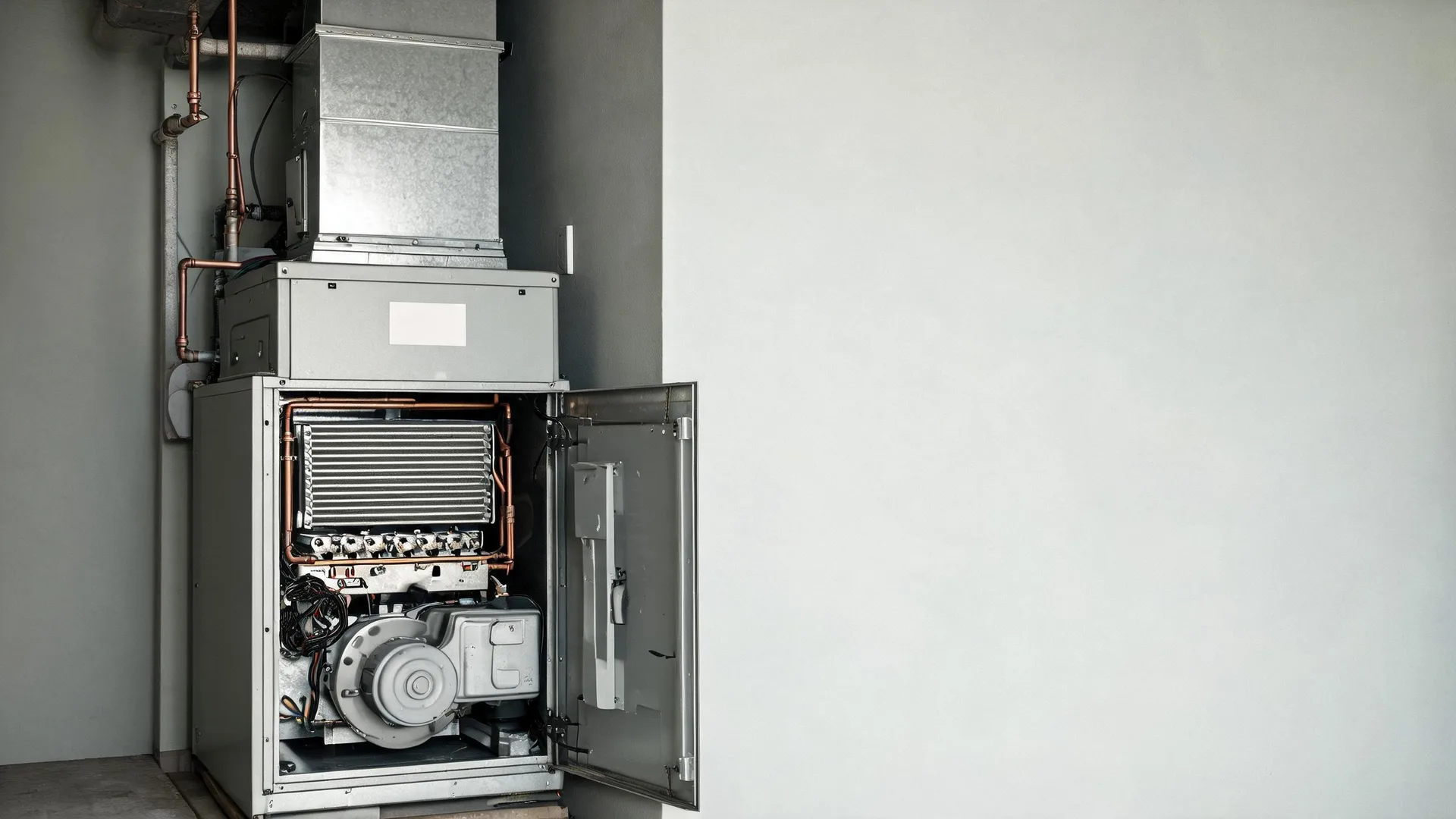
The coils and the drain decide what you pay for that air

The indoor coil has to stay clean to absorb heat the way it was built to, and the outdoor coil has to stay clear to release it. Dirt on either one makes the whole system work harder for the same result. The drain line matters too. Condensation has to leave the unit somewhere, and a clogged line backs water up into the cabinet instead of out the pipe, which is how a cooling problem turns into a water problem.

Overhead view of an air conditioning condenser unit on a concrete pad next to a house with asphalt shingle roofing and vinyl siding.

Book your AC tune-up in March, before homes here start needing cooling in April.

  1. Jan
  2. Feb
  3. Mar
  4. Apr
  5. May
  6. Jun
  7. Jul
  8. Aug
  9. Sep
  10. Oct
  11. Nov
  12. Dec

A tune-up checks the refrigerant charge, cleans the coils, tests the capacitor and tightens the electrical connections.

A tune-up covers the parts that wear or drift out of spec without ever failing outright. The refrigerant charge gets checked against what the system calls for, since too little and the compressor runs long and still falls short. Electrical connections get tightened, because a loose connection builds resistance, and resistance builds heat right at the lug. The contactor gets checked for pitting, the capacitor gets tested under load rather than just looked at, and the blower wheel gets inspected for the kind of buildup that throws it out of balance. The condensate drain gets flushed so it can still carry water out once the system is working hard. None of this is guesswork. Each part has a range it should read in, and a tune-up is what tells you whether it still does.