





Low-angle view across a lawn with pine straw in the foreground toward a single-story brick house with a dark shingled roof and covered porch, beside a large moss-draped oak and pine trees under an overcast sky.

AC Maintenance in Houma, LA

Tell us about the job

Takes about a minute. No obligation.

Tune-up, service, or cleaningCentral ACTerrebonne Parish, LA
Step 1 of 2

What ZIP code is the job in?

Your AC runs April through October here, about seven months straight. Through June, July and August it's fighting a 90 degree afternoon on a regular basis, and it doesn't get much of a break before the next season starts. A system working that many months out of the year wears parts sooner than one that sits idle for long stretches. A weak capacitor or a dirty coil that would hold on somewhere else can give out partway through a Houma summer instead.

7 months
April through October, your air conditioner is on duty
90°F
the average summer afternoon it cools against
10 hail events
in ten years, and hail bends the fins on outdoor coils
28 wind events
in ten years, and wind drives debris into outdoor units
Isometric cutaway illustration of a single-story house showing interior rooms, ductwork and an air handler in the attic space, and an outdoor condenser unit connected by lines at the exterior wall.
Your air conditioner works hardest from May through September.

NOAA nClimDiv, 1991–2020 normals

A capacitor can test weak long before it fails outright.

Catching it on a gauge means replacing it on a mild afternoon instead of the hottest day of the year.

March is the last quiet month before this system runs for seven straight

Cooling runs April through October
Summer afternoons average 90°F
11 tropical storms and hurricanes from 2015 to 2024

Half the homes in Terrebonne Parish were built in 1983 or later, so a lot of the systems in them aren't carrying decades of wear yet. That's worth something, but only if the yearly check keeps happening. A system that's still within its working life can lose a season early to a capacitor or coil problem that regular maintenance would have caught. If your system came with a newer build here, a yearly check is what keeps that advantage from going to waste.

Check it before the season

It works hard here, so worn parts show up fast once the season starts. Get it checked before then.

Find a contractor
A gray residential air conditioner condenser unit mounted on a concrete pad in an open grass field.

Get it looked at while it's quiet

Get a technician out before April. Storms have hit this parish 11 times between 2015 and 2024, and a system already running on a weak capacitor or a dirty coil doesn't need much more to go down with it. Check it now, while the power is steady and the afternoons are still mild, instead of after a storm finds its weak point for you.

A gauge, not a glance

A thorough tune-up checks the refrigerant charge with gauges and checks capacitor strength with a meter, not a look at the unit from a few feet away. It means pulling the panel off the condenser to see the coil and the wiring, not just listening for the fan to come on. Airflow gets checked at the vents, not assumed from the blower switching on. Anyone can confirm the system turns on. Confirming it's healthy takes the instruments out.

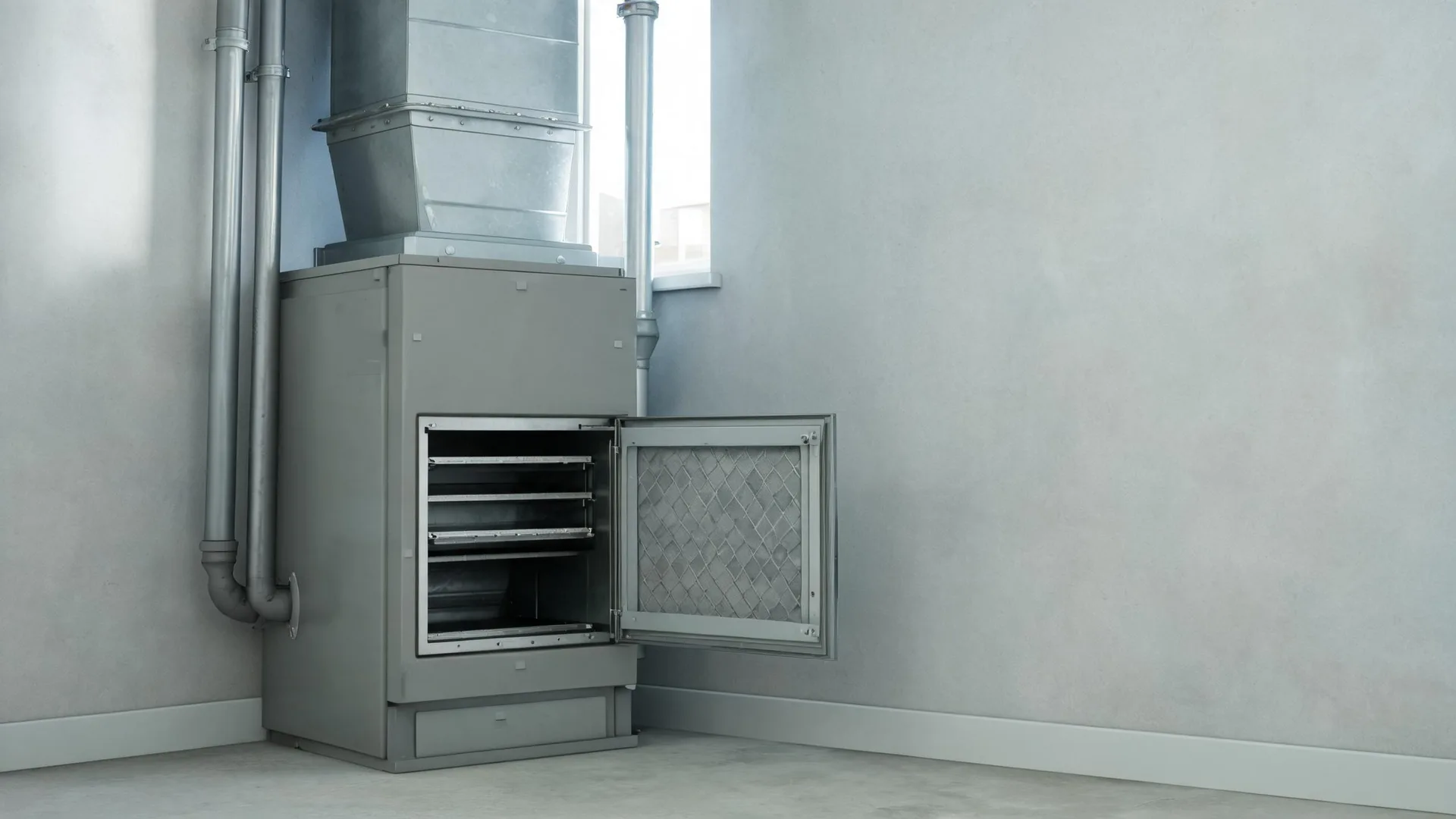
What a quick visit skips

A capacitor can read weak on a meter while still doing its job that day, which is exactly why it has to be tested rather than assumed fine because the fan spins. A coil can look clean from across the room and still be coated enough on the fins to choke airflow. A refrigerant charge can run low enough to strain the compressor without tripping anything obvious yet. Skip the readings and all of that waits for the first hot stretch to show itself.

An outdoor air conditioning condenser unit mounted on a concrete pad next to a blue-sided residential house at sunset.

Book your AC tune-up in March, before homes here start needing cooling in April.

  1. Jan
  2. Feb
  3. Mar
  4. Apr
  5. May
  6. Jun
  7. Jul
  8. Aug
  9. Sep
  10. Oct
  11. Nov
  12. Dec

A tune-up checks the refrigerant charge, cleans the coils, tests the capacitor and tightens the electrical connections.

A real tune-up starts outside at the condenser. The coil gets washed clean, not just hosed off, because dirt packed between the fins is what makes the compressor work harder than it should. The fan motor and the compressor itself get checked for the kind of noise or vibration that means a bearing is on its way out. Inside, the evaporator coil and the drain line get checked too, since a clogged drain backs up and spills before anyone notices the water damage. Refrigerant only gets added if the charge is actually low, never as a routine top-off, because a system low on charge usually means a leak that adding more refrigerant won't fix. The point is catching the part that's about to fail, not confirming the ones that already work.