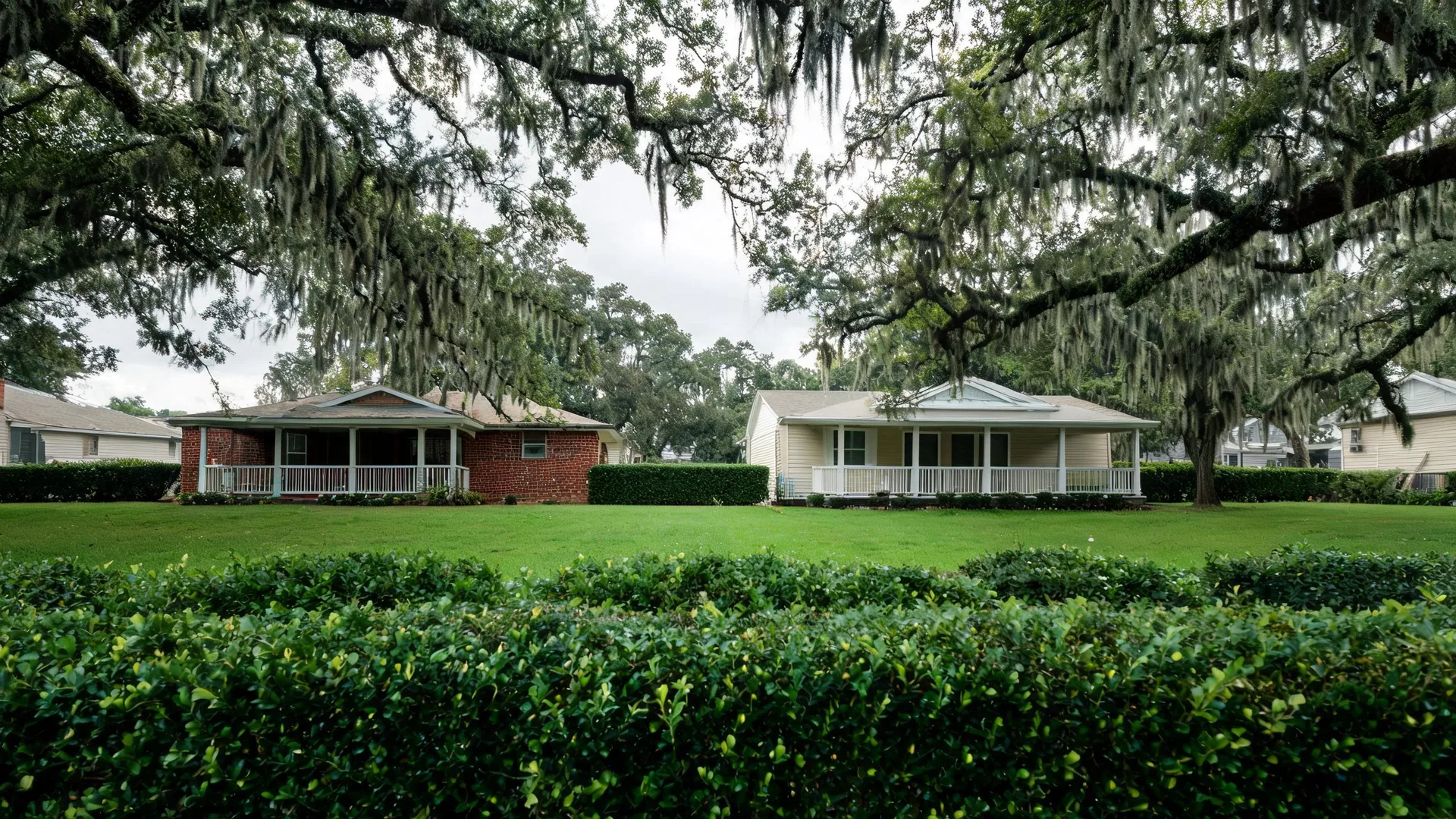







Two single-story houses, one brick and one with pale siding, both with covered porches, sit behind a mowed lawn and a trimmed hedge, framed by large oak branches draped with Spanish moss under an overcast sky.

AC Maintenance in Kenner, LA

Tell us about the job

Takes about a minute. No obligation.

Tune-up, service, or cleaningCentral ACJefferson Parish, LA
Step 1 of 2

What ZIP code is the job in?

A dirty coil or a low charge makes the compressor work harder to do the same job. That extra draw shows up on the meter every day the system runs. Electricity in Jefferson Parish is cheaper than in most US counties, so the rate itself isn't the problem. But a system that's running dirty or low on charge pulls more power than it should, no matter what the rate is. A unit that's clean and properly charged just does the job on less power.

7 months
April through October, your air conditioner is on duty
90°F
the average summer afternoon it cools against
11 hail events
in ten years, and hail bends the fins on outdoor coils
38 wind events
in ten years, and wind drives debris into outdoor units
Isometric cutaway illustration of a house showing interior ductwork, an air handler and furnace unit, and an outdoor condenser connected by lines outside the wall.
Your air conditioner works hardest from May through September.

NOAA nClimDiv, 1991–2020 normals

Jefferson Parish logged 71 severe weather events between 2015 and 2024, including 38 with damaging wind and 11 with hail.

That outdoor unit sits outside through all of it, so storm season is worth checking for before summer puts it to work.

Seven months of 90 degree afternoons wears a system down fast

Cooling runs April through October
Summer afternoons average 90°F
Power here costs 12.18 cents per kilowatt-hour
March Is the Month to Get It CheckedCooling season runs April through October here, seven months of steady work starting fast.

Get a tune-up done before April. A technician can catch a weak capacitor or a dirty coil while the unit is still idle, instead of after it's been running flat out in 90 degree heat for weeks. Once the season starts, this system doesn't get a break until October. Whatever shape it's in going into April is the shape it'll be working in through the worst of the summer.

A tune-up gets paid back in what it keeps off the meter

A technician can clean the coil and check the charge before summer starts drawing on it. Once that's done, the system does its job on less power, every day it runs.

Find a contractor
A man in a dark T-shirt and tan work pants, carrying a canvas tool bag, walks up wooden steps toward a green front door flanked by white siding and a potted shrub.
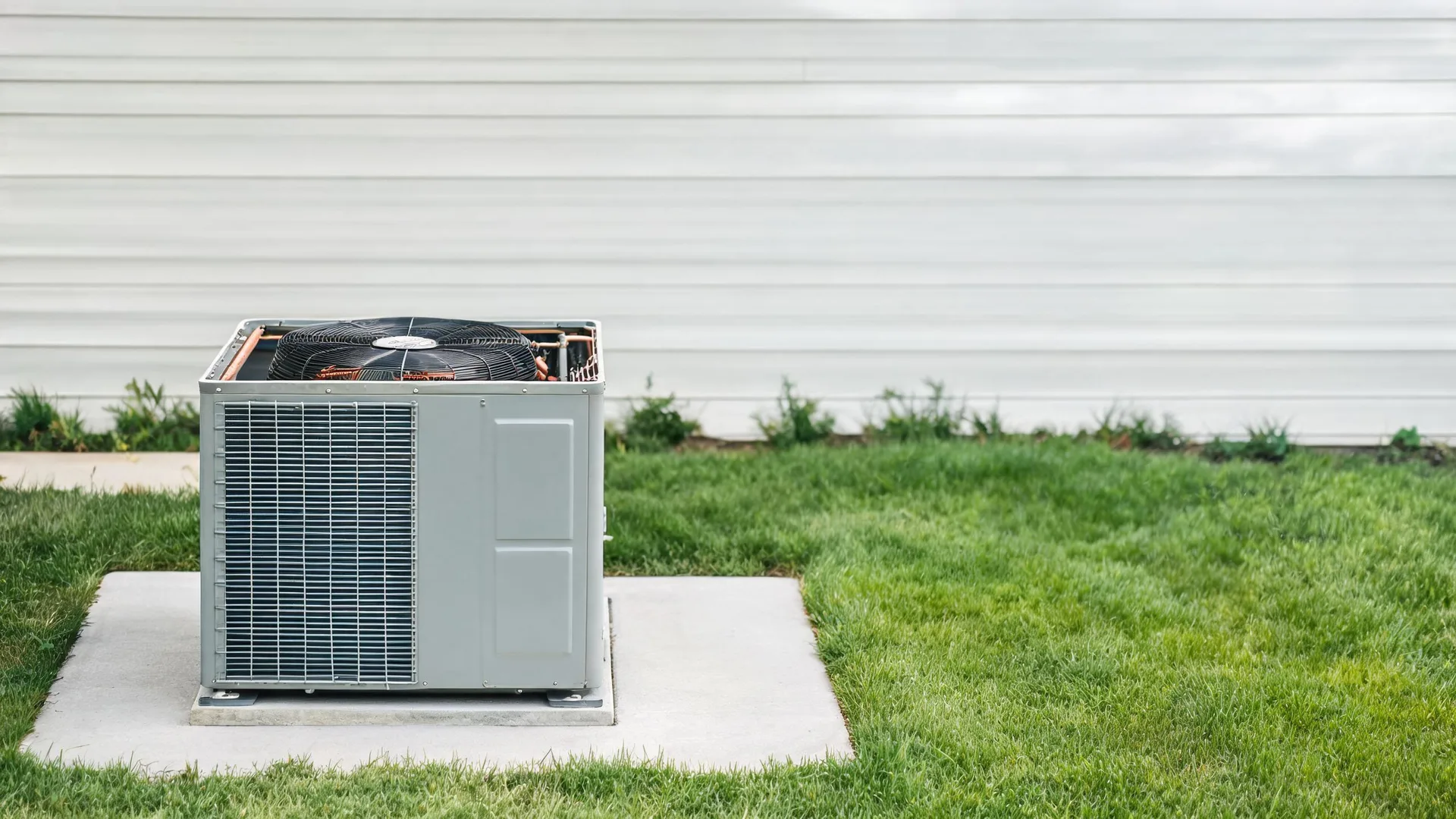
A gray metal air conditioning condenser unit mounted on a concrete pad in a flat grassy field under a partly cloudy sky.

The Filter, the Coils and the Drain Line

The filter is the cheapest insurance this system has. Once it loads up with dust, air can't move through it the way the blower expects, so the coil behind it starts running colder than it should. A coil that gets too cold will ice over, and once ice forms, airflow drops even further. It turns into a cycle that ends with a warm house and a coil that needs to thaw before anyone can look at it. The outdoor coil has the opposite job and the opposite problem. It needs open contact with outside air to dump heat, and grass clippings, pollen and plain dirt sit on those fins and block that exchange. A blocked outdoor coil makes the compressor work against itself, pushing heat into air that can't carry it away. Then there's the drain. Cooling the air pulls moisture out of it, and that water has to go somewhere. The drain line carries it out, and that line can grow algae or catch dust until it clogs. A clogged drain backs up into the pan, and once the pan overflows, water ends up somewhere in the house it was never supposed to reach. None of these three failures look alike, but they all show up as the same thing to the homeowner: a system that runs longer, cools less, and costs more to keep going.

A Quick Visit Checks It's Running

A quick tune-up confirms the system turns on, blows cold air, and the thermostat responds. That tells you it's working today. It doesn't tell you the capacitor is about to give out or the coil is already half blocked with dirt.

A Thorough One Checks Why It'll Keep Running

A thorough tune-up means the technician pulls the panel, checks refrigerant charge against the manufacturer's numbers, tests capacitor and contactor under load, and washes the outdoor coil instead of just looking at it. That's the difference between a system that works right now and one that's still working in the middle of summer.

An overhead view of a residential air conditioning condenser unit mounted on a concrete pad next to a house with vinyl siding.

Book your AC tune-up in March, before homes here start needing cooling in April.

  1. Jan
  2. Feb
  3. Mar
  4. Apr
  5. May
  6. Jun
  7. Jul
  8. Aug
  9. Sep
  10. Oct
  11. Nov
  12. Dec

A tune-up checks the refrigerant charge, cleans the coils, tests the capacitor and tightens the electrical connections.

The outdoor unit takes the weather straight on. Check it for storm damage before summer load goes on it, not after. A technician can spot bent fins, a cracked line or debris packed into the coil while the system is still easy to open up and look at. Once it's running flat out through a stretch of summer heat, a problem that started as a dented cabinet shows up as a system that won't keep the house cool. Thirteen tornadoes and eight tropical storms or hurricanes touched this parish between 2015 and 2024, on top of 38 damaging wind events and 11 hail events in that same stretch. A unit that's sat through that is worth checking before it has to work.