Seven months of the year
Air conditioners in Calcasieu Parish run from April through October. That is seven months of the compressor cycling on and off, not just a stretch of hot weeks.
Takes about a minute. No obligation.
Air conditioners in Calcasieu Parish run from April through October. That is seven months of the compressor cycling on and off, not just a stretch of hot weeks.
June through August, the afternoon high averages 91 degrees. A system pushing against that heat for seven months wears on its parts sooner than one running in a milder place.
NOAA nClimDiv, 1991–2020 normals
A dirty filter chokes off airflow before it ever reaches the coil.
A starved coil can't dump heat properly, so the compressor runs longer to cool the same air.




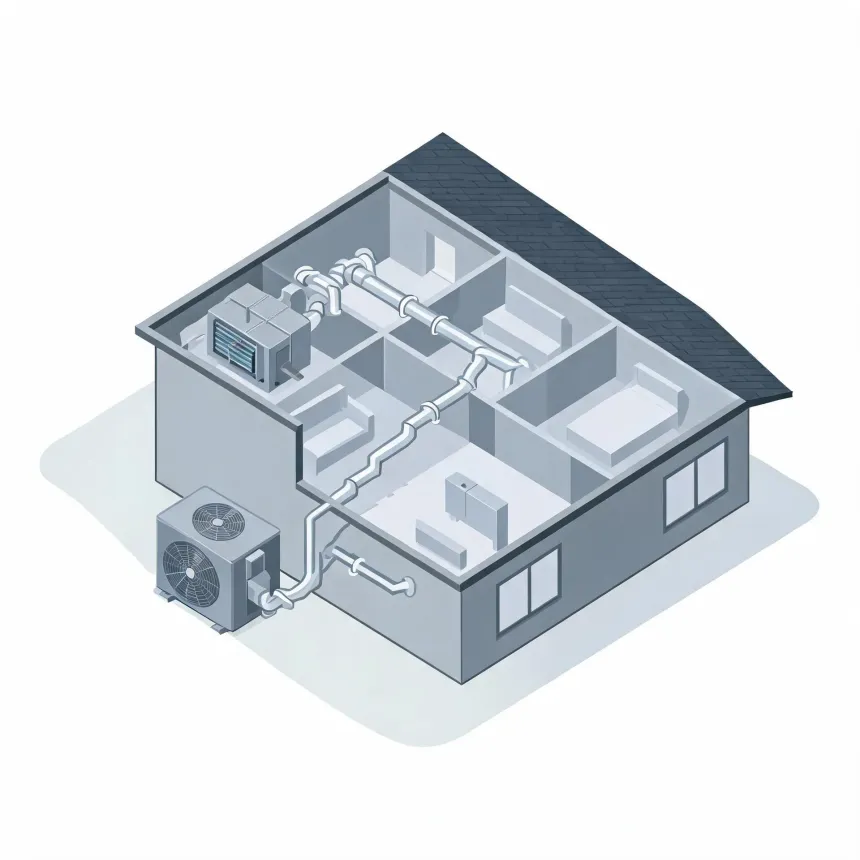
A quick visit means someone glances at the filter, checks the thermostat, and leaves. A thorough one gets into the parts you don't see. The tech should check refrigerant pressure against what the system calls for, not just ask if it's cooling fine. They should pull the capacitor and test it under load, since a weak one can still start the compressor but fail within months. The condenser coil gets washed, not wiped, because packed-in dirt and grass clippings block heat from leaving the refrigerant. They should check the contactor for pitting, tighten electrical connections that loosen from vibration over time, and flush the condensate drain so it doesn't back up and shut the system down later. A visit that ends with nothing but a filter swap skipped most of that work.
Seven months of cycling on and off against that kind of heat wears parts down faster than a mild climate would. A capacitor or a coil that is already weak will not wait for a slow week to fail. Getting it checked before April means catching that now, while the system is still sitting idle.
Find a contractor
Running for months at a stretch wears parts in ways you can't see from the thermostat. The compressor cycles on and off thousands of times over a season, and each start puts a jolt through the capacitor that helps kick it into motion. A capacitor can be weak and still get the compressor going, so the system keeps cooling right up until the day it doesn't. Refrigerant pressure can drift low from a slow leak without the air ever feeling warm, because the system just runs longer to make up for it. The condenser coil collects dirt and grass clippings with every month it sits outside, and a coil caked in debris can't shed heat the way a clean one does even though the fan still spins fine. None of this shows up as a change in comfort until a part finally gives out. A tune-up catches it while the system is still running, not after it stops.
A condenser coil sitting outside collects dust, pollen and grass clippings every week it runs. Nobody wipes it off between visits, so it builds up layer on layer until the coil can't shed heat the way it did when it was clean. Skip a season of cleaning and the compressor is already working harder than it needs to, even though nothing looks wrong yet.
A contactor with a little pitting still closes the circuit. A connection that's worked a bit loose still carries power. Left alone through another season of cycling, that pitting spreads and that connection loosens further, until a part that would have been an easy fix during a tune-up fails on its own instead.
A tune-up checks the refrigerant charge, cleans the coils, tests the capacitor and tightens the electrical connections.
A tune-up is more than a glance at the filter. The tech should check the blower motor and the fan belt if there is one, though most residential systems drive the blower directly and have nothing to adjust there. They test the start and run capacitors under load, not just look at them, because a capacitor can measure fine sitting still and still fail to carry the compressor through a hard start. They check the thermostat calibration against a separate thermometer, since a thermostat reading a few degrees off makes the system run longer than it should without anyone noticing. They inspect the evaporator coil inside the air handler for mold or a buildup of dust, since a dirty evaporator coil starves airflow the same way a dirty filter does, just further along the line. They check refrigerant lines for signs of oil residue, which points to a slow leak before the gauges ever show low pressure. None of this takes long when the system is clean and the parts are sound. It only takes time when something is already wearing out, which is the point of doing it before the season starts.