






White two-story houses with wraparound porches and Spanish moss-draped oak trees photographed along a residential street at night.

AC Maintenance in Luling, LA

Tell us about the job

Takes about a minute. No obligation.

Tune-up, service, or cleaningCentral ACSt. Charles Parish, LA
Step 1 of 2

What ZIP code is the job in?

Electricity in St. Charles Parish averaged 11.91 cents per kilowatt-hour in 2025, cheaper than in most US counties. That rate only works in your favor if the air conditioner is running the way it should. A dirty coil or a low refrigerant charge makes the unit pull more power to cool the same house. At that point the low rate is just covering waste instead of saving you anything. A system running clean is what turns cheap power into a lower bill.

7 months
April through October, your air conditioner is on duty
91°F
the average summer afternoon it cools against
5 hail events
in ten years, and hail bends the fins on outdoor coils
26 wind events
in ten years, and wind drives debris into outdoor units
Isometric grey illustration of a cutaway single-story house showing interior rooms, ceiling ductwork connected to an indoor air handler, and an outdoor condenser unit linked by lines outside the wall.
Your air conditioner works hardest from May through September.

NOAA nClimDiv, 1991–2020 normals

Half the homes in St. Charles Parish were built in 1986 or later.

A system that age still has years ahead of it, and a yearly check is what gets it there.

This county sees weather that's hard on outdoor units

45 severe weather events from 2015 to 2024
49% of homes statewide lost power a day or more in 2024
26 damaging wind events from 2015 to 2024
Seven Months of WorkCooling runs April through October here, with afternoon highs near 91°F in summer.

Cooling starts here in April, and that is when this system goes from sitting idle to running full days. March is the month to get it checked, before that switch happens. A technician looking at it cold can catch a weak capacitor or a low charge before the unit has to push through a full day of summer heat on it. Cooling runs April through October here, seven months straight, so a problem that starts the season doesn't get a quiet stretch to wait out. It just keeps running under it.

A clean system is what makes that low rate count

A tune-up gets the coil clean and the charge right, and that's what lets the rate you're already paying work for you instead of covering waste. Get it checked before the unit is running full days.

Find a contractor
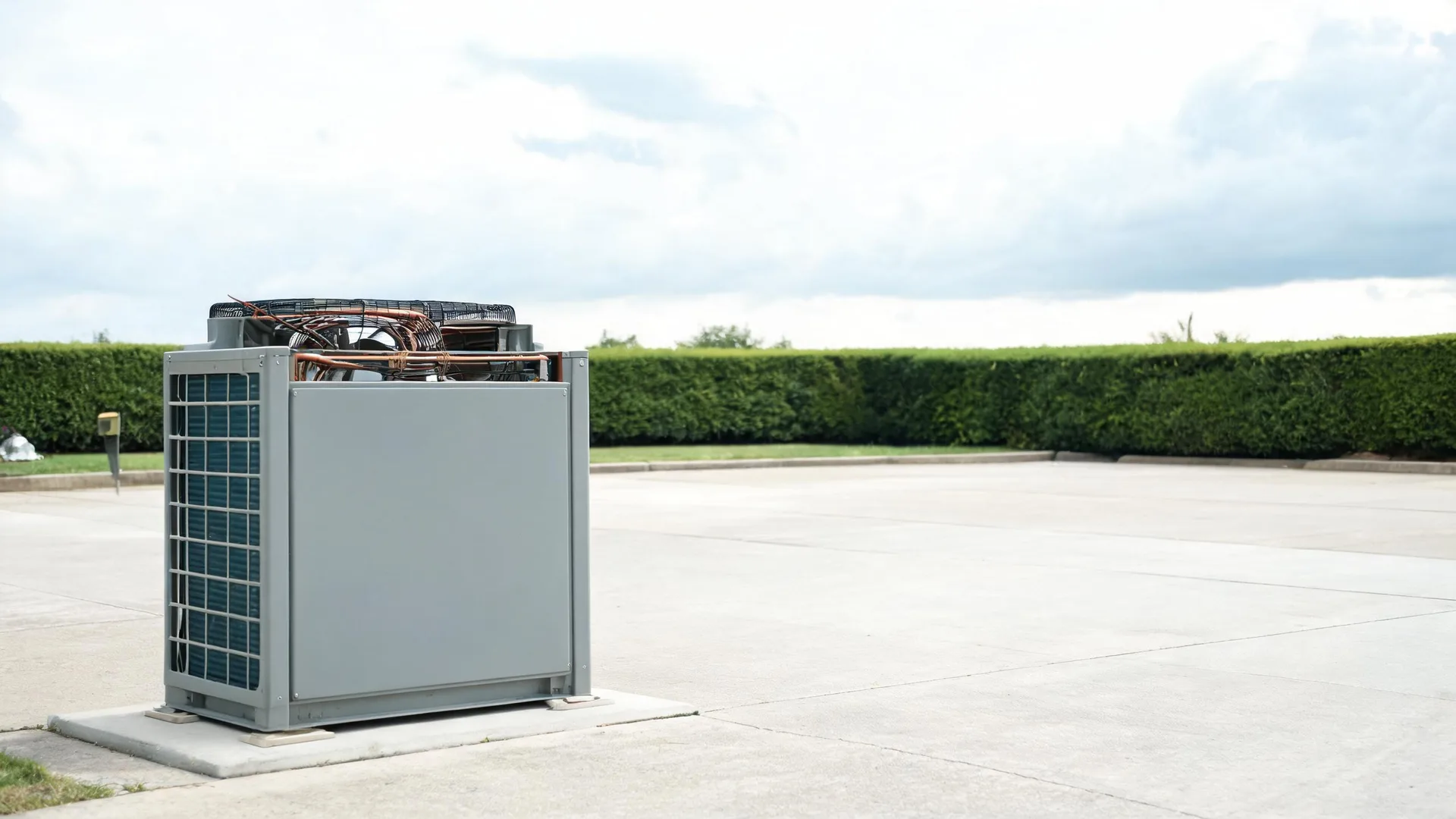
A gray residential air conditioner condenser unit mounted on a concrete pad in an open grass field.

Built to Last, If It's Checked

A system installed new keeps running this way for years, not months. A yearly check in the spring is what makes that stretch count. It catches a part wearing out while it's still cheap to fix, before it takes the compressor down with it. Skip a few years of checks and small wear turns into a repair bill, or a system replaced well before it had to be.

The Filter Decides What the Coil Deals With

A dirty filter chokes the airflow across the evaporator coil. When that air slows down, the coil gets colder than it should, and the moisture that normally drains off it starts freezing into a layer of ice instead. Once ice builds up, almost no air gets through at all, so the system runs long stretches while cooling the house less and less.

The Drain Line Is the Part Nobody Checks Until It Fails

The condensate line carries off the water the coil pulls out of the air, and it's a narrow tube that algae and dirt clog easily. A clogged drain backs that water up into the pan under the coil, and once the pan overflows, the water goes into the ceiling or the closet the unit sits in. A tune-up includes flushing that line before it blocks, not after.

An outdoor air conditioning condenser unit positioned on a concrete pad next to a blue-sided house, surrounded by green shrubs and flowering hydrangeas at sunset.

Book your AC tune-up in March, before homes here start needing cooling in April.

  1. Jan
  2. Feb
  3. Mar
  4. Apr
  5. May
  6. Jun
  7. Jul
  8. Aug
  9. Sep
  10. Oct
  11. Nov
  12. Dec

A tune-up checks the refrigerant charge, cleans the coils, tests the capacitor and tightens the electrical connections.

A tune-up is not a quick look and a filter swap. The refrigerant charge gets checked against what the system calls for, since too little or too much both make the compressor work harder than it should. The electrical connections get checked too, because a loose connection builds heat, and heat is what ends contactors and capacitors early. The condenser coil gets cleaned so it can actually shed the heat the refrigerant is carrying. Blower wheel, fan motor, the safety controls that shut the system down before it damages itself, all of it gets looked at while it's still working, not after it quits. A system that passes a real tune-up is one where every part doing the work has been checked on, not assumed.