






A lit antebellum-style two-story house with white columns and a wraparound porch at night, framed by live oak trees draped in Spanish moss.

AC Maintenance in Many, LA

Tell us about the job

Takes about a minute. No obligation.

Tune-up, service, or cleaningCentral ACSabine Parish, LA
Step 1 of 2

What ZIP code is the job in?

Sabine Parish saw 90 severe weather events between 2015 and 2024. Damaging wind came through 38 times, hail 30 times, and 15 tornadoes touched down in that same stretch. Your outdoor unit sits outside through all of it, exposed to branches, hail and whatever the wind carries. Nearly half of Louisiana households went at least a full day without power last year. A unit that's already weak going into a storm is a lot more likely to fail when the power comes back on.

6 months
May through October, your air conditioner is on duty
92°F
the average summer afternoon it cools against
30 hail events
in ten years, and hail bends the fins on outdoor coils
38 wind events
in ten years, and wind drives debris into outdoor units
Isometric cutaway illustration of a house interior showing ducted HVAC piping, an indoor air handler unit, and an outdoor condenser with fan connected by a line, rendered in grey tones on a white background.
Your air conditioner works hardest from June through September.

NOAA nClimDiv, 1991–2020 normals

A dirty, neglected AC pulls more power to do the same job.

Electricity here runs 13.43 cents per kilowatt-hour, cheap by national standards, but a system working harder than it should still adds up over a long Louisiana summer.

Six months of heat like this wears a system down fast

Cooling runs May through October
Summer afternoons average 92°F
Climate zone 3A

Half the homes in Sabine Parish were built in 1986 or earlier. An AC system doesn't last as long as the house does, so if yours came with an older home, it may already be on its second or third unit, or running past the point where parts wear thin. A yearly check gives a contractor a chance to look at the coil, the refrigerant charge and the electrical connections before one of them fails outright. Caught early, a weak part is a repair. Caught late, during a storm or a power cut, it can take the whole system down with it.

Have your AC ready before the next storm, not after

Get the outdoor unit checked before the next storm comes through. A contractor can clear debris, check the coil for hail damage, and make sure the electrical connections are solid enough to take a hit when the power comes back on.

Find a contractor
A man in a cap, dark jacket and tan work pants walks up porch steps toward a green front door, carrying a worn canvas tool bag in his right hand, with a potted shrub beside the entry.
An outdoor residential air conditioning condenser unit mounted on a concrete pad, surrounded by gravel with a blue sky in the background.

Get it looked at in April, before May puts it to work

Cooling starts here in May and runs straight through October, six months of work. The system takes on its full load from the first hot week, not gradually. A tune-up done in April catches a weak part before that happens. Wait until the season's already started and a contractor is working on a unit that's already carrying the load instead of one sitting idle.

The system usually tells you first

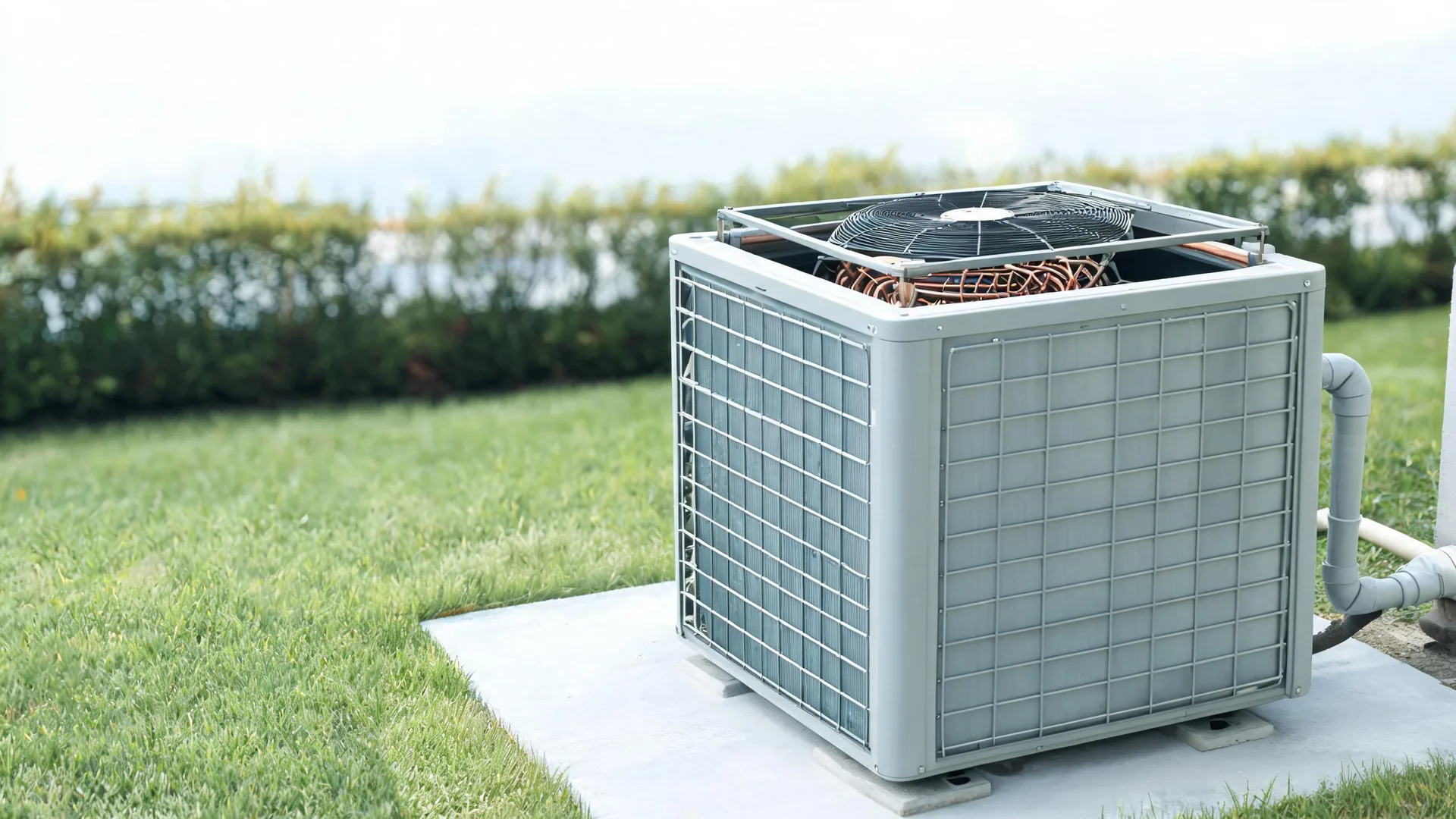
A capacitor going weak makes the outdoor fan struggle to start, sometimes with a hum before it catches. A refrigerant leak shows up as warm air at the vents even though the system runs constantly. A clogged coil makes the compressor work harder and run longer to hit the same temperature. None of these stop the system cold right away. They just make it work worse until something finally gives out.

The weak part rarely picks a convenient time to fail

A compressor under strain from a dirty coil or low charge tends to fail when it's working hardest, during a long stretch of heat or right after the power comes back on from an outage. A contractor checking the system ahead of time catches a failing capacitor or a loose electrical connection while it's still a small fix. Waiting means finding out which part was weak on the day it finally quits.

An outdoor air conditioning condenser unit installed beside the exterior wall of a blue vinyl-sided house at sunset.

Book your AC tune-up in April, before homes here start needing cooling in May.

  1. Jan
  2. Feb
  3. Mar
  4. Apr
  5. May
  6. Jun
  7. Jul
  8. Aug
  9. Sep
  10. Oct
  11. Nov
  12. Dec

A tune-up checks the refrigerant charge, cleans the coils, tests the capacitor and tightens the electrical connections.

A tune-up starts outside, with the condenser coil. A contractor washes it out so the system can shed heat the way it was built to. They check the refrigerant charge, since a system low on refrigerant runs longer and still cools less. The capacitor and contactor get tested, because those are the parts that get the outdoor fan and compressor started in the first place, and a weak one makes the unit struggle before it fails outright. They'll check the electrical connections too, tightening anything that's worked loose, since a loose connection is what turns into an arc or a dead unit later. Indoors, the evaporator coil and the blower get a look, along with the drain line, so the system isn't fighting a clog on top of everything else.