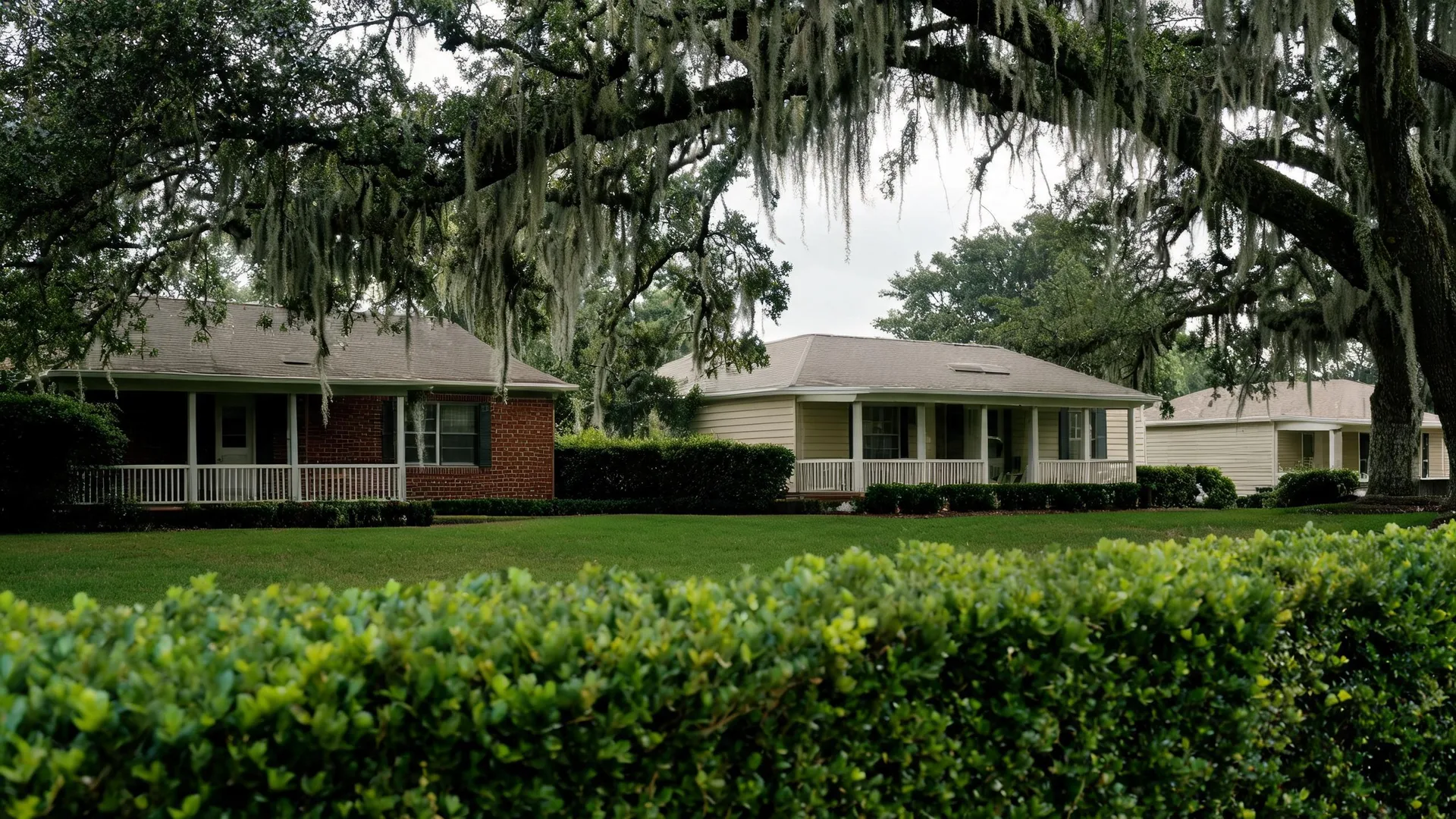
Single-story houses, one brick and one with light siding, both with covered porches, behind a mowed lawn and trimmed hedge, under large moss-draped oak branches.

AC Maintenance in Napoleonville, LA

Tell us about the job

Takes about a minute. No obligation.

Tune-up, service, or cleaningCentral ACAssumption Parish, LA
Step 1 of 2

What ZIP code is the job in?

Power here is cheap, but that cuts both ways

Electricity in Assumption Parish runs about 12.16 cents per kilowatt-hour, lower than most of the country. That helps, but a system that's losing efficiency still burns more to do the same job, and it's running most of the year here.


A dirty or strained AC draws more power to do the same job

A coil caked with dust or a refrigerant charge that's drifted low makes the compressor work harder for the same cooling. That shows up on the meter whether electricity is cheap or not.

7 months
April through October, your air conditioner is on duty
91°F
the average summer afternoon it cools against
7 hail events
in ten years, and hail bends the fins on outdoor coils
4 wind events
in ten years, and wind drives debris into outdoor units
Isometric cutaway illustration of a house interior showing ducted air handling equipment, ceiling ducts, furniture in two rooms, and an outdoor condenser unit connected by lines outside the wall.
Your air conditioner works hardest from May through September.

NOAA nClimDiv, 1991–2020 normals

Half the homes in Assumption Parish were built in 1983 or earlier.

An AC unit that old has had a lot of years to collect dust on the coil and drift off on charge, and a yearly check is how you find that before it costs you.

Seven months of cooling starts in April. Have it checked in March.

Cooling runs April through October
Climate zone 2A
Power here costs 12.16 cents per kilowatt-hour
Seven Months of Work for This MachineAfternoon highs average 91°F through June, July and August, with a dew point around 74°F.

Assumption Parish recorded 22 severe weather events between 2015 and 2024, including 7 hail storms, 6 tornadoes and 4 tropical storms or hurricanes. The outdoor unit sits through all of that with no cover. Hail dents the fins, and wind throws branches and debris into the coil where the airflow is. A tune-up is when a tech catches a dented coil or a bent fan blade before it turns into a bigger repair. Power matters too. Close to half of Louisiana households went at least 24 hours without power in 2024, and when it comes back on, the AC needs to be in shape to start up and run right away.

A Tune-Up Gets You Paying For The Cooling You Actually Get

A coil clogged with dust or a charge that's drifted low makes the compressor run harder for the same cooling, every hour this machine runs. A tune-up gets the coil clean and the charge back where it belongs, so the work it does matches the power it draws.

Find a contractor
A man in a dark long-sleeve shirt and olive cargo pants, seen from behind, carries a waxed canvas tool bag up porch steps toward a green front door of a gray clapboard house.
An outdoor residential air conditioning condenser unit mounted on a concrete pad, surrounded by gravel with a blue sky in the background.

Put It On The Calendar Every Year

If the system in your house dates back to when it was built, a yearly check is worth putting on the calendar and keeping there. A tech can look at the coil and the charge before either one costs you through a summer. If you've had the unit replaced since, the same visit still matters, just less urgently. Either way, this is the machine running longest where you're least likely to notice it slipping.

A Real Check Goes Inside the Cabinet

A quick visit means someone glances at the outdoor unit, hoses off the coil if that, and checks the thermostat on the way out. A thorough one means the panels come off. The tech checks refrigerant pressure against what the system is supposed to run, pulls the blower wheel if it's caked, and looks at the capacitor and contactor for wear before they fail outright. Washing a coil from the outside is not the same as a tech confirming the charge is correct.

The Report Tells You Which One You Got

After a real tune-up, the tech can tell you the numbers: what the refrigerant pressure read, what the temperature split across the coil was, what the capacitor tested at. If all you get is 'it's running fine' with no readings, nothing was actually measured. A written readout of what was checked and what it measured is how you know the visit found problems instead of just looking for them.

An outdoor air conditioning condenser unit installed beside the exterior wall of a blue vinyl-sided house at sunset.

Book your AC tune-up in March, before homes here start needing cooling in April.

  1. Jan
  2. Feb
  3. Mar
  4. Apr
  5. May
  6. Jun
  7. Jul
  8. Aug
  9. Sep
  10. Oct
  11. Nov
  12. Dec

A tune-up checks the refrigerant charge, cleans the coils, tests the capacitor and tightens the electrical connections.

A tune-up starts outside at the condenser coil, pulling it clean so air can move through the fins the way it was designed to. From there the tech checks refrigerant charge against the pressures the system is built to run, because too little or too much makes the compressor strain. The blower wheel and evaporator coil get looked at too, since dust buildup there chokes airflow just as much as a dirty condenser. A capacitor gets tested under load, not just eyeballed, since a weak one can still spin the fan while it's failing. Electrical connections get checked and tightened, because a loose one generates heat and wears out the parts around it. The condensate drain gets checked for a clog, since a blocked drain backs up and can shut the system down or cause water damage on its own.