Overhead view of an outdoor AC condenser unit on a concrete pad next to a house with a dark shingle roof.

AC Maintenance in Opelousas, LA

Tell us about the job

Takes about a minute. No obligation.

Tune-up, service, or cleaningCentral ACSt. Landry Parish, LA
Step 1 of 2

What ZIP code is the job in?

Power here is cheap, but that cuts both ways

Electricity in St. Landry Parish runs about 12.99 cents per kilowatt-hour, lower than most of the country. That helps every homeowner here, but it also means a system that's slipping doesn't announce itself with a shocking bill. The waste is still there. It just takes longer to notice.


A tune-up protects a machine that barely gets a break

An air conditioner working against dirt on the coil or a low charge pulls more power to do the same job. Multiply that by a long cooling season here and the extra cost adds up fast, even at a low rate. A tune-up keeps the system from working harder than it has to.

7 months
April through October, your air conditioner is on duty
91°F
the average summer afternoon it cools against
5 hail events
in ten years, and hail bends the fins on outdoor coils
52 wind events
in ten years, and wind drives debris into outdoor units
Isometric cutaway illustration of a small house showing interior rooms, ductwork, an indoor air handler, and an outdoor condenser unit connected by lines, on a plain white background.
Your air conditioner works hardest from May through September.

NOAA nClimDiv, 1991–2020 normals

This AC runs from April through October, with afternoon highs averaging 91°F and a dew point near 73°F in June, July and August.

Seven months of that kind of heat wears parts down faster than a mild climate ever would.

April is the first hard month, not the warm-up

Cooling runs April through October
Climate zone 2A
Power here costs 12.99 cents per kilowatt-hour

St. Landry Parish saw 79 severe weather events between 2015 and 2024, including 52 with damaging wind and 17 tornadoes. An outdoor AC unit sits outside through all of that, exposed to wind-driven debris and hail. A bent fin or a cracked fan blade does not always stop the unit right away, but it can make the system work harder or fail sooner than it should. Louisiana households also went without power for a day or more at a high rate in 2024, which matters most right when the heat is worst. Having the unit checked before summer catches what the last storm season left behind.

Get the system back to pulling only what it needs

A unit working against dirt or a low charge pulls more power to do the same job, and that extra draw runs all summer long here. A tune-up gets it back to pulling only what it needs.

Find a contractor
An outdoor air conditioning condenser unit mounted on a concrete pad surrounded by gravel, photographed against a partly cloudy blue sky.

Check it before the season starts, not after

Seven months of cooling means seven months where a weak part gets tested. Get the tune-up done before April. A technician can catch a failing capacitor or a dirty coil while the system is sitting idle, not after it's already running twelve hours a day against 91 degree afternoons. Once the season starts, there's no slow week to schedule around.

The charge is off before the gauge says so

A system can lose a little refrigerant every year through a fitting or a coil without ever dumping it all at once. The air still feels cool at the register, so nothing seems wrong. A gauge set on the lines during a tune-up shows the charge is light before the compressor starts struggling against it.

The drain line clogs from the inside

Condensate drains collect algae and dirt the same way any damp pipe does, and the blockage builds where the homeowner can't see it, inside the line or the drain pan. Left alone it backs up and the pan overflows. Clearing it during a tune-up is quick. Finding it because water is coming through a ceiling is not.

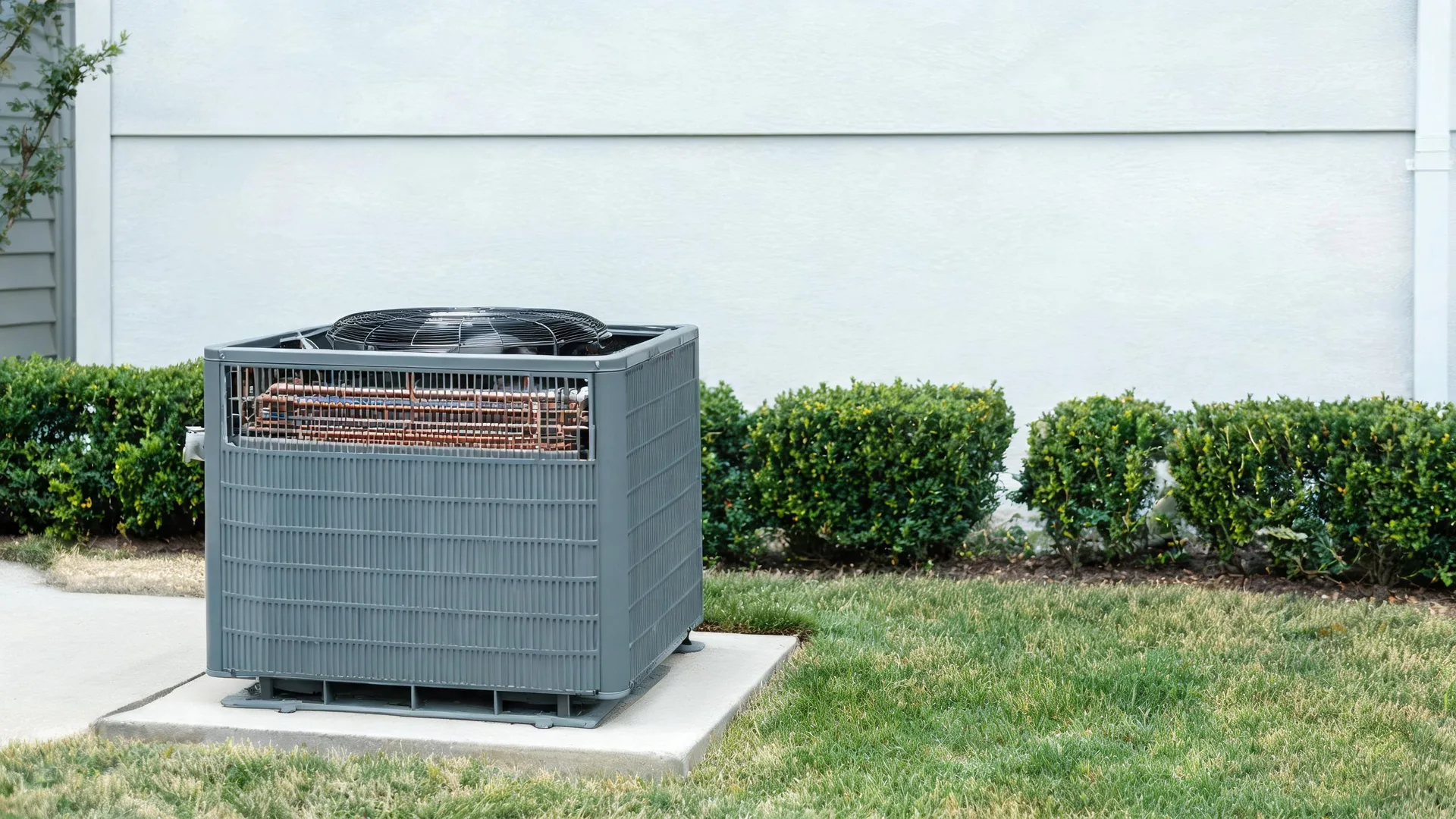
Aerial view of a gray central air conditioning condenser unit on a concrete pad next to a house with vinyl siding.

Book your AC tune-up in March, before homes here start needing cooling in April.

  1. Jan
  2. Feb
  3. Mar
  4. Apr
  5. May
  6. Jun
  7. Jul
  8. Aug
  9. Sep
  10. Oct
  11. Nov
  12. Dec

A tune-up checks the refrigerant charge, cleans the coils, tests the capacitor and tightens the electrical connections.

A tune-up is a fixed list, not a once-over with a flashlight. The technician pulls the panel and checks the capacitor and the contactor, because those are the parts that take the hit every time the compressor cycles on. The coil gets inspected and cleaned if it's dirty, since a coated coil can't shed heat the way it's supposed to and makes the system run longer to do the same job. The blower wheel gets checked for dirt buildup, and the motor gets checked for bearing wear. Refrigerant charge gets verified against what the system calls for, not just guessed at. The condensate drain gets cleared and the electrical connections get tightened. None of this fixes something that's already broken. It's what keeps the parts that are fine now from becoming the parts that fail once the system is running hard every day.